Are Lovable apps secure?
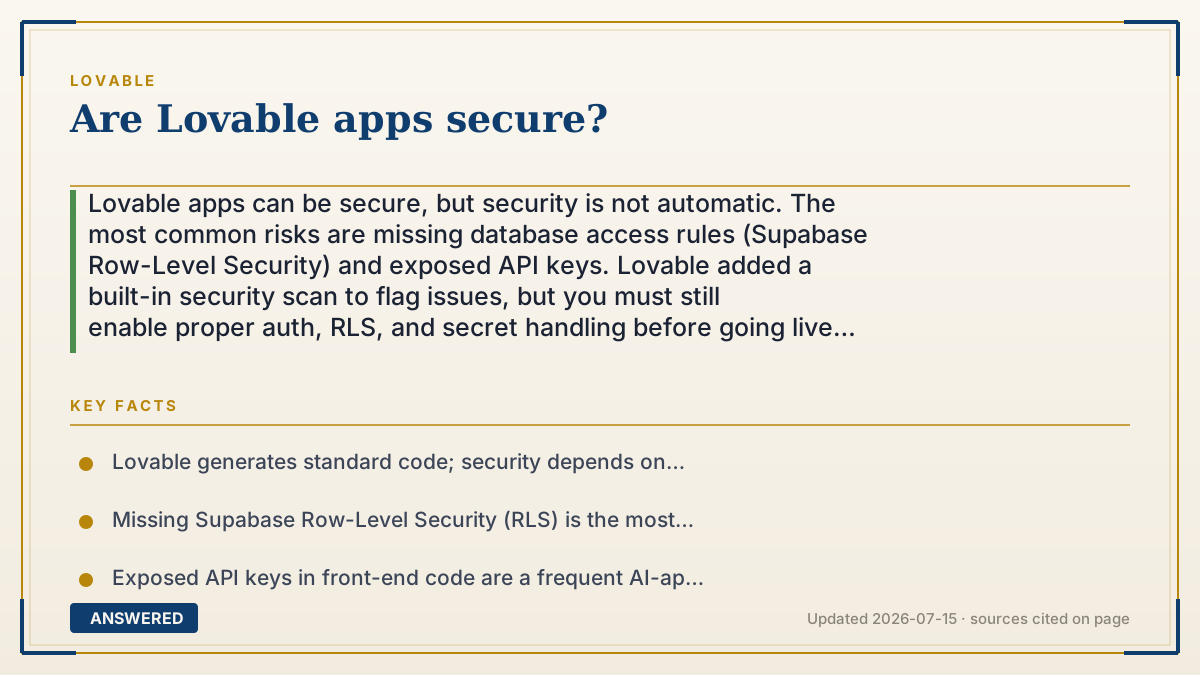
Lovable apps can be secure, but security is not automatic. The most common risks are missing database access rules (Supabase Row-Level Security) and exposed API keys. Lovable added a built-in security scan to flag issues, but you must still enable proper auth, RLS, and secret handling before going live. Treat it like any real app: verify before you ship.
Why — the first-principles explanation
An app's security depends on its configuration, not on who or what wrote the code. Lovable generates standard code, so it can be exactly as secure—or as leaky—as a hand-built app. The risk is that AI generation makes it easy to ship fast and skip the invisible safeguards.
The two classic failure modes for AI-built apps both involve the backend. First, Row-Level Security (RLS) on the Supabase/Cloud database: if RLS isn't enabled, any logged-in user might read or edit everyone's data. Second, secret exposure: API keys or credentials accidentally placed in front-end code, where anyone can view them in the browser. Neither is unique to Lovable, but a non-technical builder may not know to check.
Lovable's response is guardrails: it added a security review/scan that flags common problems before you publish, and its Cloud backend encourages proper auth patterns. But scans catch known patterns, not everything. The durable principle: the platform can hand you a locked door, but you still have to turn the key—enable RLS, keep secrets server-side, require authentication, and test with a non-admin account before launch.
An example that makes it click
Imagine building a house with an AI contractor that works incredibly fast. It frames the walls and hangs the doors perfectly—but unless you ask, it might leave the back door unlocked and the spare key under the mat. That's a Lovable app without Row-Level Security or with keys left in the front-end code.
Lovable now includes a 'home inspector' (the security scan) that walks through and points at the unlocked door before you move in. But you still have to actually turn the deadbolt—enable the database rules and hide the keys—before you invite the public inside.
How to do it
- Enable Row-Level Security (RLS) on every Supabase/Cloud table so users only access their own data.
- Keep API keys and secrets server-side; never paste them into front-end code.
- Require real authentication before exposing any private data or actions.
- Run Lovable's built-in security scan and fix every flagged issue.
- Test the live app while logged in as a normal, non-admin user to confirm data isolation.
- For sensitive apps, have a developer review the exported code before launch.
Key facts
- Lovable generates standard code; security depends on configuration, not the AI.
- Missing Supabase Row-Level Security (RLS) is the most common serious risk.
- Exposed API keys in front-end code are a frequent AI-app vulnerability.
- Lovable includes a built-in security scan that flags common issues before publishing.
- Automated scans catch known patterns but do not guarantee full security.
Open the official product site and confirm the current access, plans and terms.
▶ The 60-second explainer (script)
Are Lovable apps secure? They can be—but security isn't automatic. Because Lovable writes standard code, your app is exactly as safe as you configure it. The two biggest risks are on the backend. First, missing Row-Level Security on your Supabase database, which can let any logged-in user read everyone's data. Second, API keys accidentally left in front-end code, where anyone can see them. Lovable now includes a built-in security scan that flags these common problems before you publish, which helps a lot. But scans catch known issues, not everything. So before you go live: enable Row-Level Security on every table, keep secrets server-side, require real login, and test as a normal user—not an admin. For sensitive apps, have a developer review the code. Ship carefully, and Lovable apps can be genuinely secure.
What authoritative sources say
People also ask
What's the biggest security risk in a Lovable app?
Missing Row-Level Security on the database, which can expose all users' data to any logged-in user.
Does Lovable check my app for security problems?
Yes, it has a built-in security scan that flags common issues, but you must still fix them and verify manually.
Can I make a Lovable app secure enough for real users?
Yes—enable RLS, hide secrets server-side, require authentication, and test as a non-admin user before launch.
Should a developer review it?
For sensitive or production apps, yes. You can export the code to GitHub for a proper security review.