Can I use DALL-E images commercially?
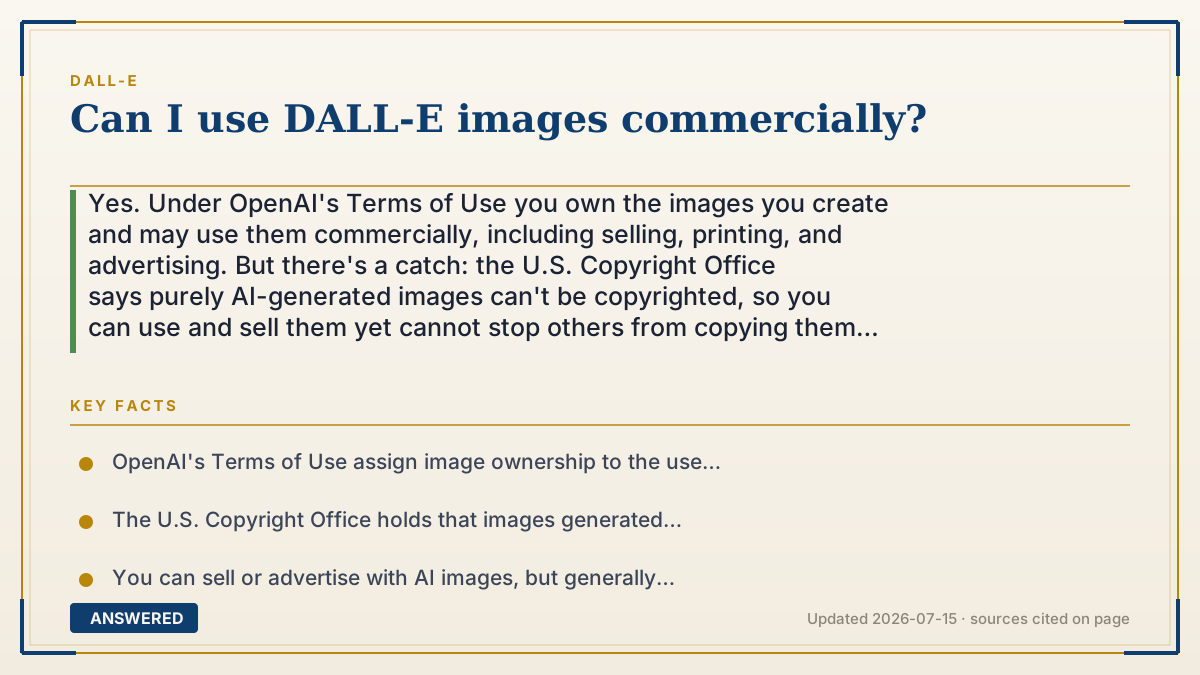
Yes. Under OpenAI's Terms of Use you own the images you create and may use them commercially, including selling, printing, and advertising. But there's a catch: the U.S. Copyright Office says purely AI-generated images can't be copyrighted, so you can use and sell them yet cannot stop others from copying them. This is general information, not legal advice.
Why — the first-principles explanation
Two separate rules govern this, and mixing them up causes most confusion. The first is your contract with OpenAI. OpenAI's Terms of Use assign you ownership of your output, meaning OpenAI won't claim your images and permits commercial use, subject to their usage policies (no illegal, deceptive, or infringing content). So the company that made the tool is not blocking you from selling.
The second rule is copyright law, which is about whether you can legally stop others from copying your image. Here U.S. law is strict: copyright protects human authorship, and the U.S. Copyright Office has stated that images generated purely from text prompts lack sufficient human authorship to be registered. So a plain AI image sits closer to the public domain: you can sell it, but a competitor could legally reuse the identical image.
The practical takeaway is that commercial use and copyright ownership are not the same thing. You can put a DALL-E (now GPT Image) picture on a T-shirt, a book cover, or an ad. What you generally cannot do is claim exclusive copyright over the raw AI output. Adding meaningful human creativity, editing, arranging, combining, can create protectable elements. Because laws differ by country and edge cases exist, treat high-stakes commercial projects as worth a lawyer's review.
An example that makes it click
Imagine a free public fountain. Anyone can scoop up water and sell it in bottles, that's using the AI image commercially, which is allowed. But you can't fence off the fountain and stop your neighbor from scooping the same water, because nobody owns it, that's the copyright limit. If you add your own special flavoring and packaging (real human creative work), that new mix can be yours to protect, even though the base water still isn't.
How to do it
- Confirm your image doesn't copy a real brand, logo, or living person's likeness.
- Check OpenAI's usage policies for prohibited content before selling.
- Keep your prompts and edits on file to document any human creative input.
- For high-value products (logos, book covers, ad campaigns), consider adding substantial human editing and consult a lawyer about copyright.
Key facts
- OpenAI's Terms of Use assign image ownership to the user and permit commercial use.
- The U.S. Copyright Office holds that images generated from prompts alone lack the human authorship needed for copyright registration.
- You can sell or advertise with AI images, but generally cannot claim exclusive copyright over the raw output.
- Substantial human editing or creative arrangement may make parts of a work copyrightable.
- Rules vary by country, and this is general information, not legal advice.
▶ The 60-second explainer (script)
Can you use DALL-E images commercially? Yes, but you need to understand two different rules. Rule one is OpenAI's Terms of Use. They give you ownership of the images you make and allow commercial use, so you can put them on products, book covers, and ads. Rule two is copyright law. In the United States, the Copyright Office says images made purely from a text prompt don't have enough human authorship to be copyrighted. So here's the twist: you can sell the image, but you usually can't stop someone else from copying it, because nobody legally owns it. If you add real human creativity, editing and arranging, those parts may become protectable. Bottom line: commercial use is allowed, exclusive copyright usually isn't. For big projects, check with a lawyer, and remember this is general info, not legal advice.
What authoritative sources say
People also ask
Can I sell DALL-E images on print-on-demand sites?
Generally yes, OpenAI permits commercial use. Just avoid copyrighted characters, real logos, or real people's likenesses, and follow each marketplace's own AI-content rules.
Do I have to credit OpenAI or DALL-E?
OpenAI does not require you to credit it for images you generate, though some platforms ask you to disclose that content is AI-generated.
Can someone legally copy my AI image?
Possibly. Since raw AI output usually isn't copyrightable in the U.S., others may reuse an identical image unless you've added protectable human creativity.
Is commercial use different outside the U.S.?
Yes. Copyright treatment of AI images varies by country. OpenAI's usage permission still applies, but legal protection differs, so check local law for major projects.
The same question, asked other ways
- Can I use DALL-E images for book covers?
- Can I use DALL-E images on merchandise?
- How to use DALL-E output commercially through the API?