Can Synthesia be used for deepfakes?
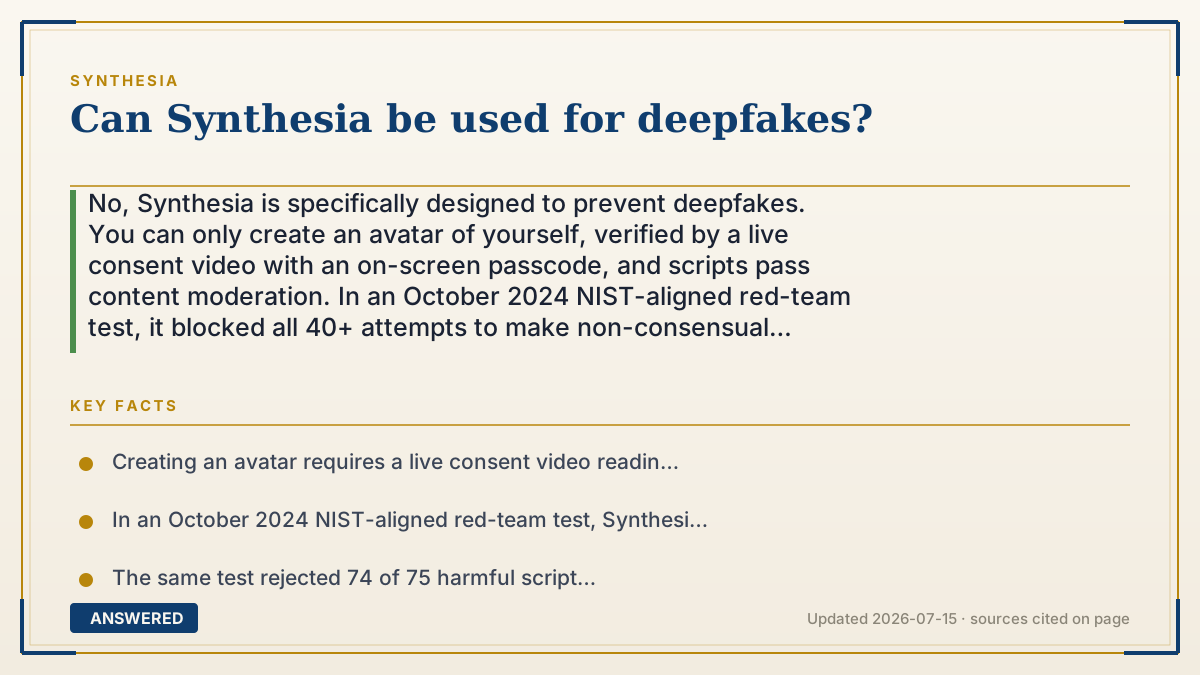
No, Synthesia is specifically designed to prevent deepfakes. You can only create an avatar of yourself, verified by a live consent video with an on-screen passcode, and scripts pass content moderation. In an October 2024 NIST-aligned red-team test, it blocked all 40+ attempts to make non-consensual avatars (including celebrity likenesses) and rejected 74 of 75 harmful scripts.
Why — the first-principles explanation
A 'deepfake' means putting words in someone's mouth without their consent. Synthesia attacks that at the root by making consent a technical requirement of creating any avatar, not a policy you promise to follow.
The core control is liveness-verified consent. To turn a face into an avatar, the same person must record a live video reading a randomly generated on-screen passcode. Because the passcode is fresh each time, you can't reuse old footage, and pre-recorded consent is rejected. This is what stops the classic deepfake attack: uploading a politician's or ex-partner's existing video to make them 'say' something. There's no face to clone without a live, consenting person on camera.
The second layer is content moderation of the script. Even for a legitimately created avatar, Synthesia runs submitted scripts through automated detection and human review across categories like fraud, hate, violence, and medical misinformation, so a consenting person still can't use their avatar to spread harmful content at scale.
The proof this works is an independent red team. In October 2024, security experts ran a NIST-aligned test and Synthesia blocked 100% of the 40+ non-consensual avatar attempts, including celebrity likenesses and stitched face/voice combos, and rejected 74 of 75 harmful scripts. That's the opposite of a deepfake tool: a system that actively refuses the deepfake use case. No safeguard is perfect (one misinformation clip slipped through and was fixed), but the design intent and the test results both point the same way, this is built to prevent deepfakes, not enable them.
An example that makes it click
Think of a rubber-stamp maker that will only carve a stamp of your own signature. To order one, you have to walk into the shop and sign a fresh slip while they watch, holding up a random number they just gave you (the live consent video with a passcode). You can't mail in an old signature, and you definitely can't order a stamp of someone else's autograph.
So the one thing a forger wants, a stamp of a victim's signature made from a photo, is exactly what the shop refuses. Synthesia works the same way: it will make a talking version of you, with your live permission, and blocks making a talking version of anyone else.
Key facts
- Creating an avatar requires a live consent video reading a randomly generated on-screen passcode; pre-recorded consent is rejected.
- In an October 2024 NIST-aligned red-team test, Synthesia blocked all 40+ non-consensual avatar attempts, including celebrity likenesses.
- The same test rejected 74 of 75 harmful script submissions across policy categories.
- Scripts pass automated and human content moderation covering fraud, hate, violence, and misinformation.
- Liveness detection prevents substituting stock or pre-recorded footage during avatar creation.
Open the official product site and confirm the current access, plans and terms.
▶ The 60-second explainer (script)
Can Synthesia be used for deepfakes? No, and it's actually built to prevent them. A deepfake means putting words in someone's mouth without their consent, and Synthesia stops that at the root by making consent a technical requirement. To turn any face into an avatar, that same person has to record a live video reading a random passcode shown on screen. The code changes every time, so you can't reuse old footage, and pre-recorded consent is rejected. That blocks the classic attack, uploading a politician's or an ex-partner's existing video to make them say something. There's simply no face to clone without a live, consenting person. On top of that, every script goes through automated and human moderation for fraud, hate, violence, and misinformation. And it's been tested independently: in October 2024, a NIST-aligned red team blocked all forty-plus attempts to make non-consensual avatars, including celebrities, and rejected 74 of 75 harmful scripts. So Synthesia is the opposite of a deepfake tool, it refuses the deepfake use case by design.
What authoritative sources say
People also ask
Can I make a Synthesia video of a celebrity or someone else?
No. You can only create an avatar of a person who records live consent with an on-screen passcode. Attempts to clone celebrities or others without consent are blocked.
How does Synthesia stop deepfakes technically?
Through liveness-verified consent (a live passcode video), rejection of pre-recorded consent, liveness detection against stock footage, and content moderation of every script.
Has Synthesia's anti-deepfake system been tested?
Yes. An October 2024 NIST-aligned red team blocked 100% of 40+ non-consensual avatar attempts and rejected 74 of 75 harmful scripts, with the one miss fixed afterward.
Is any misuse still possible?
No system is perfect, one misinformation clip slipped past moderation and was corrected, but non-consensual face cloning, the core deepfake risk, is blocked by design.
The same question, asked other ways
- How does Synthesia prevent misuse and deepfakes?