Do I own videos made with Veo?
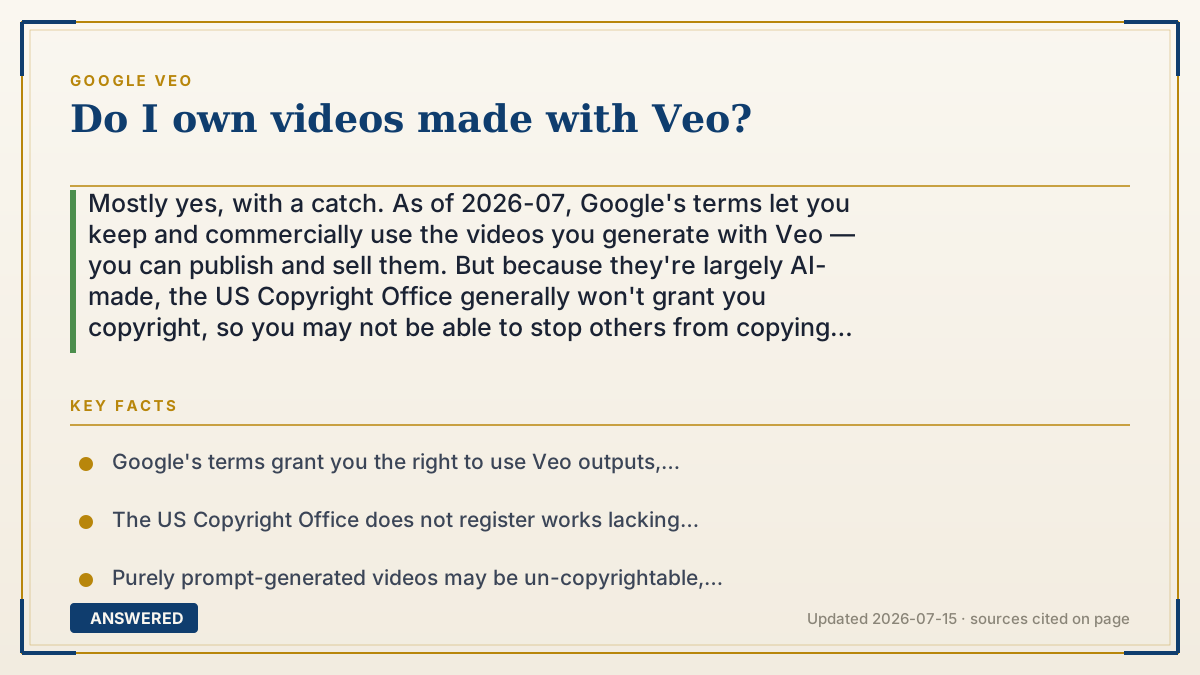
Mostly yes, with a catch. As of 2026-07, Google's terms let you keep and commercially use the videos you generate with Veo — you can publish and sell them. But because they're largely AI-made, the US Copyright Office generally won't grant you copyright, so you may not be able to stop others from copying them.
Why — the first-principles explanation
There are two different questions hiding inside 'do I own it.' The first is usage rights — can I keep this file, publish it, and make money from it? Google answers yes: its terms grant you the right to use your Veo outputs, including commercially, because Google's business is selling the tool, not owning your creations. In practical terms, the video is yours to use.
The second is copyright — can I stop other people from copying it? Here the law, not Google, decides, and the answer is murkier. Copyright protects works of human authorship. When a video is produced mostly by typing a prompt and letting a model generate everything, the US Copyright Office has repeatedly ruled there isn't enough human authorship to register it. So the clip can be legally yours to use while simultaneously being un-copyrightable — meaning a competitor could copy it and you'd have limited recourse.
The way creators strengthen ownership is by adding human authorship: meaningful editing, arrangement, combining Veo clips with your own footage, music, and narration. The more human creative choices layered on top, the stronger the argument that the final work is protectable. There's also a provenance layer — Veo's SynthID watermark stays embedded — but that's about identifying AI content, not about who owns it. So the honest summary: you own the right to use and sell it; you may not own an enforceable copyright.
An example that makes it click
Imagine you use a vending machine that prints a poster from a slogan you type. The machine's owner says, 'Take the poster, sell it, hang it wherever — it's yours to use.' That's Google's usage grant. But the town's trademark office says, 'A poster spat out by a machine from one sentence isn't your original artwork, so we won't register it as yours.' That's copyright.
So you can sell the poster at your shop, but you can't sue the shop next door for printing the same one. If you cut it up, add your own hand-drawn border, and rearrange it, though, now it looks more like your creation — and the office is more willing to protect it.
How to do it
- Read Google's terms for the product you use (Gemini app, Flow, or Vertex AI) to confirm your usage rights.
- Keep your prompts, input images, and project files as evidence of your creative input.
- Add substantial human authorship: edit, arrange, combine clips, and add your own music or narration.
- Avoid generating real people's likenesses or trademarked characters, which carry separate legal risks.
- For high-stakes commercial work, consult an IP attorney about copyright registration.
Key facts
- Google's terms grant you the right to use Veo outputs, including for commercial purposes, as of 2026-07.
- The US Copyright Office does not register works lacking sufficient human authorship.
- Purely prompt-generated videos may be un-copyrightable, limiting your ability to stop copying.
- Adding meaningful human editing and arrangement strengthens a copyright claim.
- All Veo outputs retain an embedded SynthID watermark identifying them as AI-generated.
Open the official product site and confirm the current access, plans and terms.
▶ The 60-second explainer (script)
Do you own the videos you make with Veo? Mostly yes — with an important catch. Google's terms let you keep, publish, and even sell your Veo videos, so the file is yours to use commercially. But 'owning the right to use it' isn't the same as 'owning the copyright.' Copyright protects human creativity, and when a video is made mostly by typing a prompt, the US Copyright Office generally rules there isn't enough human authorship to register it. That means the clip is legally yours to use, but a competitor could copy it and you might have little recourse. The fix? Add real human work — edit it, combine it with your own footage, music, and narration. The more of you that's in the final video, the stronger your ownership.
What authoritative sources say
People also ask
Can I sell videos I make with Veo?
Yes. Google's terms permit commercial use of your Veo outputs, including selling and publishing them.
Can I copyright a Veo video?
Generally not if it's purely AI-generated. Adding substantial human editing and arrangement can strengthen a claim.
Can someone else copy my Veo video legally?
Possibly, if it isn't copyrightable. Human-edited, combined works are better protected against copying.
Does Google claim ownership of my videos?
No. Google grants you usage rights; it doesn't take ownership of the videos you generate.