How to spot a deepfake video?
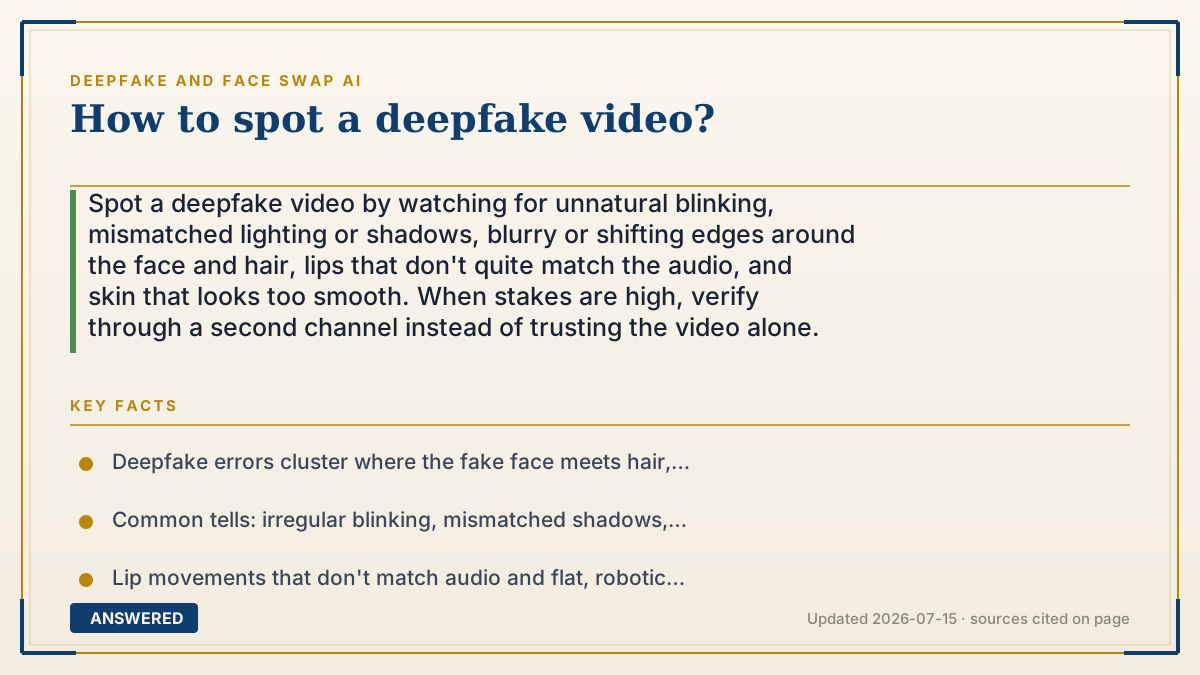
Spot a deepfake video by watching for unnatural blinking, mismatched lighting or shadows, blurry or shifting edges around the face and hair, lips that don't quite match the audio, and skin that looks too smooth. When stakes are high, verify through a second channel instead of trusting the video alone.
Why — the first-principles explanation
Deepfakes are convincing on the face but weak on physics and consistency. The AI focuses its effort on the face region, so the telltale errors show up where the fake face meets the real world: edges, lighting, reflections, and timing.
Edges and blending are the first place to look. The boundary where the swapped face meets hair, ears, glasses, or the neck is hard to render perfectly, so you may see slight blur, a color mismatch, or a 'mask' that shifts when the head turns. Hair strands and teeth are notoriously hard for models to reproduce cleanly.
Lighting and reflections must obey physics, and fakes often don't. Shadows may fall the wrong way, skin can look oddly uniform or waxy, and the reflections in the two eyes may not match the room or each other. Blinking can be too rare, too frequent, or slightly mistimed because the model learned an average rather than a real rhythm.
Audio-visual sync is a strong tell for talking videos: watch whether lip movements precisely match the words, and listen for a flat, robotic, or oddly-paced voice. Because detection by eye is getting harder as tools improve, the most reliable defense for anything important, an urgent request, a shocking clip, is to verify through another channel: call the person back on a known number, or confirm the claim with a trusted source before acting.
An example that makes it click
Think of a deepfake like a really good sticker of a face pressed onto a moving photo. The sticker itself can look great, but look at its edges: where it meets the hair or the collar, you might catch a faint outline, a smudge, or a spot where the sticker slides a little when the head tilts.
And like a sticker under a lamp, the light won't line up perfectly. If the room light comes from the left but the face is lit from the front, or the two eyes reflect different windows, your brain says 'something's off.' Trust that feeling, and if it matters, pick up the phone to check.
How to do it
- Watch the eyes: look for too little or too much blinking and eye reflections that don't match the scene.
- Inspect edges: check the boundary around the face, hair, ears, and glasses for blur, color shifts, or a mask that slides.
- Check lighting and skin: flag shadows falling the wrong way and skin that looks waxy or unnaturally smooth.
- Test lip-sync and voice: see if the mouth matches the words and listen for a flat or robotic tone.
- Slow it down: pause and step through frames, where flicker and warping around the jaw often appear.
- Verify out of band: for anything urgent or high-stakes, confirm via a known phone number or trusted second source.
Key facts
- Deepfake errors cluster where the fake face meets hair, ears, glasses, and neck.
- Common tells: irregular blinking, mismatched shadows, waxy skin, and inconsistent eye reflections.
- Lip movements that don't match audio and flat, robotic voices signal talking-head fakes.
- As tools improve, visual tells shrink, so out-of-band verification is the most reliable defense.
- Provenance standards like C2PA Content Credentials can confirm whether media was AI-altered.
▶ The 60-second explainer (script)
Deepfakes look great on the face but stumble on physics. Here's what to check. Start with the eyes: unnatural blinking, too much or too little, and reflections in the two eyes that don't match the room. Next, the edges. Where the fake face meets the hair, ears, or collar, look for blur, a color mismatch, or a mask that slides when the head turns. Hair and teeth are especially hard to fake. Then lighting: shadows falling the wrong way, or skin that looks waxy and too smooth. For talking videos, watch the lips, do they match the words, and listen for a flat, robotic voice. Slow the clip down and step through frames to catch warping around the jaw. But here's the honest truth: as the tech improves, your eyes alone aren't enough. For anything urgent or shocking, verify through another channel, call the person on a number you know before you act.
What authoritative sources say
People also ask
What's the easiest deepfake tell to check?
The face edges. Look at where the face meets hair, ears, and collar for blur, color mismatch, or a mask that shifts when the head moves.
Do deepfakes still get blinking wrong?
Sometimes. Early deepfakes rarely blinked; modern ones blink but can still mistime it. Treat odd blinking as one clue among several, not proof.
Can I always spot a deepfake by eye?
No. Quality keeps improving, so visual checks can fail. For high-stakes situations, verify the claim through a separate, trusted channel.
What is C2PA / Content Credentials?
It's a provenance standard that attaches tamper-evident history to media, helping show whether an image or video was AI-generated or edited.
The same question, asked other ways
- What visual clues reveal a deepfake?
- How do you detect a deepfake video?