Is Stable Diffusion legal?
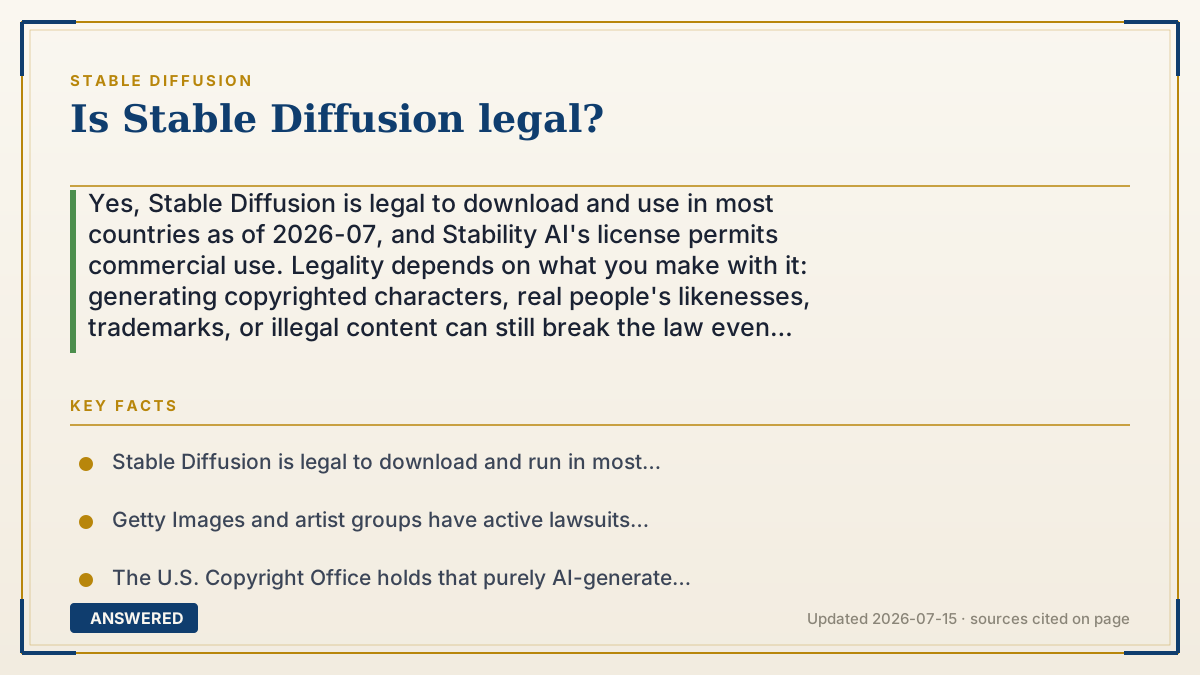
Yes, Stable Diffusion is legal to download and use in most countries as of 2026-07, and Stability AI's license permits commercial use. Legality depends on what you make with it: generating copyrighted characters, real people's likenesses, trademarks, or illegal content can still break the law even though the tool itself is lawful.
Why — the first-principles explanation
Whether a tool is legal and whether a specific use is legal are two separate questions. Stable Diffusion as software is lawful to own and run; there is no law banning image-generation models in most jurisdictions. Stability AI even licenses it for free commercial use under $1M revenue.
The unsettled legal debate is about how the model was trained. Stable Diffusion learned from billions of images scraped from the web, some copyrighted. Getty Images and groups of artists have sued Stability AI, arguing that training on their images without permission is infringement. Courts in the U.S., UK, and EU are still working through these cases, and outcomes may reshape the rules. So far, no ruling has made using the model illegal for end users.
A separate settled point is copyright of outputs. The U.S. Copyright Office has stated that images generated purely by AI, without meaningful human authorship, are not eligible for copyright protection. That doesn't make generating them illegal; it means you may not be able to stop others from copying them.
Finally, your specific outputs can be illegal regardless of the tool. Creating a real person's face without consent (deepfakes), reproducing a trademarked logo, copying a specific artist's protected character, or making illegal material can all break existing laws. The tool is legal; misuse is not.
An example that makes it click
A camera is completely legal to own. But if you use it to photograph counterfeit money or secretly film someone in a locker room, you have broken the law, not because the camera is illegal, but because of what you did with it.
Stable Diffusion is the camera. Making a fantasy landscape is fine. Making a fake nude photo of a real classmate is a crime in many places. Same tool, very different legality, decided entirely by what you point it at.
How to do it
- Use the tool for original content, not copies of protected characters, logos, or real people.
- Read the model's license and Acceptable Use Policy before commercial projects.
- Do not create deepfakes of real people without their clear consent.
- For business use, keep revenue under $1M to stay within the free Community License or buy an Enterprise License.
- When in doubt about a specific commercial use, consult a lawyer familiar with your country's copyright and publicity laws.
Key facts
- Stable Diffusion is legal to download and run in most countries as of 2026-07; no major jurisdiction bans it.
- Getty Images and artist groups have active lawsuits against Stability AI over training data, still unresolved.
- The U.S. Copyright Office holds that purely AI-generated images without human authorship cannot be copyrighted.
- Stability AI's Community License and Acceptable Use Policy explicitly permit lawful commercial use.
- Generating deepfakes, trademarks, or copyrighted characters can be illegal regardless of the tool.
Open the official product site and confirm the current access, plans and terms.
▶ The 60-second explainer (script)
Is Stable Diffusion legal? Yes, the tool itself is legal to download and use in almost every country, and Stability AI even licenses it for free commercial use if you earn under a million dollars a year. But legality has layers. There's an ongoing legal fight over how the model was trained. Getty Images and groups of artists have sued Stability AI, arguing it learned from copyrighted images without permission. Those cases are still in court, and no ruling has made using the model illegal for regular people. What can get you in trouble is what you create. Making a fake image of a real person without consent, copying a company's logo, or reproducing a protected cartoon character can break the law no matter what tool you used. So the tool is lawful. Keep your creations original and consent-based, and you stay on the right side of the line.
What authoritative sources say
People also ask
Can I be sued just for using Stable Diffusion?
Using the tool alone has not been ruled illegal. The lawsuits target Stability AI over training data, not everyday users making original images.
Are AI images copyrighted?
In the U.S., fully AI-generated images without meaningful human authorship are not copyrightable, so you may not be able to stop others from copying them.
Is making deepfakes with it legal?
Often no. Many places have laws against non-consensual deepfakes of real people, especially explicit ones. The tool being legal does not make deepfakes legal.
Can I legally sell what I generate?
Yes, if your revenue is under $1M and your images don't copy protected characters, logos, or real people. Above $1M you need an Enterprise License.