What happened to Udio?
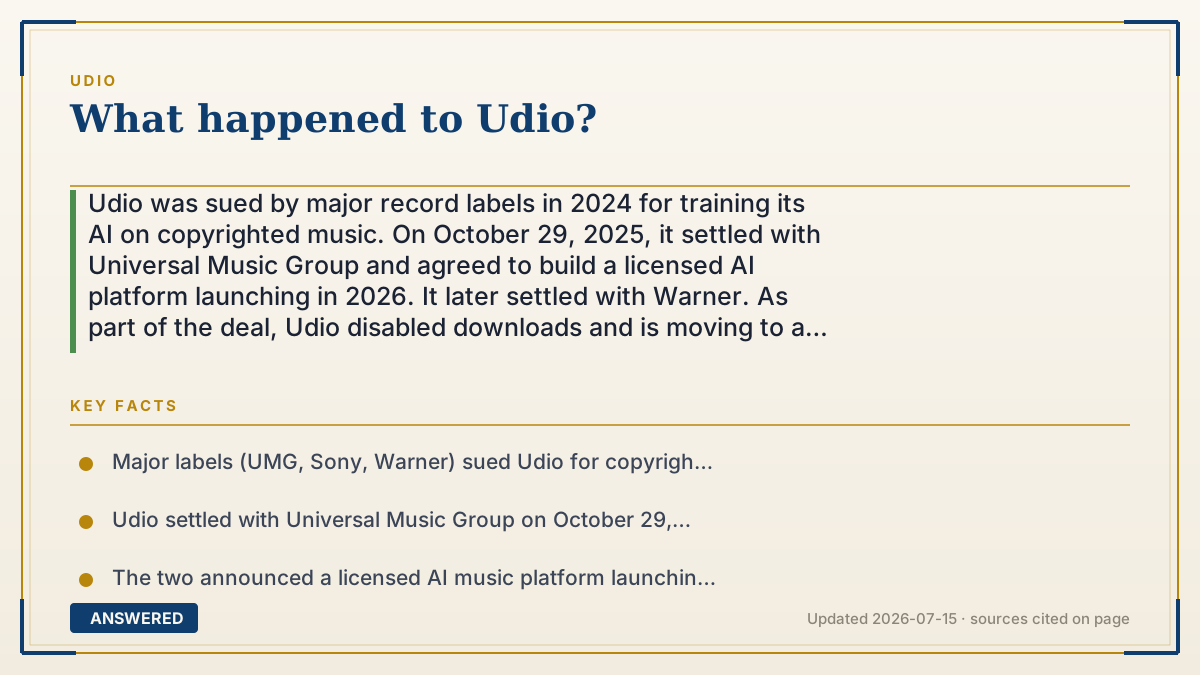
Udio was sued by major record labels in 2024 for training its AI on copyrighted music. On October 29, 2025, it settled with Universal Music Group and agreed to build a licensed AI platform launching in 2026. It later settled with Warner. As part of the deal, Udio disabled downloads and is moving to a 'walled garden,' angering many users.
Why — the first-principles explanation
What happened to Udio is a story about AI colliding with copyright. To make convincing music, Udio trained on a vast library of recordings. In June 2024, Universal Music Group, Sony, and Warner sued Udio (and rival Suno), alleging mass copyright infringement from using their songs without permission.
Rather than fight to the end, Udio settled with UMG on October 29, 2025. Instead of just paying damages, the two agreed to partner on a licensed AI music platform launching in 2026, trained on authorized music, with revenue flowing to artists and songwriters. Udio later reached a deal with Warner as well.
The settlement reshaped the product overnight. Udio added fingerprinting and filtering and, most controversially, disabled downloads of audio, video, and stems, moving toward a 'walled garden' where users stream creations inside the app but cannot export them. A brief 48-hour download window in early November 2025 let users save pre-settlement songs.
Users reacted with backlash, since many had built workflows around downloading and distributing tracks. To soften the blow, Udio raised credit limits and gave subscribers a one-time 1,000 non-expiring credit grant. As of 2026-07, Udio is operational but in transition, awaiting the full licensed launch.
An example that makes it click
What happened to Udio is like a popular food truck that got caught using recipes it didn't own. Instead of getting shut down, it struck a deal with the recipe owners to go legit. But the new rules changed the experience: you can still buy and eat the food at the truck, but you can no longer take any home in a to-go box. Loyal customers who loved takeout were upset, so the truck handed out bonus meal tickets to smooth things over while it rebuilds as a fully licensed kitchen.
Key facts
- Major labels (UMG, Sony, Warner) sued Udio for copyright infringement in June 2024.
- Udio settled with Universal Music Group on October 29, 2025.
- The two announced a licensed AI music platform launching in 2026, with a Warner deal to follow.
- Udio added fingerprinting and filtering and disabled downloads of audio, video, and stems.
- A 48-hour download window opened in early November 2025 for pre-settlement songs.
- Subscribers received a one-time 1,000 non-expiring credit grant plus higher credit limits.
Open the official product site and confirm the current access, plans and terms.
▶ The 60-second explainer (script)
What happened to Udio? It's a copyright story. To make great music, Udio trained its AI on a huge library of recordings. In June 2024, Universal Music Group, Sony, and Warner sued Udio and rival Suno for mass copyright infringement. Rather than fight to the finish, Udio settled with Universal on October 29, 2025, and instead of just paying up, the two agreed to build a licensed AI music platform launching in 2026, trained on authorized music, with money flowing back to artists. Udio later settled with Warner too. But the deal changed the product fast: Udio added fingerprinting and filtering and, most controversially, disabled downloads, moving to a walled garden where you stream inside the app but can't export. A brief 48-hour window let users save older songs. Fans were angry, so Udio raised credit limits and gave subscribers a bonus of 1,000 credits that never expire. As of July 2026, Udio still works, but it's in transition, waiting for its full licensed launch.
What authoritative sources say
People also ask
Is Udio shut down?
No. Udio is still operational as of 2026-07, but it is in a transition period toward a licensed platform launching in 2026.
Why did people get upset?
Udio disabled downloads and moved to a walled garden, breaking workflows for users who relied on exporting and distributing songs.
Did Udio lose the lawsuits?
It settled rather than losing outright, agreeing to build licensed platforms with UMG and Warner instead of continuing to litigate.
What did users get in return?
Higher credit limits (Standard to 2,400, Pro to 6,000) and a one-time grant of 1,000 non-expiring credits.