Are Canva AI images copyright protected?
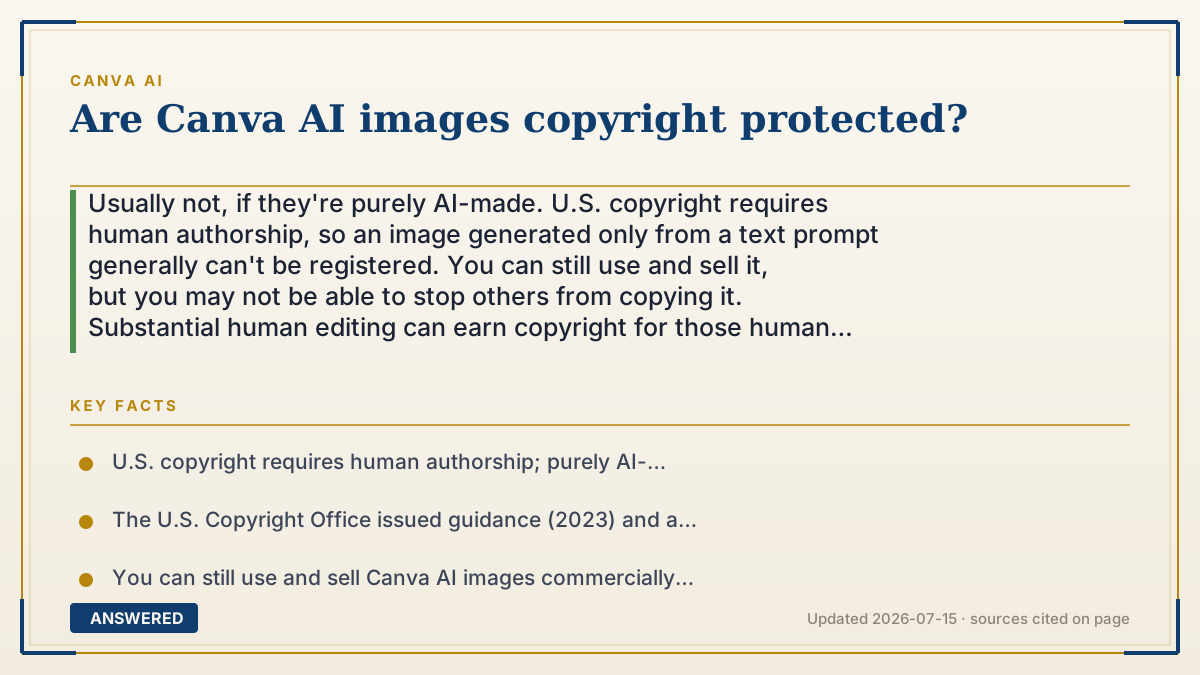
Usually not, if they're purely AI-made. U.S. copyright requires human authorship, so an image generated only from a text prompt generally can't be registered. You can still use and sell it, but you may not be able to stop others from copying it. Substantial human editing can earn copyright for those human contributions.
Why — the first-principles explanation
Copyright protects human creativity, not machine output. The U.S. Copyright Office has repeatedly held that a work needs a human author to be registered, and that typing a prompt is more like commissioning than authoring—you describe what you want, but the AI makes the expressive choices. So a straight text-to-image generation typically falls into the public-domain-like gap: no one holds a copyright on it.
This is separate from permission to use it. Canva's terms let you use and sell the image commercially. Copyright is a different right—the power to stop others from copying. Losing copyright doesn't stop you from using the image; it stops you from suing a copycat. For a marketing graphic, that rarely matters; for a signature brand mascot, it might.
The door reopens with human authorship. If you meaningfully edit, arrange, combine, or build on the AI image—adding original elements, retouching, composing a larger design—the parts you created can be protected, even if the raw AI layer isn't. Courts and the Copyright Office look for a real human creative footprint, not a token tweak.
An example that makes it click
Think of an AI image like a photo taken by a chimpanzee who grabbed a camera—there's a famous real case where the monkey selfie couldn't be copyrighted because no human took it. The picture exists and people can use it, but nobody 'owns' the shot. Canva AI images are similar: the machine made them, so there's no human author to hold the copyright.
But if you take that image, paint over it, add your own hand-drawn logo, and arrange it into a poster, the poster—your creative work—can be protected, even though the raw AI layer underneath isn't.
How to do it
- Understand the default: a purely prompt-generated image generally can't be copyrighted in the U.S.
- If protection matters, add substantial human creativity—editing, original elements, arrangement.
- Keep records of your creative contributions in case you ever register or defend the work.
- When registering with the U.S. Copyright Office, disclaim the AI-generated portions and claim only your human authorship.
- For brand-critical assets, consider commissioning original human artwork instead of relying on raw AI output.
Key facts
- U.S. copyright requires human authorship; purely AI-generated images generally cannot be registered.
- The U.S. Copyright Office issued guidance (2023) and a report (2025) affirming the human-authorship rule.
- You can still use and sell Canva AI images commercially even without copyright.
- Human editing, arrangement, or added original elements can earn copyright for those contributions.
- Canva's terms grant you ownership of the output as a contract matter, which is distinct from copyright.
Open the official product site and confirm the current access, plans and terms.
▶ The 60-second explainer (script)
Are Canva AI images copyright protected? Usually not, if they're made purely from a prompt. Here's why. In the United States, copyright only protects things a human creates. When you type a description and the AI paints the picture, the law sees the machine—not you—as making the creative choices. So there's no human author, and that means no copyright to register. Now, don't panic: you can still use and even sell that image. Copyright is a separate power—the right to stop others from copying you. Without it, you just can't sue a copycat. For a marketing graphic, that rarely matters. But here's the workaround: if you meaningfully edit the image—retouch it, add your own original elements, arrange it into a bigger design—the parts you personally created can be protected. So the AI layer stays unprotected, but your human creativity on top of it can earn real copyright.
What authoritative sources say
People also ask
If I can't copyright it, can I still use it?
Yes. Canva's terms let you use and sell AI output commercially. You just can't stop others from copying the raw AI image.
How do I get copyright on my AI design?
Add substantial human creativity—original edits, elements, and arrangement—and register only your human-authored contributions, disclaiming the AI parts.
Does Canva own the copyright instead?
No. Canva doesn't claim copyright over your output. In many cases no one holds copyright on a purely AI-made image.
Is this the same in every country?
No. This reflects U.S. law. Some jurisdictions treat AI-assisted works differently, so check local rules for important assets.