Can I use Leonardo AI for commercial use?
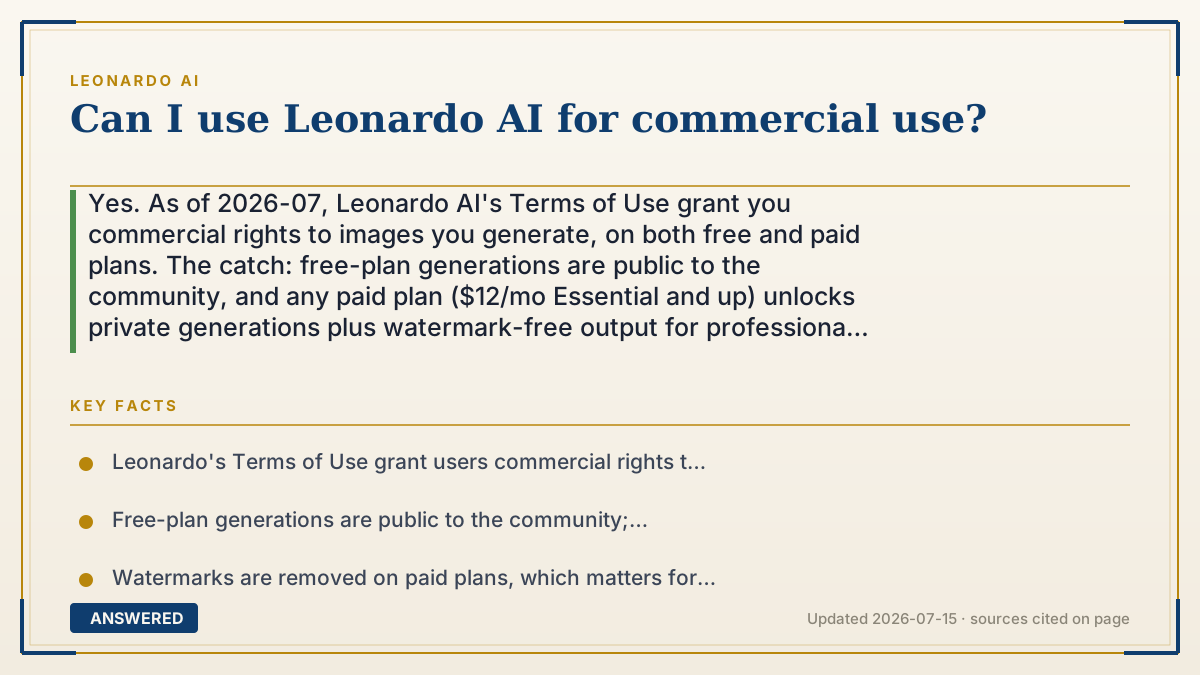
Yes. As of 2026-07, Leonardo AI's Terms of Use grant you commercial rights to images you generate, on both free and paid plans. The catch: free-plan generations are public to the community, and any paid plan ($12/mo Essential and up) unlocks private generations plus watermark-free output for professional use.
Why — the first-principles explanation
A generative image tool sits on top of a legal contract. When you sign up, you agree to Leonardo's Terms of Use, and that contract is what actually decides who may sell or publish the pictures. Leonardo's business model is subscriptions, so it has an incentive to make outputs commercially usable — a tool you couldn't earn money with would lose paying customers. That is why the company grants users broad rights to their generations rather than keeping those rights for itself.
There are two different legal ideas people mix up. One is usage rights — permission from Leonardo to use, sell, and distribute the image. Leonardo grants you these. The other is copyright — the exclusive legal ownership registered with a government. In the United States, the Copyright Office requires meaningful human authorship, so a picture made only by typing a prompt usually cannot be registered as your copyright. You can still sell it; you just may not be able to stop others from copying it.
The practical dividing line is the plan tier. On the free plan, generations are public — visible to the community feed — which is fine for practice but awkward for client work. Any paid plan adds a private mode and removes watermarks, which is why businesses upgrade. Third-party models (like Veo or Kling video) can carry their own terms, so high-stakes commercial projects should always be double-checked against the current policy.
An example that makes it click
Think of Leonardo like a rental art studio. When you pay for a room (a paid plan), whatever you paint inside is yours to sell at the market, and nobody peeks in — that's the private mode. In the free corner of the studio, you can still take your painting to market and sell it, but the studio hangs a copy on its public wall for everyone to see, and stamps a small logo in the corner.
Selling the painting (usage rights) is allowed. But if a stranger photographs your painting and prints their own copies, you might not be able to sue them — because a machine, not a human hand, did most of the brushwork, and the law's 'ownership stamp' (copyright) needs a human artist behind it.
How to do it
- Read Leonardo's current Terms of Use at leonardo.ai before selling any output — terms can change.
- Upgrade to a paid plan (Essential $12/mo or higher) to make generations private and remove watermarks for client work.
- Keep generations on Leonardo's first-party models (Phoenix, Lucid Origin) for the clearest commercial rights; re-check terms if you use third-party models like Veo 3 or Kling.
- Avoid prompts that copy living artists' names, brand logos, or real people's likenesses to reduce trademark and right-of-publicity risk.
- For products you plan to trademark or license, add substantial human editing so a human-authorship copyright claim is stronger.
Key facts
- Leonardo's Terms of Use grant users commercial rights to images they generate, on free and paid tiers (as of 2026-07).
- Free-plan generations are public to the community; private generations require a paid plan starting at $12/mo (Essential).
- Watermarks are removed on paid plans, which matters for professional and client deliverables.
- The US Copyright Office requires human authorship, so purely prompt-generated images generally cannot be registered for copyright.
- Leonardo.Ai has been owned by Canva since the acquisition announced July 29, 2024.
- Third-party models (e.g., Veo 3, Kling) may carry separate usage terms distinct from Leonardo's own models.
Open the official product site and confirm the current access, plans and terms.
▶ The 60-second explainer (script)
Yes, you can use Leonardo AI images for commercial work. When you sign up, Leonardo's Terms of Use hand you the right to sell and publish the pictures you generate — on both free and paid plans. Here's the nuance. On the free plan, your creations are public to the community, and they carry a watermark. Any paid plan, starting at twelve dollars a month, makes your work private and removes that watermark, which is why freelancers and businesses upgrade. But watch one trap: selling an image is not the same as owning its copyright. In the United States, copyright needs a human author, so a picture made just by typing a prompt usually can't be registered as yours — meaning you can sell it, but you may not be able to stop copycats. So: generate freely, upgrade for private client work, avoid copying real brands or people, and always skim the current terms before a big project.
What authoritative sources say
People also ask
Do I need a paid plan to use images commercially?
No — the usage rights exist on the free plan too. But free generations are public and watermarked, so most people upgrade to a paid plan ($12/mo+) for private, watermark-free output.
Can I copyright the images I sell?
In the US, usually not if the image is purely AI-generated, because copyright requires human authorship. You can still sell it; you just may not be able to stop others from copying it.
Is it safe to use Leonardo images on print-on-demand or stock sites?
Generally yes for Leonardo's own models, but some marketplaces restrict AI content, and third-party models may have separate terms — check both the platform's and Leonardo's current rules.
Can I use Leonardo images of real celebrities or brand logos commercially?
No, that invites right-of-publicity and trademark problems regardless of Leonardo's terms. Stick to original, generic subjects for commercial work.