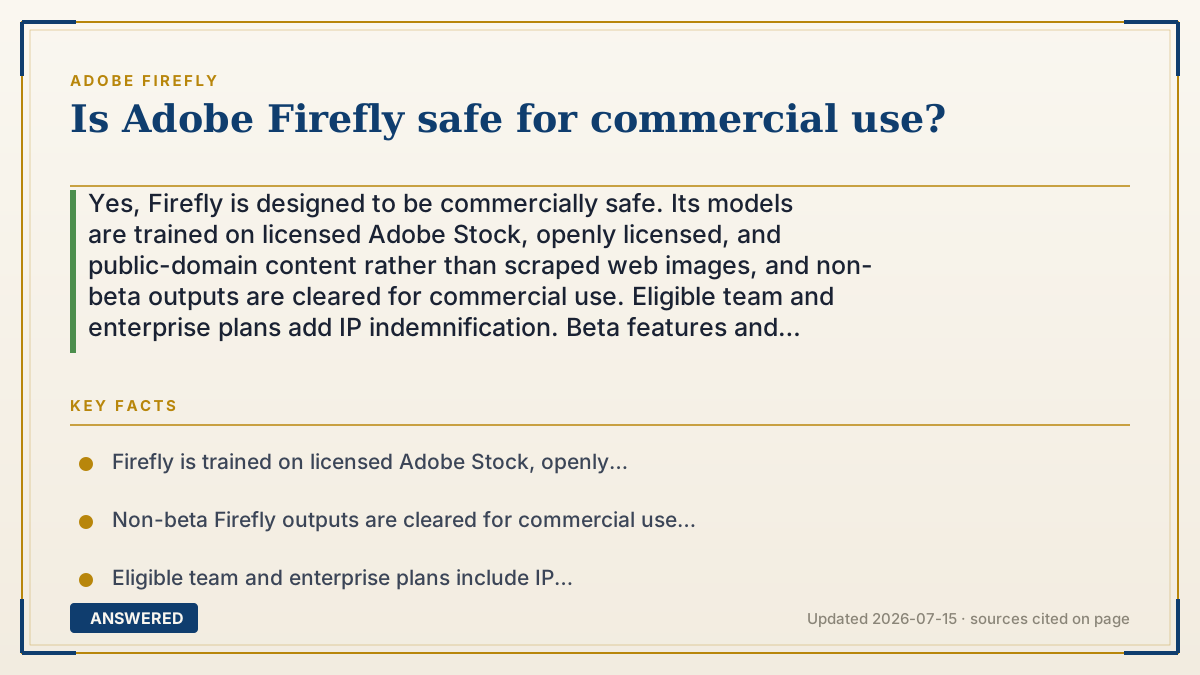
Is Adobe Firefly safe for commercial use?
Yes, Firefly is designed to be commercially safe. Its models are trained on licensed Adobe Stock, openly licensed, and public-domain content rather than scraped web images, and non-beta outputs are cleared for commercial use. Eligible team and enterprise plans add IP indemnification. Beta features and free-plan watermarks are the main caveats.
Why — the first-principles explanation
"Commercially safe" is really a statement about legal risk from training data. Many AI generators learned from copyrighted images scraped off the internet, so their outputs can resemble protected work and trigger infringement claims against whoever used them. Firefly attacks this at the root: Adobe curated its training set from Adobe Stock (which it licenses), openly licensed work, and public-domain content, and says it doesn't train on general web scrapes or your private files.
Because the inputs are cleared, Adobe is willing to tell businesses the outputs are fine for commercial projects. This is a risk-reduction claim, not a zero-risk guarantee: no generator can promise an output will never coincidentally resemble something, but a licensed training set makes that far less likely.
For its most demanding customers, Adobe adds a financial backstop: eligible teams and enterprise plans include IP indemnification, meaning Adobe agrees to help defend certain copyright claims tied to Firefly output. Individual free and paid users get commercial-use rights but not this indemnification.
The caveats are specific. Beta-labeled features may be excluded from commercial-use permission and are not indemnified. And on the free plan, downloads are watermarked, which doesn't affect legality but looks unprofessional. Note that debates about unrelated content on the Adobe Stock marketplace don't change Firefly's own training-data policy.
An example that makes it click
Think of two food trucks. One buys ingredients from a supplier that can prove every item was sourced legally (Firefly). The other grabs mystery ingredients from unmarked crates behind the market (a web-scraped model). Both make tacos, but if a health inspector asks where the beef came from, only the first truck has receipts. When you sell those tacos, the receipts are what protect you.
For its biggest catering clients, the first truck even signs a note: "If anyone questions our sourcing, we'll stand with you" (indemnification). Smaller walk-up customers get the same clean ingredients but not the signed note.
Key facts
- Firefly is trained on licensed Adobe Stock, openly licensed, and public-domain content, not general web scrapes.
- Non-beta Firefly outputs are cleared for commercial use on free and paid plans (as of 2026-07).
- Eligible team and enterprise plans include IP indemnification for Firefly output; individual plans do not.
- Beta-labeled features may be excluded from commercial use and are not indemnified.
- Free-plan downloads carry a watermark, which affects appearance but not commercial legality.
Open the official product site and confirm the current access, plans and terms.
▶ The 60-second explainer (script)
Is Adobe Firefly safe for commercial use? Yes, and here's exactly what that means. When people say an AI tool is commercially safe, they're really talking about legal risk from the training data. A lot of AI image tools learned from copyrighted pictures scraped off the web, so their outputs can accidentally copy protected art, and that risk lands on you. Firefly is built differently. Adobe trained it on licensed Adobe Stock images, openly licensed material, and public-domain content, and it says it doesn't use random web scraping. Because the inputs are cleared, non-beta outputs are approved for commercial projects, even on the free plan. For its biggest customers, Adobe goes further: eligible team and enterprise plans include IP indemnification, meaning Adobe helps defend certain copyright claims. Just watch two things. Features labeled beta may not be cleared for commercial use, and free-plan downloads have a watermark, which doesn't affect legality but looks unfinished. Bottom line: for commercial work, Firefly is one of the safest choices out there.
What authoritative sources say
People also ask
Does Adobe guarantee I won't be sued?
Only eligible teams and enterprise customers get IP indemnification. Individual users get commercial-use rights, and the licensed training set greatly reduces, but can't eliminate, all risk.
Are beta features commercially safe?
Not necessarily. Beta-labeled features may be excluded from commercial-use permission and are not indemnified. Check the product's labeling before using them commercially.
Why is Firefly safer than other AI generators?
Because it's trained on licensed Adobe Stock, openly licensed, and public-domain content rather than scraped copyrighted images, lowering infringement risk.
Does the free-plan watermark affect commercial rights?
No. The watermark affects appearance, not legality. Free images can be used commercially, though most businesses upgrade for clean files.