Is Lovable good for building an mvp?
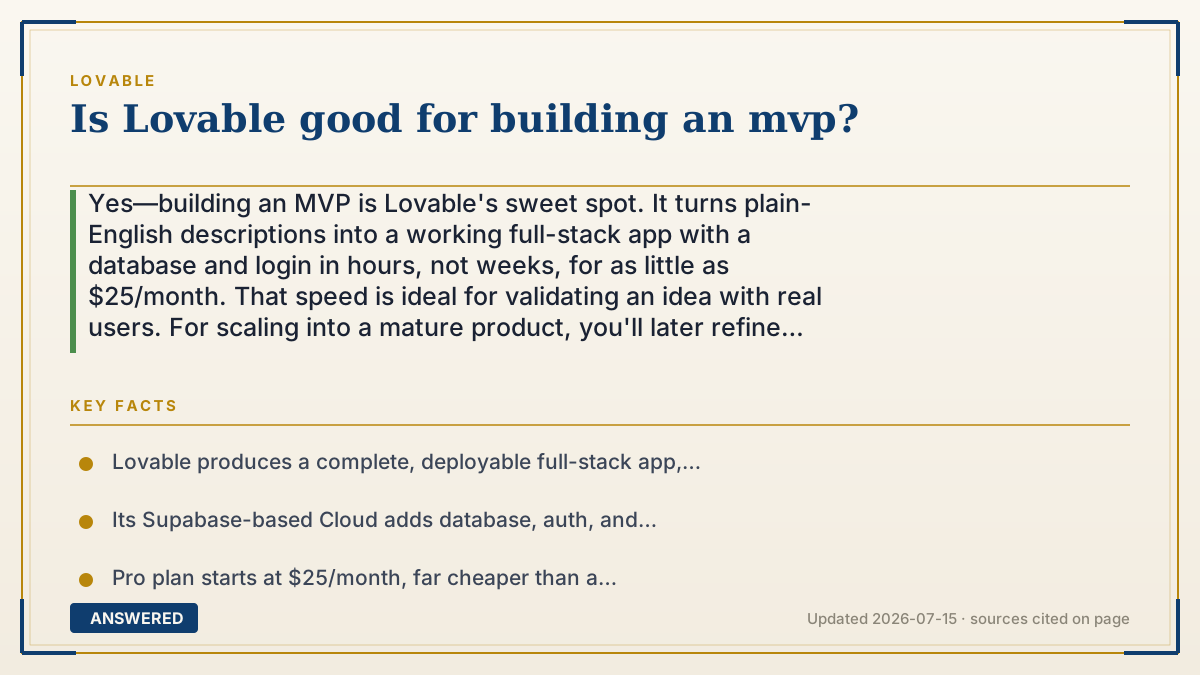
Yes—building an MVP is Lovable's sweet spot. It turns plain-English descriptions into a working full-stack app with a database and login in hours, not weeks, for as little as $25/month. That speed is ideal for validating an idea with real users. For scaling into a mature product, you'll later refine security, testing, and complex features.
Why — the first-principles explanation
An MVP (minimum viable product) exists to answer one question fast: do people want this? Its value is speed and learning, not polish or scale. Lovable is tuned exactly for that job—it collapses the slow first build into a conversation, so you can put something real in front of users quickly and cheaply.
What makes it MVP-ready is that it produces a complete, deployable app, not just a mockup. Through its Supabase-based Cloud, it adds the database, authentication, and hosting an MVP needs to actually be used—so you can test real sign-ups and real data, not a clickable prototype. And because you own the code, a validated MVP doesn't have to be rebuilt from scratch; you extend the same codebase.
The limits show up after validation. As the app grows complex, you'll need to harden security (like database access rules), add tests, and possibly bring in a developer for tricky features or scale. That's normal for any MVP-to-product journey. The right mental model: Lovable is superb for getting to a testable MVP fast, and a solid launching pad—via GitHub export—for the engineering that follows.
An example that makes it click
Building an MVP with Lovable is like using a food truck to test a restaurant concept. Instead of signing a lease and building a full kitchen (months of engineering), you get a working truck serving real customers this week. You learn fast whether people actually buy your tacos.
If the tacos sell, you keep the recipes (you own the code) and invest in a proper restaurant—better equipment, more staff, stricter health standards (security, testing, scale). Lovable gets you the food truck fast; the restaurant build-out comes only after you've proven demand.
How to do it
- Write a one-paragraph description of your MVP's core feature and target user.
- Build the main flow in Lovable, one screen at a time.
- Add a database and login so users can sign up and save real data.
- Publish with one click and share the link with test users.
- Collect feedback and iterate quickly using your credits.
- Once validated, export to GitHub and harden security, tests, and scale.
Key facts
- Lovable produces a complete, deployable full-stack app, not just a mockup.
- Its Supabase-based Cloud adds database, auth, and hosting an MVP needs.
- Pro plan starts at $25/month, far cheaper than a development team.
- You own the code, so a validated MVP can be extended, not rebuilt.
- Scaling to a mature product still requires security hardening, testing, and possibly a developer.
Open the official product site and confirm the current access, plans and terms.
▶ The 60-second explainer (script)
Is Lovable good for building an MVP? Yes—it's practically what Lovable was made for. An MVP's whole job is to answer one question fast: do people actually want this? Lovable lets you turn a plain-English description into a real, working full-stack app—with a database, login, and hosting—in hours instead of weeks, starting at just twenty-five dollars a month. That means you can put something real in front of users and learn quickly, instead of spending months coding a guess. And because it builds a complete deployable app, not just a mockup, you can test real sign-ups and real data. Best of all, you own the code, so if the idea works, you extend the same app instead of rebuilding it. The heavy engineering—security, testing, scale—comes later, after you've proven demand.
What authoritative sources say
People also ask
How fast can I build an MVP with Lovable?
Often in hours to a few days, since the AI writes the code and sets up the backend for you.
Can real users sign up and use my Lovable MVP?
Yes. Its Cloud backend provides a real database, authentication, and hosting.
What happens after the MVP works?
Export the code to GitHub and harden security, add tests, and scale—possibly with a developer.
Is it cheaper than hiring a developer?
For an early MVP, yes. Pro is $25/month versus the much higher cost of development time.