What are the pros and cons of Perplexity AI?
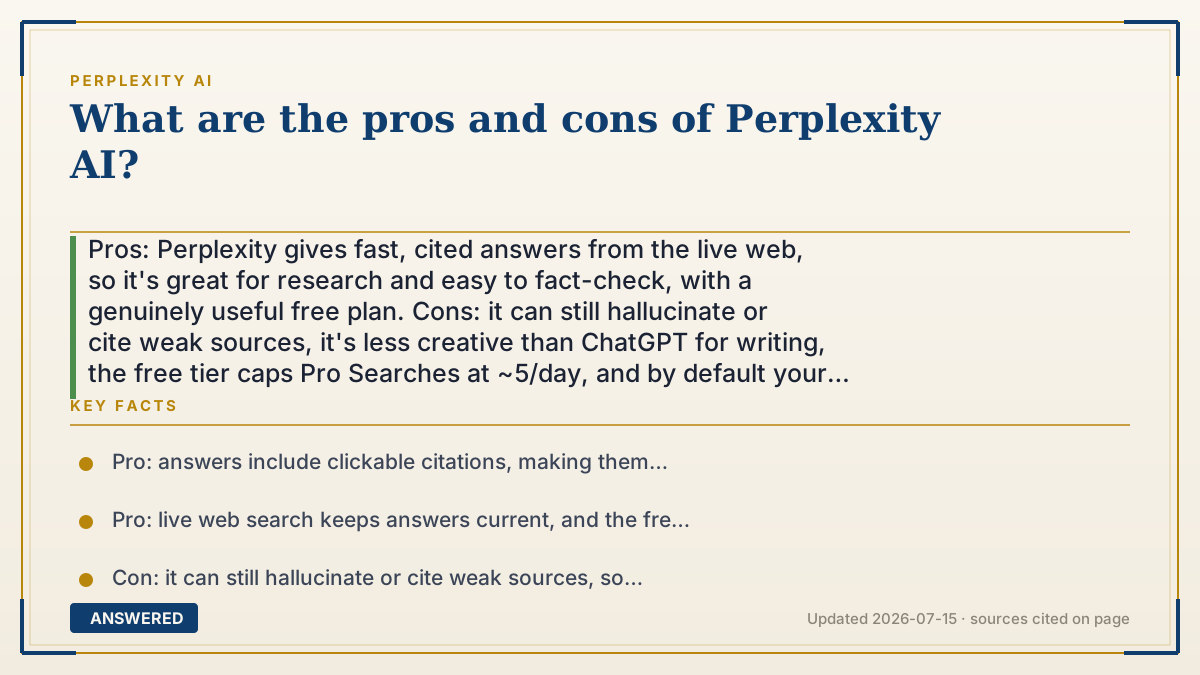
Pros: Perplexity gives fast, cited answers from the live web, so it's great for research and easy to fact-check, with a genuinely useful free plan. Cons: it can still hallucinate or cite weak sources, it's less creative than ChatGPT for writing, the free tier caps Pro Searches at ~5/day, and by default your searches can train its models.
Why — the first-principles explanation
Every tool's strengths and weaknesses come from its core design choice. Perplexity chose to be a cited answer engine built on retrieval-augmented generation. That single decision produces most of its pros: because it searches live and quotes sources, answers are current and verifiable, which is exactly what a search-and-research tool should be. The free plan is generous because a basic cited answer is cheap to serve.
The same design creates the cons. Retrieval reduces hallucination but doesn't eliminate it, the model can still misread a page or lean on a low-quality source, so you must check the citations. And because the tool is tuned for finding and summarizing facts, it's less playful and flexible than a pure chatbot for creative writing, long roleplay, or complex code. Optimizing hard for one job means being second-best at others.
The business model adds a final trade-off. To fund free access, Perplexity limits heavy "Pro Search" and by default uses your queries to improve its models unless you opt out. So the pros (free, cited, current) and the cons (caps, occasional errors, default data use) are two sides of the same coin: a lean, search-first tool that trades creative range and some privacy defaults for speed, freshness, and verifiability.
An example that makes it click
Think of Perplexity as a sports car. The pros and cons come from the same engineering. It's fast, nimble, and perfect for zipping to an answer, because it was built lean and focused. But that same focus means it's not a minivan: it won't haul a soccer team or a creative-writing camping trip as comfortably as a bigger, general-purpose vehicle.
And like any car, you still have to keep your eyes on the road, checking the citations, because even a great car can take a wrong turn. Fast and honest about where it's going, but not built to do absolutely everything.
Key facts
- Pro: answers include clickable citations, making them easy to verify.
- Pro: live web search keeps answers current, and the free plan is genuinely usable.
- Con: it can still hallucinate or cite weak sources, so verification is needed.
- Con: less strong than ChatGPT for creative writing, long conversations, and complex coding.
- Con: free tier limits Pro Searches to about 5/day, and AI Data Retention is on by default.
Try source-backed search first, then compare current Pro/Max research limits, credits and billing before upgrading.
▶ The 60-second explainer (script)
What are the real pros and cons of Perplexity AI? Let's start with the good. The biggest pro: it cites its sources. Every answer comes with clickable footnotes, so you can fact-check instantly, that's huge for research. It also searches the live web, so answers stay current, and the free plan is genuinely useful, not a crippled demo. Now the trade-offs. First, it can still hallucinate or lean on a weak source, so you do have to check those citations. Second, it's laser-focused on finding facts, which means it's less creative than ChatGPT for writing stories, long chats, or heavy coding. Third, the free plan caps you at about five deep searches a day. And fourth, a privacy note: by default, your searches can be used to train its models, though you can switch that off in settings. Bottom line: Perplexity is a fast, honest research tool, brilliant for finding and verifying facts, just not the best pick for creative work.
What authoritative sources say
People also ask
What is Perplexity's biggest advantage?
Its cited, live-search answers. You can click the footnotes to verify facts, which makes it strong for research and fact-checking.
What is its biggest weakness?
It can still occasionally hallucinate or cite weak sources, and it's less creative than general chatbots for writing and coding.
Is the free plan good enough?
For light users, yes. But the ~5 Pro Searches per day cap and default data retention are the main drawbacks to weigh.