Who owns the copyright of DALL-E images?
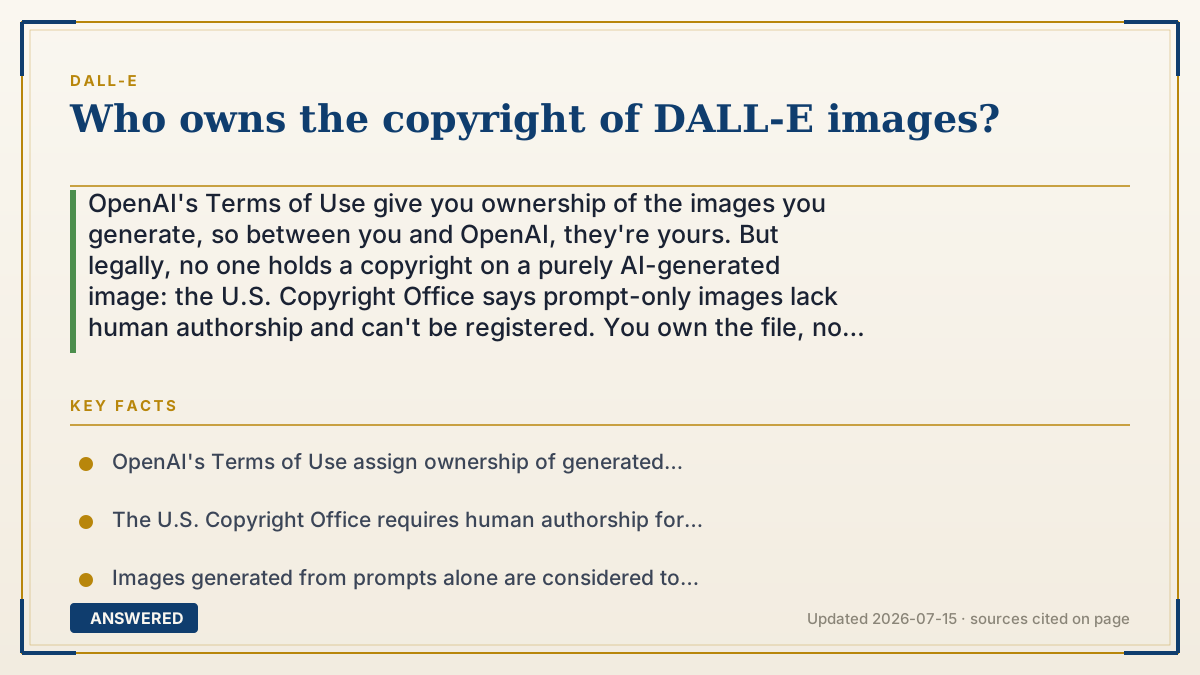
OpenAI's Terms of Use give you ownership of the images you generate, so between you and OpenAI, they're yours. But legally, no one holds a copyright on a purely AI-generated image: the U.S. Copyright Office says prompt-only images lack human authorship and can't be registered. You own the file, not an enforceable copyright. This is general information, not legal advice.
Why — the first-principles explanation
"Ownership" and "copyright" sound identical but aren't. Ownership is about who possesses and controls the file. Copyright is a specific legal monopoly, the right to stop others from copying. You can own something that carries no copyright, like a plain fact or a public-domain photo.
By contract, OpenAI settles the first question: its Terms of Use assign all its right, title, and interest in your generated images to you. So OpenAI is not claiming your pictures, and you can treat the file as yours to use and sell. That's the ownership half.
By copyright law, the second half is where it gets subtle. The U.S. Copyright Office requires human authorship, and it has repeatedly held that output generated from text prompts alone doesn't meet that bar, because the machine, not a person, determines the expressive details. So the copyright doesn't belong to OpenAI, doesn't belong to you, and doesn't belong to the AI; it simply doesn't exist for that raw output. If a human meaningfully edits or arranges the image, those human contributions can be copyrightable, and that copyright would belong to the human who made them.
An example that makes it click
Think of picking up a smooth stone on a public beach. You now own that stone, you can keep it, paint it, or sell it. But you don't get a law that stops everyone else from collecting identical stones, because nature made it, not you. DALL-E images work the same way: OpenAI hands you the stone (ownership), but the law won't grant you an exclusive copyright over the plain machine-made shape.
Key facts
- OpenAI's Terms of Use assign ownership of generated images to the user.
- The U.S. Copyright Office requires human authorship for copyright protection.
- Images generated from prompts alone are considered to lack the human authorship needed to be registered.
- Copyright over raw AI output does not belong to OpenAI, the user, or the AI, it does not exist.
- Human editing or creative arrangement can create copyrightable elements owned by that human.
▶ The 60-second explainer (script)
Who owns the copyright of DALL-E images? The answer splits in two. First, ownership. OpenAI's Terms of Use give you full ownership of the images you generate, so between you and OpenAI, the file is yours to keep and sell. Second, copyright, which is the legal right to stop others from copying. Here's the surprise: for a purely AI-made image, that copyright doesn't exist at all. The U.S. Copyright Office says a picture created from a text prompt lacks human authorship, so it can't be registered. It doesn't belong to OpenAI, to you, or to the AI. Now, if you meaningfully edit or arrange the image yourself, those human touches can be protected, and that copyright is yours. So you own the file, but you usually don't own an enforceable copyright. This is general information, not legal advice.
What authoritative sources say
People also ask
Does OpenAI own my DALL-E images?
No. OpenAI's Terms of Use assign ownership to you, the user. OpenAI does not claim your generated images.
Can I register a DALL-E image with the Copyright Office?
Not the raw output. The U.S. Copyright Office rejects prompt-only AI images for lacking human authorship, though you can register the human-created edits you add.
If no one owns the copyright, can I still sell it?
Yes. OpenAI's terms let you use and sell the image. You just can't stop others from copying an identical unprotected image.
Who owns edits I make to an AI image?
You do, for the parts reflecting your own creativity. Meaningful human editing or arrangement can be copyrightable and belongs to the person who made it.