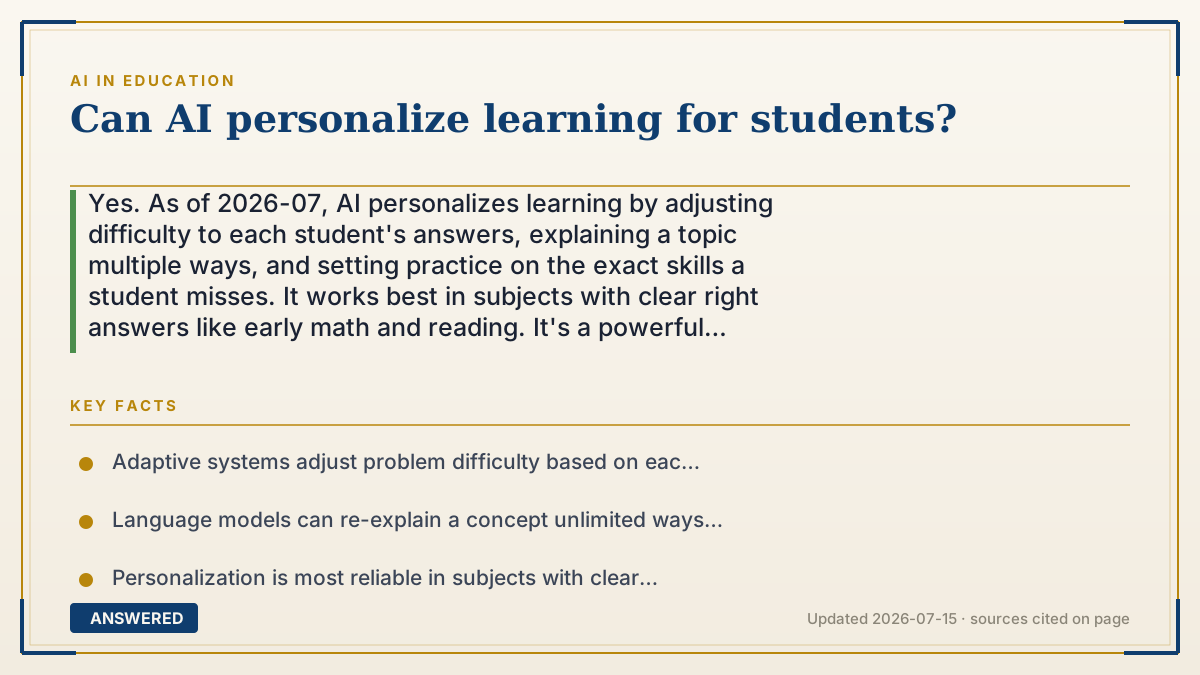
Can AI personalize learning for students?
Yes. As of 2026-07, AI personalizes learning by adjusting difficulty to each student's answers, explaining a topic multiple ways, and setting practice on the exact skills a student misses. It works best in subjects with clear right answers like early math and reading. It's a powerful supplement, but human teachers still guide goals and check accuracy.
Why — the first-principles explanation
Personalization means giving each learner the right challenge at the right moment, something one teacher with thirty students physically can't do for everyone at once. AI can, because it does two things well. First, adaptive systems track which problems a student gets right and wrong and adjust the next item's difficulty, so a struggling learner gets more scaffolding and a quick one gets stretched. That's pattern-matching on responses, and it's reliable when answers are clearly right or wrong.
Second, language models can re-explain endlessly. If a student doesn't get an analogy, the AI offers another, then a simpler one, then a worked example, without frustration or time limits. This tireless, on-demand re-explaining is the part human tutors are great at but can't provide 24/7 to every kid. Together, adaptive difficulty plus infinite patient explanation is a real form of personalization that historically only private tutoring delivered.
The limits are just as important. Personalization is strongest where correctness is clear (math facts, grammar, vocabulary) and weaker in open-ended work like essay quality, where judgment matters. The AI can also misjudge or state wrong facts, so a teacher sets the learning goals, watches for gaps the software misses, and keeps the student from drilling the wrong thing efficiently. Done well, AI personalization narrows gaps and frees the teacher to focus attention where a human is truly needed.
An example that makes it click
Think of a video game that adjusts to your skill. Beat a level easily, and the next one gets harder; die a few times, and it quietly gives you an easier path or an extra tip. You stay in the sweet spot where it's challenging but not impossible, so you keep playing and keep improving.
AI personalization does that with learning. Ace your fractions and it hands you harder problems; miss three in a row and it slows down, re-explains, and gives easier practice on that exact skill. The teacher is the game designer, setting the goals and watching to make sure you're leveling up the right skills.
How to do it
- Set the goal: the teacher defines what skill or standard the student should master.
- Use adaptive software that adjusts difficulty based on the student's correct and wrong answers.
- Let students ask the AI to re-explain a concept in different ways until it clicks.
- Assign targeted practice on the specific skills a student keeps missing.
- Monitor progress and step in where AI misjudges or where open-ended judgment is needed.
- Verify accuracy, since AI can state wrong facts confidently.
Key facts
- Adaptive systems adjust problem difficulty based on each student's right and wrong answers.
- Language models can re-explain a concept unlimited ways on demand, 24/7.
- Personalization is most reliable in subjects with clear right answers (early math, grammar, vocabulary).
- AI can misjudge or hallucinate, so teachers must set goals and check accuracy.
- AI personalization can widen access to tutoring-style help that once required paid tutors.
Choosing an AI tool for study?
The answer above explains the concept; this next step helps you choose by job, limits and current terms.
▶ The 60-second explainer (script)
Can AI personalize learning for students? Yes, and it does it two ways. First, adaptive difficulty. The software tracks which problems a student gets right and wrong, then adjusts the next problem. Struggle, and it gives more support; breeze through, and it makes things harder. That keeps every kid in the sweet spot where learning happens, something one teacher can't do for thirty students at once. Second, infinite patient explaining. If a student doesn't get one analogy, the AI offers another, then a simpler one, then a worked example, any time of day, no frustration. That's the part good tutors do, now available around the clock. This works best where answers are clearly right or wrong, like math facts, grammar, and vocabulary, and it's weaker on open-ended stuff like essay quality. And because AI can be confidently wrong, the teacher still sets the goals and checks the work. Think of a video game that adjusts to your skill, with the teacher as the game designer making sure you level up the right things.
What authoritative sources say
People also ask
How does AI personalize learning?
By adjusting problem difficulty to each student's answers and by re-explaining concepts multiple ways until they click.
Which subjects work best for AI personalization?
Subjects with clear right answers, like early math, grammar, and vocabulary, where the software can judge responses reliably.
Is AI personalization as good as a human tutor?
It's cheaper and always available, but it lacks a human's judgment and accountability, so it works best alongside a teacher.
Can AI personalization hurt learning?
It can if it drills the wrong skill or states wrong facts, which is why teacher oversight and goal-setting matter.