Can AI replace traditional teaching?
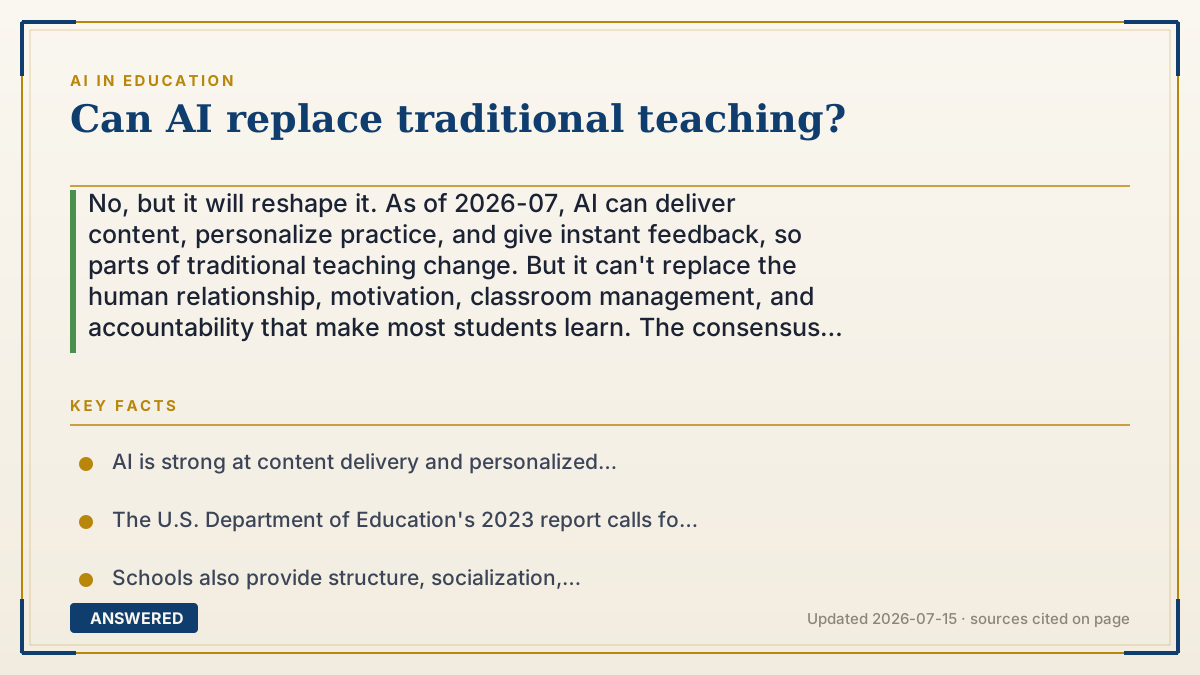
No, but it will reshape it. As of 2026-07, AI can deliver content, personalize practice, and give instant feedback, so parts of traditional teaching change. But it can't replace the human relationship, motivation, classroom management, and accountability that make most students learn. The consensus (including the U.S. Department of Education) is a blend, not a replacement.
Why — the first-principles explanation
"Traditional teaching" bundles two very different things: delivering content and building a learning relationship. AI is strong at the first, delivering and explaining content, because that's structured text generation. It's essentially incapable of the second, since a relationship requires understanding a specific human, caring about the outcome, and being accountable, none of which a word-prediction model has.
That's why the model is a blend, not a swap. In a mixed classroom, AI handles content delivery and endless personalized practice, while the teacher does the parts that actually move most learners: motivating the discouraged, managing behavior, reading confusion on a face, and adapting on the fly. Research on learning consistently finds that motivation, feedback, and relationship drive outcomes as much as content itself, and those are the human parts.
There's also a hard practical reason. Schools aren't only about academics; they provide structure, socialization, supervision, and safety for children whose parents are at work. Even a perfect AI tutor can't watch a playground, comfort a crying first-grader, or be legally responsible for a room of kids. So AI can replace some tasks inside traditional teaching, and it can serve some self-directed older learners well on its own, but it can't replace the institution and human role that traditional teaching represents. The realistic future is teachers plus AI, each doing what it does best.
An example that makes it click
Compare it to home cooking versus a microwave. The microwave is fantastic at one job, heating food fast, and it genuinely changed the kitchen. But it didn't replace cooking, because a meal is more than hot food: it's choosing ingredients, adjusting to taste, and caring who's at the table.
AI is the microwave of teaching. It heats up content delivery and practice with amazing speed. But the full "meal" of education, motivation, relationship, judgment, and care, still needs a cook. The kitchen changes; it doesn't empty out.
Key facts
- AI is strong at content delivery and personalized practice, weak at relationship, motivation, and accountability.
- The U.S. Department of Education's 2023 report calls for AI to augment teaching, not replace it.
- Schools also provide structure, socialization, supervision, and safety that AI cannot supply.
- Learning research links outcomes strongly to motivation, feedback, and relationship, which are human roles.
- The realistic model is a blend: AI plus teachers, each doing what it does best.
▶ The 60-second explainer (script)
Can AI replace traditional teaching? No, but it will reshape it. The trick is to notice that traditional teaching bundles two different jobs. One is delivering content, explaining ideas. AI is great at that, because it's structured writing. The other is building a learning relationship: understanding a specific kid, motivating them, managing the room, and being responsible for them. AI has none of that, because it's a word-prediction model with no stake in your child. So the future is a blend. AI handles content delivery and endless personalized practice, while the teacher does the parts that actually move most learners, the motivation, the feedback, the reading of a confused face. And remember schools aren't only academics. They provide structure, supervision, and safety for kids while parents work. A perfect AI tutor still can't watch a playground or comfort a crying first-grader. Think microwave versus cooking. The microwave changed the kitchen, but somebody still has to cook the meal.
What authoritative sources say
People also ask
Can AI teach a whole class by itself?
It can deliver content and practice, but it can't manage behavior, motivate reluctant learners, or be responsible for student safety.
Could AI replace teaching for self-directed learners?
For motivated older learners, AI tutoring can go a long way, but most students still need the structure and support of a teacher.
What parts of traditional teaching will AI change most?
Content delivery, practice, and first-pass feedback. The relationship and judgment parts stay human.
Why can't AI replace the whole school?
Schools also provide supervision, socialization, and safety for children, which a software tutor cannot supply.
The same question, asked other ways
- Is it possible for AI to make traditional schooling unnecessary?