Can AI think like a human?
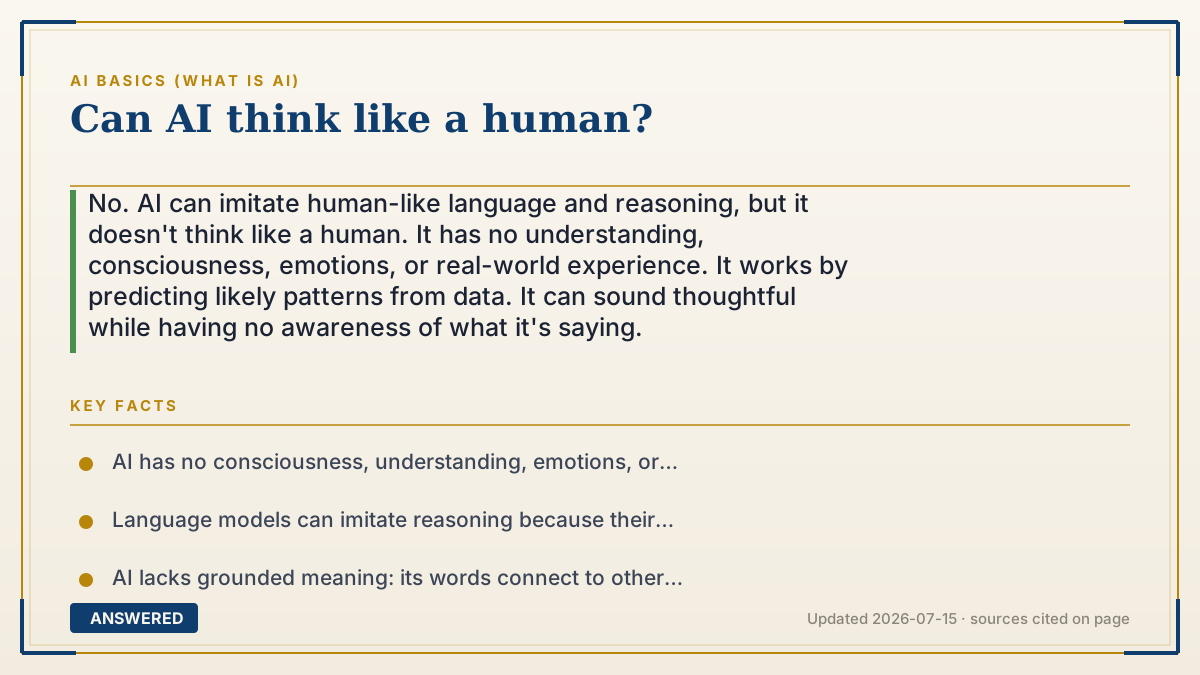
No. AI can imitate human-like language and reasoning, but it doesn't think like a human. It has no understanding, consciousness, emotions, or real-world experience. It works by predicting likely patterns from data. It can sound thoughtful while having no awareness of what it's saying.
Why — the first-principles explanation
Human thinking is grounded in understanding, consciousness, and lived experience. You know what 'hot' means because you've been burned; you have goals, feelings, and a sense of self. AI has none of that. A language model manipulates symbols by predicting which word statistically comes next. It can produce a sentence about grief without ever feeling or grasping grief, because meaning, for it, is just patterns in text.
This is why AI can be fluent yet empty. It mimics the surface of reasoning, chaining plausible steps, because its training data is full of human reasoning to imitate. But there's no inner comprehension checking whether those steps are true or sensible; that's why it can produce confident nonsense. Philosophers call this the gap between simulating understanding and actually having it.
Two more differences matter. Humans learn continuously from small amounts of real experience and generalize flexibly; AI is trained once on huge data and is narrow and brittle outside it. And humans have grounded meaning, our words connect to a real body and world, while AI's words connect only to other words. So AI is an extraordinary imitator of human output, but the underlying process is pattern prediction, not thought.
An example that makes it click
Imagine a parrot that has heard millions of conversations and learned to string words together so well it can chat about almost anything. Ask it about love and it recites beautiful lines. But the parrot has never loved anyone; it's repeating patterns that fit.
AI is a mind-bogglingly advanced version of that parrot. It arranges words that match the situation, sometimes brilliantly, but there's no one inside experiencing or understanding the words. It talks about the world without living in it.
Key facts
- AI has no consciousness, understanding, emotions, or self-awareness; it predicts patterns from data.
- Language models can imitate reasoning because their training data contains human reasoning, but they don't comprehend it.
- AI lacks grounded meaning: its words connect to other words, not to real bodily experience.
- Humans learn flexibly from little experience; AI is trained on huge data and is narrow outside it.
- Simulating understanding is not the same as having it, which is why AI can produce confident nonsense.
▶ The 60-second explainer (script)
Can AI think like a human? No, even though it can sound like it does. Here's the difference. Human thinking is built on understanding, consciousness, and real experience. You know what 'hot' means because you've been burned. You have feelings, goals, a sense of self. AI has none of that. A language model just predicts which word likely comes next. It can write a moving paragraph about grief without ever feeling or understanding grief, because to the machine, meaning is only patterns in text. That's why AI can be fluent but empty. It imitates the surface of reasoning, since its training data is full of human reasoning to copy, but there's no inner mind checking if any of it is true. That's how it produces confident nonsense. Think of a parrot that heard millions of conversations and learned to chat about anything, yet understands nothing it says. AI is a spectacularly advanced version of that parrot. Amazing imitator of human output, but the process underneath is pattern prediction, not thought.
What authoritative sources say
People also ask
Does AI understand what it says?
No. It arranges words that statistically fit, without comprehension. It can describe something accurately while understanding nothing about it.
Can AI have emotions?
No. It can imitate emotional language, but it has no feelings or inner experience. Any 'emotion' is a pattern in text, not a felt state.
Isn't reasoning proof of thinking?
AI mimics reasoning steps learned from data, but without genuine understanding to verify them, which is why it can chain to false conclusions.
Will AI ever think like a human?
That would require artificial general intelligence, which doesn't exist and has no confirmed timeline. Today's AI imitates output, it doesn't truly think.