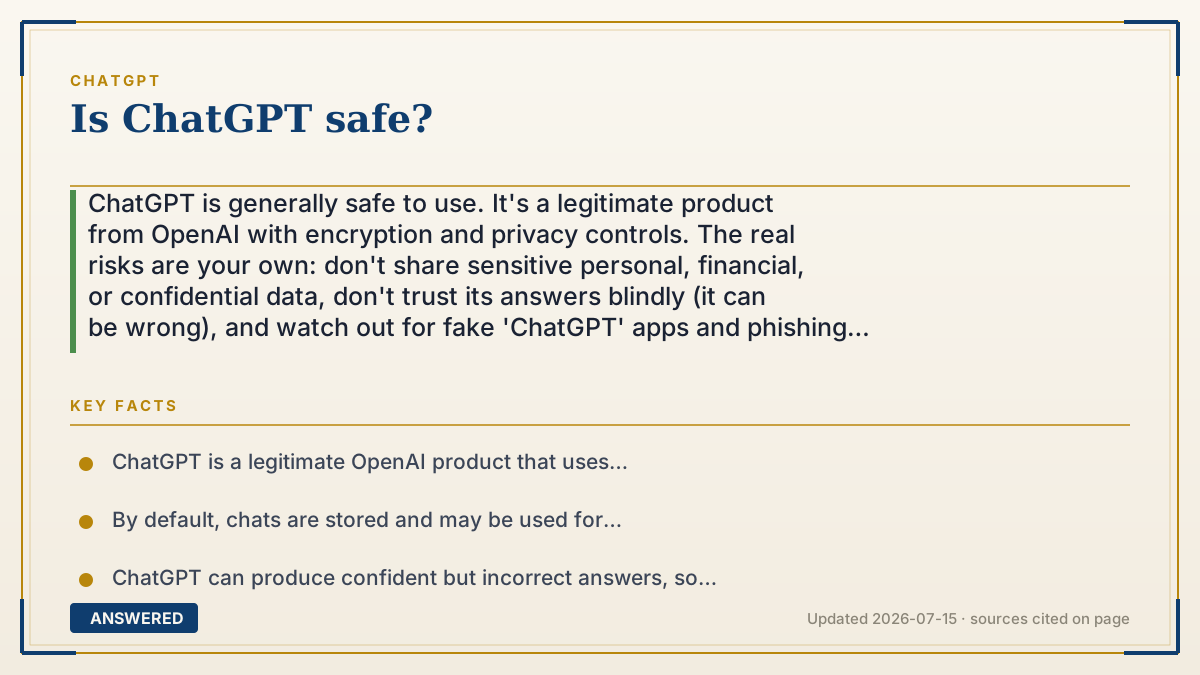
Is ChatGPT safe?
ChatGPT is generally safe to use. It's a legitimate product from OpenAI with encryption and privacy controls. The real risks are your own: don't share sensitive personal, financial, or confidential data, don't trust its answers blindly (it can be wrong), and watch out for fake 'ChatGPT' apps and phishing clones.
Why — the first-principles explanation
'Safe' has two meanings here, and it helps to separate them. The first is is the software itself trustworthy? ChatGPT is a mainstream product from OpenAI, uses encrypted connections, and gives you controls to delete chats and opt out of training. It is not malware. The genuine app at chatgpt.com and the official app stores are safe to install.
The second meaning is is it safe to put my information in? This is where care matters. By default your chats are stored and may be used to train models unless you opt out, and a limited number of staff can review flagged content. So the rule is simple: treat ChatGPT like a public-ish notebook. Don't paste passwords, bank or card numbers, government IDs, medical records, or an employer's confidential data. Once information leaves your device, you no longer fully control it.
The third risk is the answers themselves. ChatGPT predicts likely text, so it can produce confident but wrong information ('hallucinations'). For anything high-stakes, health, legal, financial, or safety, verify with a qualified source. Finally, watch for impersonation: scam apps, browser extensions, and phishing sites use the ChatGPT name to steal logins or money. Stick to official channels and you avoid most danger.
An example that makes it click
Using ChatGPT safely is like talking to a very knowledgeable stranger on a park bench. The stranger is friendly and helpful, and the park is a normal, safe place. But you still wouldn't hand them your wallet, your PIN, or your passport, and you wouldn't follow their medical advice without checking a doctor. You also wouldn't trust a different person who walks up wearing a fake name tag that says 'Official ChatGPT.' Enjoy the conversation, keep your secrets in your pocket, and verify the important stuff.
How to do it
- Download ChatGPT only from chatgpt.com or the official Apple and Google app stores.
- Turn on two-factor authentication on your OpenAI account.
- Never paste passwords, bank or card numbers, IDs, medical records, or confidential work data.
- Open Settings > Data Controls and turn off 'Improve the model for everyone' if you don't want training on your chats.
- Verify any health, legal, financial, or safety answer with a qualified professional or primary source.
- Ignore ads, emails, or apps promising 'free ChatGPT Plus' or asking for your login; they are usually scams.
Key facts
- ChatGPT is a legitimate OpenAI product that uses encrypted connections and offers privacy controls.
- By default, chats are stored and may be used for training unless you opt out under Data Controls.
- ChatGPT can produce confident but incorrect answers, so high-stakes topics need verification.
- You should never enter passwords, financial, government-ID, or confidential data into ChatGPT.
- Fake ChatGPT apps, extensions, and phishing sites are a common vector for scams and credential theft.
Open the official product site and confirm the current access, plans and terms.
▶ The 60-second explainer (script)
Is ChatGPT safe? Mostly yes, with a few smart habits. ChatGPT is a legitimate product from OpenAI. It uses encryption and gives you controls to delete chats and opt out of training. It's not malware. But safety really depends on how you use it. First, watch what you type. By default your chats are stored and may be used to improve the models, so never paste passwords, bank numbers, IDs, or confidential work files. Second, don't trust every answer. ChatGPT predicts likely words, so it can sound confident and still be wrong. For health, legal, or money questions, verify with a real professional. Third, avoid impersonators. Fake apps and phishing sites use the ChatGPT name to steal logins. Only download from chatgpt.com or the official app stores, and turn on two-factor login. Do those three things, and ChatGPT is safe for everyday use.
What authoritative sources say
People also ask
Can ChatGPT steal my data?
The app itself isn't designed to steal data, but anything you type is sent to OpenAI's servers, so avoid sharing secrets or confidential information.
Is it safe to share personal information with ChatGPT?
No. Don't enter passwords, financial details, government IDs, or medical records. Treat the chat like something that could be stored.
Are ChatGPT's answers reliable?
Often, but not always. It can produce confident errors, so verify anything important with a trusted source.
How do I avoid fake ChatGPT scams?
Only use chatgpt.com and official app stores, enable two-factor login, and ignore offers of 'free Plus' that ask for your credentials.
The same question, asked other ways
- What are the risks of using ChatGPT?