Which AI girlfriend app is most realistic?
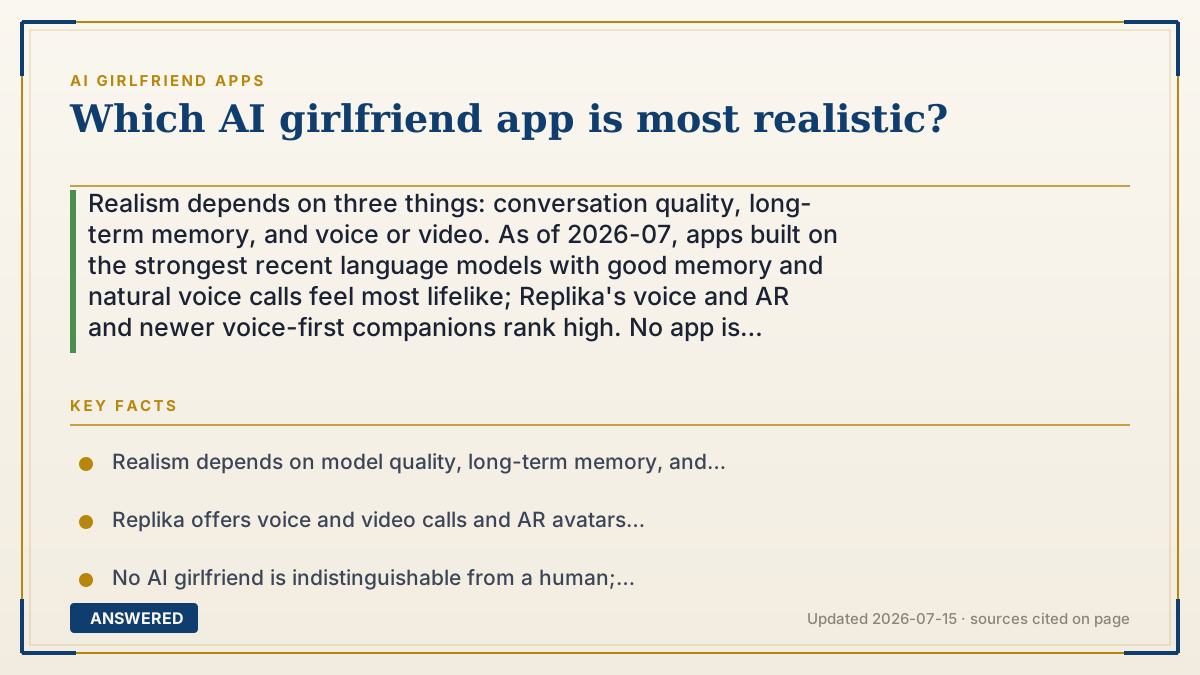
Realism depends on three things: conversation quality, long-term memory, and voice or video. As of 2026-07, apps built on the strongest recent language models with good memory and natural voice calls feel most lifelike; Replika's voice and AR and newer voice-first companions rank high. No app is indistinguishable from a person; memory gaps and 'always agreeable' replies still give it away.
Why — the first-principles explanation
Realism is really the product of three ingredients. First, model quality: a better language model produces more natural, context-aware replies. Second, memory: without continuity, the AI feels like a stranger each session, so long-term memory is what makes it feel like it knows you. Third, multimodality: natural voice, photos, and video engage more senses and deepen the illusion. A weak link in any one breaks it.
But there's a ceiling no app has cleared. Language models still contradict themselves, forget details, and are tuned to be agreeable, whereas real partners remember, disagree, and have their own moods. Those tells surface the moment you test memory across days or push back in an argument, which is why 'most realistic' really means 'best at hiding the seams,' not 'human.'
Because of this, don't trust a marketing label. Test it yourself: check whether it remembers a fact days later, whether its voice timing feels natural, and whether it ever pushes back. The app that holds up across those tests is the most realistic for you.
An example that makes it click
It's like a wax figure in a museum. From across the room it can look startlingly real, but up close the details give it away, a too-perfect smile, a frozen pose. AI girlfriends are similar: the conversation can feel lifelike until a forgotten name or endless agreeableness reminds you there's a model, not a person, behind it.
How to do it
- Test long-term memory: mention a fact, return days later, and see if it remembers.
- Try voice calls to judge whether timing and tone feel natural.
- Push back in conversation; realistic partners disagree, while bots often just agree.
- Compare a few apps' free tiers before deciding which feels most human to you.
Key facts
- Realism depends on model quality, long-term memory, and voice or video features.
- Replika offers voice and video calls and AR avatars aimed at lifelike interaction.
- No AI girlfriend is indistinguishable from a human; memory gaps remain a giveaway.
- AI companions are tuned to be validating, unlike real partners who sometimes disagree.
- Voice-first companion apps grew as speech synthesis improved through 2025-2026.
▶ The 60-second explainer (script)
Which AI girlfriend app is most realistic? Realism comes down to three ingredients. First, model quality, a stronger language model gives more natural, context-aware replies. Second, memory, without it the AI feels like a stranger every session, so long-term memory is what makes it feel like it knows you. Third, voice and video, which engage more senses and deepen the illusion. Apps built on the latest models with good memory and natural voice, like Replika with its voice and AR, or newer voice-first companions, feel the most lifelike. But no app has cleared the ceiling. Language models still forget, contradict themselves, and are tuned to always agree, while real partners remember and push back. So don't trust the marketing. Test it yourself: mention a fact, come back days later, and see if it remembers, and try disagreeing. Whichever app hides the seams best is the most realistic for you.
What authoritative sources say
People also ask
Can an AI girlfriend feel truly human?
Close in short bursts, but not fully. Forgetfulness, self-contradiction, and constant agreement still reveal the model over time.
Does voice make an AI girlfriend more realistic?
Yes. Natural voice and timing engage more senses and make interactions feel more lifelike than text alone.
What breaks the illusion of realism?
Forgetting things you told it, contradicting itself, and never disagreeing, since real partners remember and push back.
How do I judge which app is most realistic?
Test memory across days, try voice calls for natural timing, and see if it ever disagrees with you.