Will AI agents replace humans?
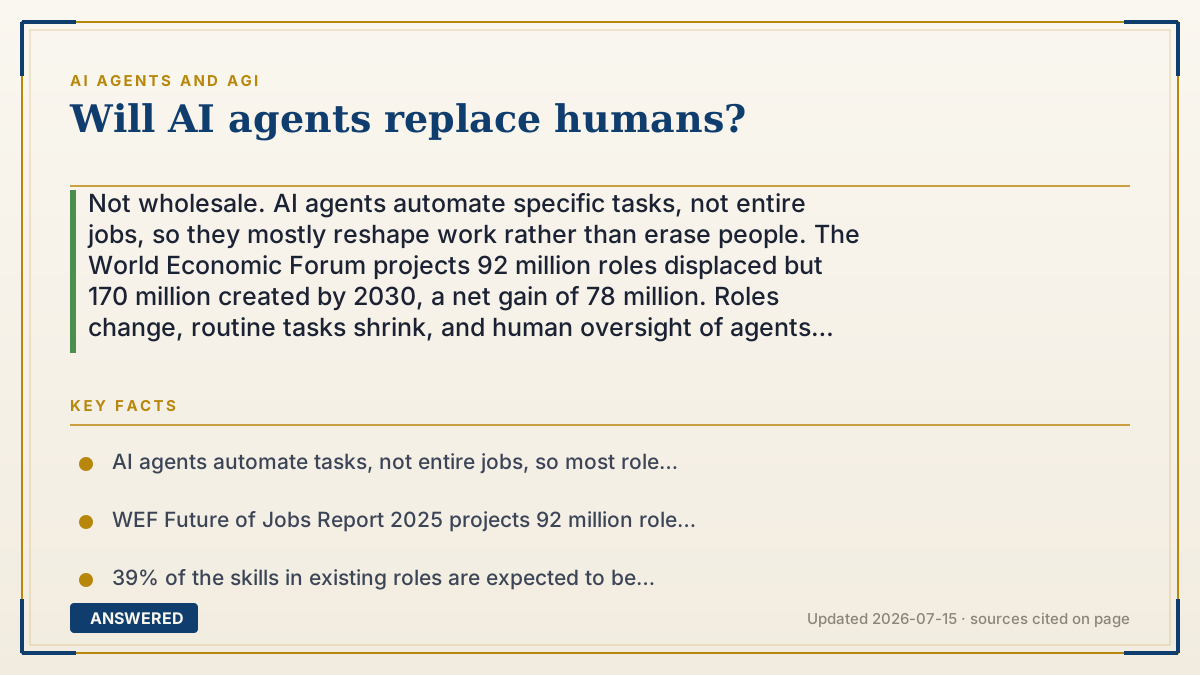
Not wholesale. AI agents automate specific tasks, not entire jobs, so they mostly reshape work rather than erase people. The World Economic Forum projects 92 million roles displaced but 170 million created by 2030, a net gain of 78 million. Roles change, routine tasks shrink, and human oversight of agents becomes a job in itself.
Why — the first-principles explanation
Whether agents 'replace humans' hinges on a key distinction: jobs are bundles of tasks, and agents automate tasks, not whole bundles.
Today's AI agents are narrow and error-prone. They shine at well-scoped, repetitive, verifiable work, sorting tickets, drafting first-pass emails, entering data, running routine code. They struggle with judgment, accountability, physical work, relationships, and anything needing real-world context or trust. So an agent might absorb 30-60% of the tasks in a role while leaving the parts that need a human, which usually transforms the job rather than deleting the worker.
History and current data back the 'reshape, not erase' view. The World Economic Forum's Future of Jobs Report 2025 projects that by 2030, technology and other trends will displace about 92 million roles but create about 170 million, a net increase of 78 million, even as 39% of the skills in existing roles get reshuffled. New categories appear precisely because agents need building, supervising, correcting, and integrating.
There are real caveats. The transition is uneven: some routine-heavy roles will shrink faster than new ones appear, and displaced workers don't automatically match new openings without reskilling. And this analysis is about today's narrow agents. A future AGI, human-level and general, would raise harder questions, but that doesn't exist yet. For the foreseeable near term, the realistic picture is augmentation and task-shifting, with a growing premium on skills agents lack: judgment, creativity, and human trust.
An example that makes it click
Think of ATMs and bank tellers. When cash machines spread, everyone predicted tellers would vanish. Instead, ATMs handled the routine cash-dispensing task, branches got cheaper to run, banks opened more of them, and the number of tellers actually held up for years, with their work shifting toward sales and customer help.
AI agents are the new ATMs, but for knowledge work. They'll take over routine tasks, filing, sorting, drafting, so a person handles more of the judgment and relationship parts. Some jobs shrink, many change, and new ones (like 'the person who supervises the agents') appear. It's a reshuffle of tasks, not a mass deletion of workers, at least while agents remain narrow.
Key facts
- AI agents automate tasks, not entire jobs, so most roles are reshaped rather than eliminated.
- WEF Future of Jobs Report 2025 projects 92 million roles displaced and 170 million created by 2030, a net +78 million.
- 39% of the skills in existing roles are expected to be transformed or outdated by 2030 (WEF, 2025).
- Agents are strongest on routine, verifiable tasks and weakest on judgment, accountability, and human trust.
- This applies to today's narrow agents; human-level AGI, which would raise bigger questions, does not exist as of 2026.
Choosing an AI tool for work?
The answer above explains the concept; this next step helps you choose by job, limits and current terms.
▶ The 60-second explainer (script)
Will AI agents replace humans? Not wholesale, and here's the key idea: jobs are bundles of tasks, and agents automate tasks, not whole jobs. Today's agents are great at routine, repetitive work, sorting tickets, drafting emails, entering data. They're weak at judgment, accountability, and human trust. So an agent might take over a chunk of a role while leaving the parts that need a person, which usually changes the job instead of deleting the worker. The data backs this up. The World Economic Forum projects that by 2030, technology will displace about 92 million roles but create about 170 million, a net gain of 78 million. Think of ATMs: everyone thought they'd wipe out bank tellers, but tellers' work just shifted. The real catch is the transition, some routine jobs shrink faster than new ones appear, so reskilling matters. The rising premium is on what agents can't do: judgment, creativity, and trust.
What authoritative sources say
People also ask
Will AI agents take my job?
More likely they'll take over parts of it. Agents automate specific tasks, so most roles change rather than disappear. Jobs heavy in routine, verifiable tasks face the most pressure.
Which jobs are safest from AI agents?
Roles built on judgment, accountability, creativity, physical work, and human relationships, where trust and real-world context matter, are hardest for narrow agents to replace.
Won't automation cause net job losses?
Historically and in current projections, no, WEF expects a net gain of 78 million jobs by 2030. But the transition is uneven and demands reskilling.
What new jobs do agents create?
Building, supervising, correcting, and integrating agents, plus roles that use agents as tools. Overseeing AI output is itself becoming a common responsibility.
The same question, asked other ways
- Are AI agents replacing office workers?
- Will AGI replace people in data entry jobs?