Are AI covers legal to upload?
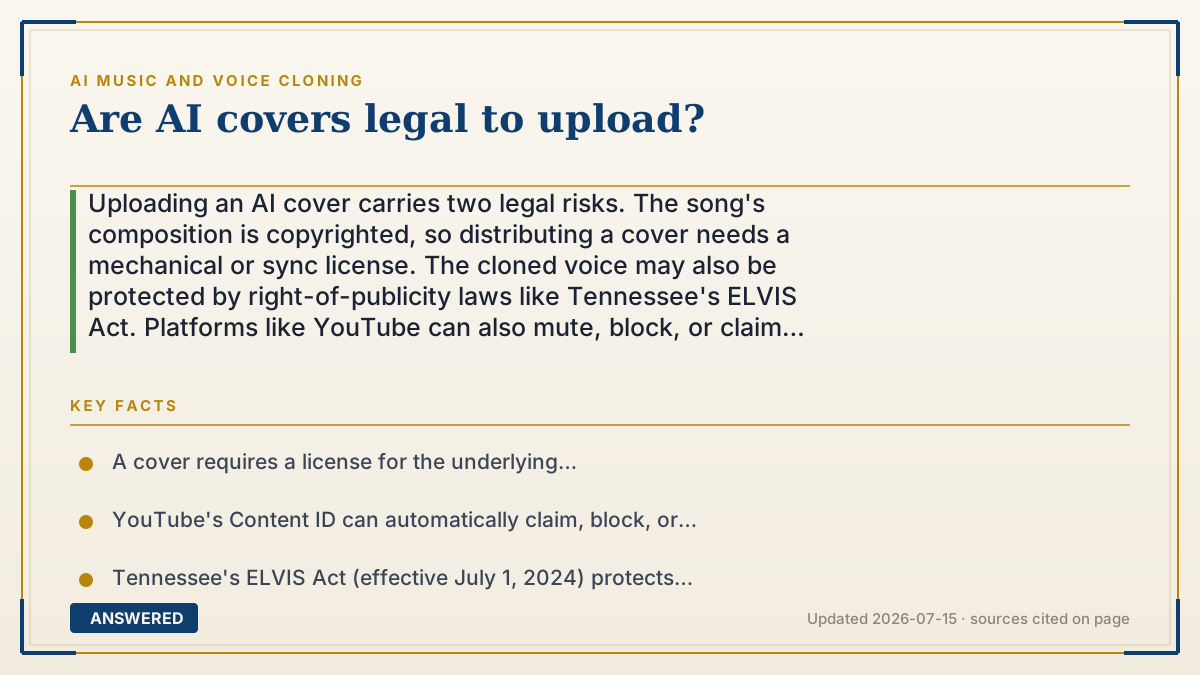
Uploading an AI cover carries two legal risks. The song's composition is copyrighted, so distributing a cover needs a mechanical or sync license. The cloned voice may also be protected by right-of-publicity laws like Tennessee's ELVIS Act. Platforms like YouTube can also mute, block, or claim revenue via Content ID. This is general information, not legal advice.
Why — the first-principles explanation
An AI cover stacks two separate rights problems, and uploading exposes you to both.
First, the song itself. Every song has a composition copyright (melody and lyrics). Covering it means re-recording that composition, which legally requires a mechanical license for audio distribution or a sync license if it is paired with video. In the U.S., a compulsory mechanical license is available for audio-only streaming and downloads, but video platforms usually need direct permission or rely on their own licensing deals. That is why an unlicensed cover on YouTube can get Content ID claims that mute the video or divert its ad revenue to the rights holder.
Second, the cloned voice. If your cover imitates an identifiable artist's voice, you may trigger right-of-publicity claims. Tennessee's ELVIS Act (effective July 1, 2024) explicitly protects a person's voice from unauthorized AI replication, and other states are following. So an AI cover of a famous singer performing a copyrighted song is doubly exposed: the composition and the voice each belong to someone else. A cover in your own voice of a public-domain song is the safest end of the spectrum.
An example that makes it click
Uploading an AI cover is like selling lemonade made from someone else's secret recipe, poured into a cup shaped like a celebrity's face. Even if you squeezed the lemons yourself, you owe the recipe owner (the songwriter) a licensing fee, and the celebrity can object to their face on your cup (their voice). Two different people can each say 'you needed my permission.'
How to do it
- Identify both rights: the song's composition owner and whose voice the cover imitates.
- Get a mechanical license for audio distribution (via a service like the MLC or a licensing platform), or a sync license for video.
- Use your own voice or a voice you have permission for — imitating a real artist risks right-of-publicity claims.
- Expect platform enforcement: YouTube Content ID may claim, mute, or monetize the cover for the rights holder.
- For public release or monetization, confirm licenses with a qualified attorney or a licensing service.
Key facts
- A cover requires a license for the underlying composition (mechanical for audio, sync for video).
- YouTube's Content ID can automatically claim, block, or monetize covers on behalf of rights holders.
- Tennessee's ELVIS Act (effective July 1, 2024) protects a person's voice from unauthorized AI cloning.
- Purely AI-generated material is not copyrightable without meaningful human authorship (U.S. Copyright Office, Jan 2025).
- A cover of a public-domain song sung in your own voice carries the least legal risk.
▶ The 60-second explainer (script)
Are AI covers legal to upload? It depends, because a cover involves two different rights. First, the song. The melody and lyrics are copyrighted, so distributing any cover requires a license — a mechanical license for audio, or a sync license for video. Upload an unlicensed cover to YouTube and Content ID may mute it or send the ad money to the rights holder. Second, the voice. If your AI cover imitates a real artist, you might violate right-of-publicity laws like Tennessee's ELVIS Act. So an AI cover of a famous singer performing a hit song has two owners to answer to. The safest upload is your own voice singing a public-domain song. For anything commercial, get the licenses and, ideally, a lawyer. This is general information, not legal advice.
What authoritative sources say
People also ask
Can I upload an AI cover to YouTube?
You can, but Content ID may claim, mute, or monetize it for the rights holder, and imitating a real artist adds right-of-publicity risk.
What license does a cover need?
A mechanical license for audio distribution, or a sync license when paired with video. Public-domain songs need no license.
Is it safer to use my own voice?
Yes. Your own voice removes the right-of-publicity problem, though you still need a license for the song's composition.
What's the lowest-risk AI cover?
Your own voice singing a public-domain song, which avoids both the composition license and the voice-rights issue.