Can AI clone my singing voice?
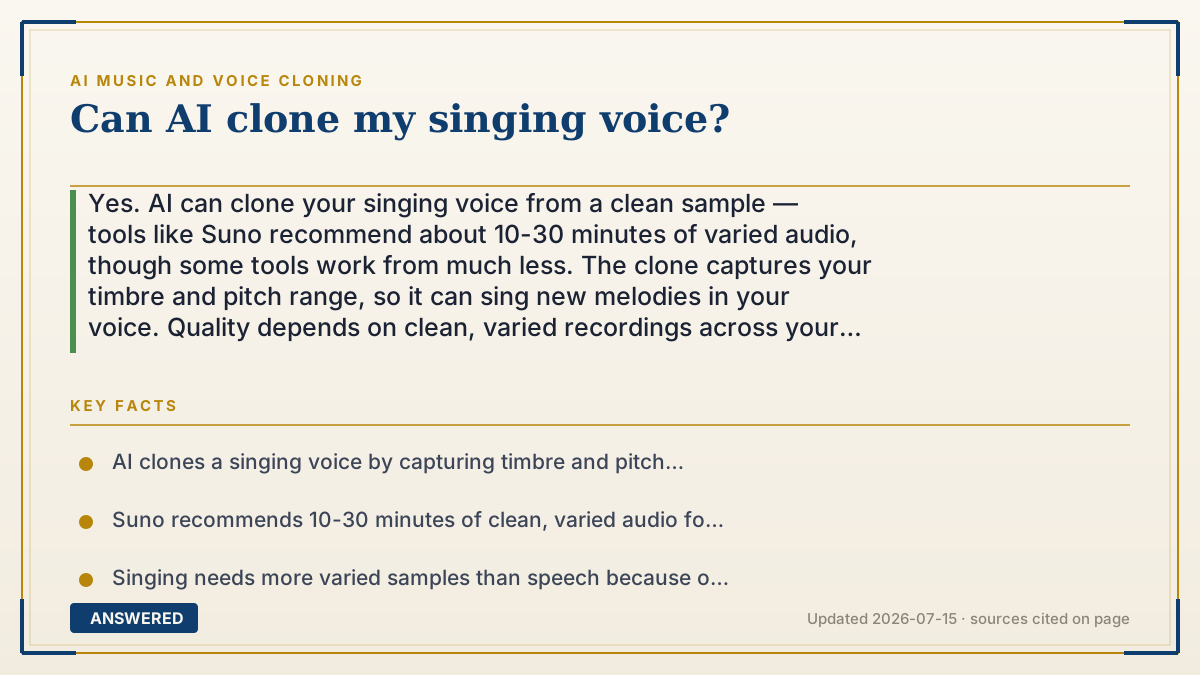
Yes. AI can clone your singing voice from a clean sample — tools like Suno recommend about 10-30 minutes of varied audio, though some tools work from much less. The clone captures your timbre and pitch range, so it can sing new melodies in your voice. Quality depends on clean, varied recordings across your full range.
Why — the first-principles explanation
Your singing voice is a fingerprint made of physics: vocal-cord size, throat shape, and how you shape vowels all produce a timbre unique to you. An AI clone works by measuring that fingerprint from your recordings and storing it as a speaker embedding — a numeric portrait of your voice.
Singing is harder to clone than speech because it spans a wider pitch range and includes vibrato, breath, and sustained notes. That is why quality tools ask for more varied material: they want to hear you high and low, loud and soft, so the model can reproduce your whole range instead of guessing. Suno, for example, suggests 10-30 minutes of clean audio and asks you to sing in different registers.
Once trained, the clone can do two things. It can convert an existing melody into your voice (a cover), keeping the notes and swapping the timbre, or it can generate a brand-new song sung in your voice. The better your input — quiet room, one microphone, steady volume — the more natural and expressive the clone. Poor input produces a thin, robotic result because the model never heard enough of your real range.
An example that makes it click
Imagine teaching a parrot that's a perfect mimic. If you only hum a few low notes, the parrot only learns those and sounds flat. But sing for it across your whole range — high notes, low notes, soft and loud — and the parrot can now belt any song in a voice that sounds just like yours. The AI is that parrot, except it writes your voice down as a card of numbers so it never forgets.
How to do it
- Record in a quiet room with one microphone and steady volume.
- Sing across your full range — high and low notes, soft and loud, with some vibrato.
- Provide enough material; Suno recommends 10-30 minutes of clean, varied audio.
- Upload it to a singing-voice tool and complete any verification step.
- Generate a test song and re-record more samples if the clone sounds thin or robotic.
Key facts
- AI clones a singing voice by capturing timbre and pitch range as a speaker embedding.
- Suno recommends 10-30 minutes of clean, varied audio for a high-quality voice.
- Singing needs more varied samples than speech because of wider pitch range and vibrato.
- A clone can convert existing melodies or sing brand-new songs in your voice.
- Clean, single-mic recordings across your full range produce the most natural results.
▶ The 60-second explainer (script)
Can AI clone your singing voice? Yes, it can. Your voice has a unique fingerprint — created by your vocal cords, throat, and how you shape vowels — and AI captures that as a set of numbers called a speaker embedding. Singing is trickier than talking because it covers a wider range and includes vibrato and long held notes, so good tools want varied samples. Suno, for instance, suggests ten to thirty minutes of clean audio, and asks you to sing high and low. Once trained, the clone can sing new songs in your voice or convert an existing melody into your voice. The secret to a natural result is clean recording — a quiet room, one microphone, steady volume, and your full vocal range. Feed it good input, and the AI sings just like you.
What authoritative sources say
People also ask
How much do I need to sing for a clone?
Suno suggests 10-30 minutes of clean, varied audio. Some tools work from less, but quality and range suffer.
Will the clone match my high notes?
Only if your samples include them. The model can't reproduce a range it never heard, so sing high and low when recording.
Can the clone sing songs I can't hit?
It can sing within the range it learned. For notes beyond your recorded range, results may sound less natural.
Why does my clone sound robotic?
Usually short, noisy, or narrow-range samples. Re-record in a quiet space across your full range for a smoother result.