Are AI voices copyrighted?
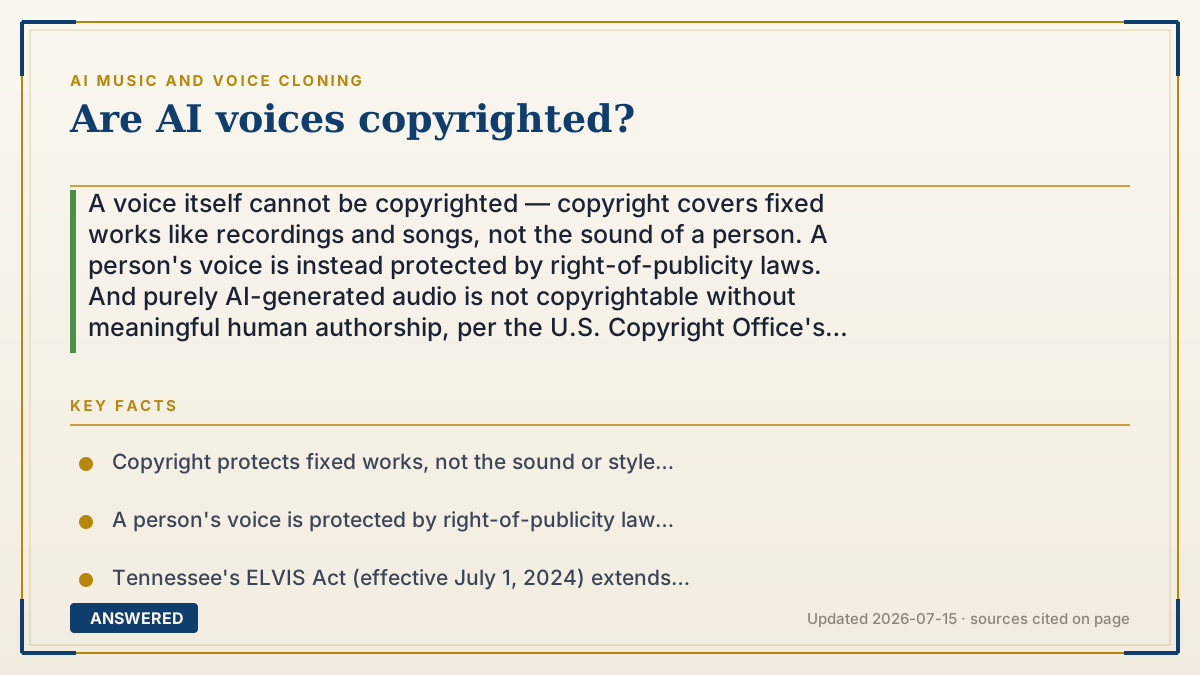
A voice itself cannot be copyrighted — copyright covers fixed works like recordings and songs, not the sound of a person. A person's voice is instead protected by right-of-publicity laws. And purely AI-generated audio is not copyrightable without meaningful human authorship, per the U.S. Copyright Office's January 2025 report. This is general information, not legal advice.
Why — the first-principles explanation
People confuse two different legal systems here. Copyright protects specific fixed creative works — a particular recording, a song's melody and lyrics, a written script. It does not protect a style or the raw sound of someone's voice, because those are not fixed works.
So what protects your voice? The right of publicity — a separate right to control commercial use of your identity, including your recognizable voice. This is mostly state law and is expanding to cover AI clones; Tennessee's ELVIS Act (effective July 1, 2024) is the leading example. That is why a company can't just clone a celebrity's voice: not because the voice is copyrighted, but because the celebrity owns their identity.
The third piece is the AI's own output. The U.S. Copyright Office confirmed in January 2025 that material produced purely by generative AI is not copyrightable — protection requires meaningful human authorship. So an AI-spoken clip you generated from a text prompt alone generally has no copyright at all. What you can protect is the human creative work around it: your script, your arrangement, your edits. In short: the voice sound isn't copyrighted, the person's identity is protected by publicity rights, and pure AI output has thin-to-no copyright.
An example that makes it click
Think of three different fences. Copyright is a fence around a specific painting — the exact canvas. Right of publicity is a fence around your face and your voice — your identity. And AI output is like a drawing made by a coin-operated machine: because no human really drew it, the machine's picture gets no fence at all. People assume one fence covers everything, but each protects a different thing.
How to do it
- Remember copyright protects fixed works (recordings, songs, scripts), not the raw sound of a voice.
- Rely on right-of-publicity laws to protect a person's recognizable voice from unauthorized use.
- Do not assume AI-generated audio is copyrighted — pure AI output generally is not.
- To gain copyright, add meaningful human authorship: original lyrics, arrangement, editing, or performance.
- For commercial use of any voice, get consent and, for high stakes, consult an attorney.
Key facts
- Copyright protects fixed works, not the sound or style of a person's voice.
- A person's voice is protected by right-of-publicity law, not copyright.
- Tennessee's ELVIS Act (effective July 1, 2024) extends voice protection to AI clones.
- Purely AI-generated audio is not copyrightable without meaningful human authorship (U.S. Copyright Office, Jan 29, 2025).
- Human contributions like lyrics, arrangement, and edits can still be copyrighted.
▶ The 60-second explainer (script)
Are AI voices copyrighted? Not the way most people think. Copyright protects fixed creative works — a specific recording, a song, a script — but not the raw sound of a person's voice. So a voice by itself can't be copyrighted. What protects your voice is a different system called the right of publicity, which lets you control commercial use of your identity. Tennessee's ELVIS Act now extends that to AI clones. And here's the twist: audio made purely by AI generally isn't copyrighted at all. The U.S. Copyright Office confirmed in January 2025 that you need meaningful human authorship for protection. So the takeaway: the voice sound isn't copyrighted, the person's identity is protected by publicity rights, and pure AI output has little to no copyright. This is general information, not legal advice.
What authoritative sources say
People also ask
Can I copyright my own voice?
No. You can copyright a specific recording of your voice, but not the voice sound itself. Your identity is protected by right-of-publicity law.
Does AI-generated audio have a copyright?
Generally no. The U.S. Copyright Office says purely AI-generated output isn't protected without meaningful human authorship.
So what stops others cloning a famous voice?
Right-of-publicity laws, like Tennessee's ELVIS Act, which protect a person's recognizable voice from unauthorized use.
How do I get copyright on an AI song?
Add substantial human creativity — original lyrics, arrangement, editing, or a real performance — so a human authored the expressive elements.