Can you delete all the AI bloatware on Windows 11?
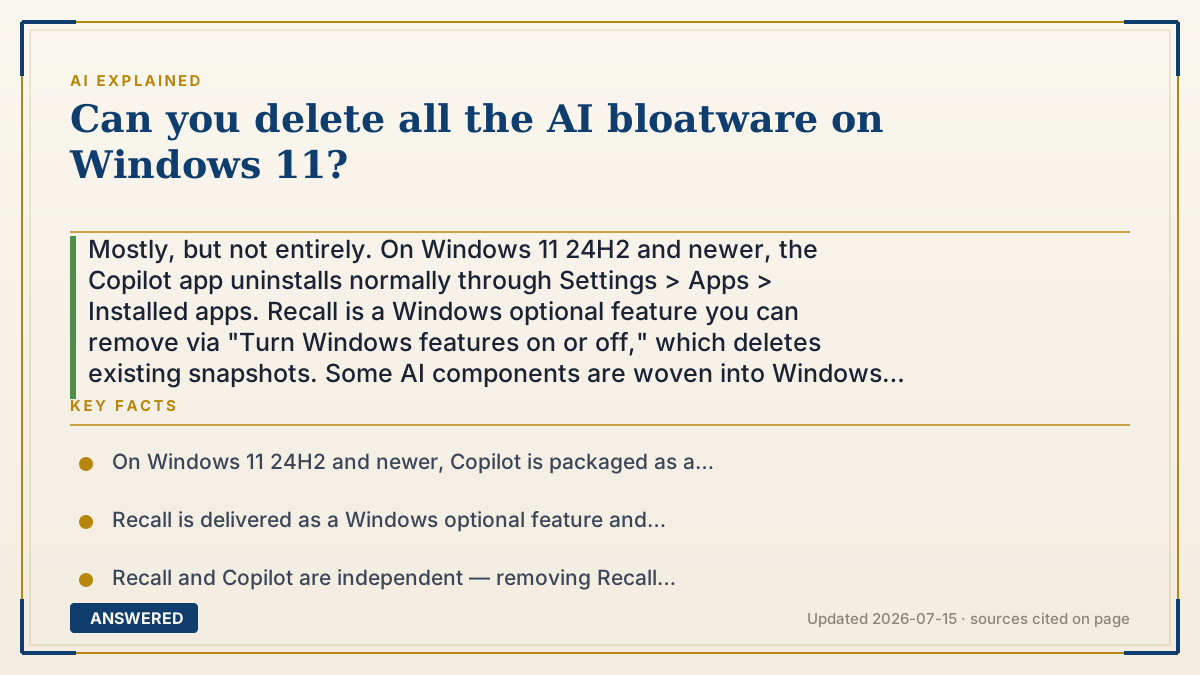
Mostly, but not entirely. On Windows 11 24H2 and newer, the Copilot app uninstalls normally through Settings > Apps > Installed apps. Recall is a Windows optional feature you can remove via "Turn Windows features on or off," which deletes existing snapshots. Some AI components are woven into Windows itself and cannot be cleanly removed.
Why — the first-principles explanation
The frustration here comes from a category error. "AI bloatware" is not one thing — Microsoft ships AI in three structurally different forms, and each has a different removal story. The first is apps. Copilot on modern Windows 11 is packaged as a normal Store app. This was a real change: it was once more deeply wired in, and Microsoft repackaged it as a standard app. Standard apps uninstall through Settings, and Copilot now does. Easy tier.
The second is optional features. Recall — the feature that periodically screenshots your screen to make it searchable — is delivered as a Windows optional feature, the same delivery mechanism as things like Hyper-V. You remove it in "Turn Windows features on or off" by clearing its checkbox and rebooting, and existing snapshots are deleted when it is removed. Note that Recall and Copilot are independent: removing Recall leaves Copilot working, and vice versa. Many guides conflate them.
The third is integrated capability, and this is where "delete all" fails. Some AI is not an app at all — it is code inside Windows components: search behavior, Photos and Paint features, text suggestions, on-device processing on Copilot+ hardware. These have no uninstaller because they are not separate products. You can often disable behaviors, but you cannot subtract the code. This is the honest ceiling on the question.
There is also a durability problem. Uninstalling an app does not stop a future feature update from reintroducing it, which is why the registry policy approach exists: setting `TurnOffWindowsCopilot` under the Windows policies key enforces a rule rather than removing a file. Policy survives updates in a way that uninstallation does not. That distinction — remove the file versus forbid the behavior — is the difference between a fix that lasts and one that quietly reverses next patch cycle. A caution worth stating plainly: aggressive third-party "debloat" scripts that rip out Windows components often break Windows Update, the Store, or servicing in ways that surface months later and are painful to diagnose. The Settings, Windows Features, and policy routes are supported. Scripts that delete system packages are not.
An example that makes it click
Think of Windows as a house you rent furnished. The AI comes in three forms. Copilot is a coffee machine sitting on the counter — you can pick it up and put it in the garage. Done. Recall is a wall-mounted intercom — it's screwed in, but there's a proper panel, and if you unscrew it the intercom is gone and so are its recordings.
But some of it is the wiring inside the walls. It's not a device you can carry out. It's copper running through the studs, feeding a dozen things you actually want. You can flip breakers and turn outlets off, but you cannot remove the wiring without tearing up drywall — and people who take a sledgehammer to it (those debloat scripts) discover three months later that the lights in another room stopped working, and nobody can figure out why.
How to do it
- Uninstall the Copilot app (Windows 11 24H2 and newer): open Settings, go to Apps > Installed apps, search for Copilot, click the three-dot menu next to it, choose Uninstall, and confirm.
- Remove Recall: open Start, search for "Turn Windows features on or off," clear the Recall checkbox, and restart your PC. Existing snapshots are deleted when Recall is removed. Copilot remains available — Recall is a separate optional feature.
- Alternative for Recall via command line: run DISM /Disable-Feature /FeatureName:"Recall" from an elevated prompt, then reboot.
- Make Copilot removal durable via policy: press Windows + R, type regedit, navigate to HKEY_CURRENT_USER\Software\Policies\Microsoft\Windows, create a key named WindowsCopilot, create a DWORD (32-bit) value named TurnOffWindowsCopilot, and set it to 1.
- Back up the registry or create a restore point before editing it. Registry mistakes are not self-correcting.
- Accept the limit: AI woven into Windows components — search behavior, Photos and Paint features, text suggestions — has no uninstaller. Disable individual features in Settings where offered.
- Avoid third-party debloat scripts that delete system packages. They frequently break Windows Update, the Microsoft Store, or servicing, and the damage often appears weeks later.
Key facts
- On Windows 11 24H2 and newer, Copilot is packaged as a standard app and can be uninstalled via Settings > Apps > Installed apps.
- Recall is delivered as a Windows optional feature and can be removed through "Turn Windows features on or off"; existing snapshots are deleted when it is removed.
- Recall and Copilot are independent — removing Recall leaves Copilot installed and functional.
- The registry policy path to disable Copilot is HKEY_CURRENT_USER\Software\Policies\Microsoft\Windows\WindowsCopilot with a DWORD named TurnOffWindowsCopilot set to 1.
- Recall can also be disabled via DISM using the feature name "Recall" followed by a reboot.
- Uninstalling an app does not prevent a future Windows feature update from reintroducing it; policy settings are more durable than uninstallation.
▶ The 60-second explainer (script)
Can you delete all the AI bloatware on Windows 11? Mostly — but not all, and here's why that phrase trips people up. Microsoft ships AI in three different forms, and each removes differently. Tier one: apps. On Windows 11 24H2 and newer, Copilot is just a regular app now. Settings, Apps, Installed apps, find Copilot, three dots, Uninstall. Gone. That's a genuine change — it used to be wired in deeper. Tier two: optional features. Recall — the thing that screenshots your screen so you can search it later — is a Windows optional feature, same delivery system as Hyper-V. Hit Start, search for Turn Windows features on or off, uncheck Recall, reboot. Your existing snapshots get deleted when you remove it. And note: Recall and Copilot are independent. Removing one leaves the other. Half the guides online confuse this. Tier three is where the phrase 'delete all' dies. Some AI isn't an app — it's code inside Windows itself. Search behavior, Photos, Paint, text suggestions. There's no uninstaller because there's no separate product. You can turn behaviors off. You cannot subtract the code. That's the honest ceiling. One more thing that actually matters: uninstalling doesn't stop a future update from putting it back. That's why the registry policy exists. Under HKEY current user, Software, Policies, Microsoft, Windows — make a key called WindowsCopilot, add a DWORD called TurnOffWindowsCopilot, set it to 1. That's forbidding the behavior instead of deleting a file, and it survives updates. Back up your registry first. And please skip the aggressive debloat scripts. They rip out system packages and break Windows Update or the Store in ways you won't notice for months.
What authoritative sources say
People also ask
Can I remove Copilot permanently so it never returns?
Uninstalling removes it now, but a future feature update can reintroduce it. Setting the TurnOffWindowsCopilot registry policy to 1 enforces a rule rather than deleting a file, which is more durable across updates.
Does removing Recall delete the screenshots it already took?
Yes. Existing snapshots are deleted when Recall is removed through Windows Features.
Do I have to remove Copilot to get rid of Recall?
No. They are independent. Recall is an optional Windows feature separate from Copilot, so you can remove one and keep the other.
Can I remove every trace of AI from Windows 11?
No. Apps and optional features come off cleanly, but AI baked into Windows components — search, Photos, Paint, text suggestions — has no supported removal path. You can disable behaviors, not delete the code.
Are debloat scripts safe?
They carry real risk. Scripts that delete system packages frequently break Windows Update, the Microsoft Store, or servicing, and the failures often appear long after the fact. Settings, Windows Features, and policy are the supported routes.