How can you invest in OpenAI?
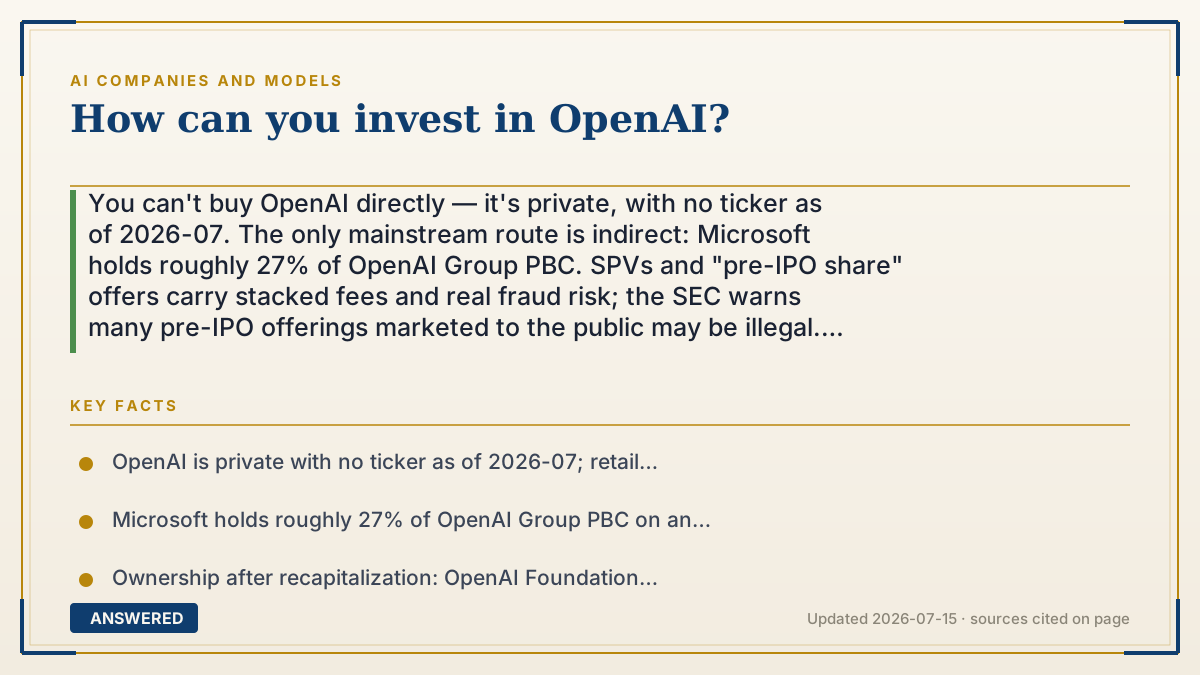
You can't buy OpenAI directly — it's private, with no ticker as of 2026-07. The only mainstream route is indirect: Microsoft holds roughly 27% of OpenAI Group PBC. SPVs and "pre-IPO share" offers carry stacked fees and real fraud risk; the SEC warns many pre-IPO offerings marketed to the public may be illegal. This is information, not investment advice.
Why — the first-principles explanation
The mechanics of private ownership explain why this is hard, and why the workarounds are worse than they look.
When a company is private, its shares don't move freely. They're governed by transfer restrictions in the shareholder agreements — the company decides who may own them, and usually the answer is: employees, the funds it chose, and nobody else. There is no open order book, no quoted price, no obligation to publish audited financials. OpenAI's cap table after the October 28, 2025 restructuring is a closed room: the nonprofit OpenAI Foundation ~26%, Microsoft ~27% (a stake Microsoft valued around $135 billion), and employees and other investors ~47%. Retail investors were never a category in that structure. It isn't an oversight you can route around; it's the design.
So what's actually available? Indirect exposure through public companies. Microsoft is the cleanest, holding roughly 27% on an as-converted diluted basis — but understand what you're buying. Microsoft is an enormous, diversified business; its share price responds to cloud growth, enterprise software, buybacks, and rate expectations. The OpenAI stake is one input among many, and it's already priced in by a market that knows about it. You are not getting concentrated OpenAI exposure. You're getting Microsoft, with a garnish.
Then there's the tier where people lose money. SPVs — special purpose vehicles — pool investor money into an entity that supposedly holds shares of the private company. Some are legitimate. The structural problems are that fees stack at every layer, you often hold an interest in an entity that holds an interest in another entity (each layer taking a cut and obscuring what's underneath), you get no information rights, and you cannot sell when you want. When deals run several layers deep, the murkiness itself is the hazard — it's what fraud hides inside.
Below that is outright crime, and the SEC is unusually blunt about it. Pre-IPO offerings are not registered with the SEC. Unregistered offerings are prohibited unless an exemption applies, and many exemptions don't allow broadly offering securities to the general public — so many pre-IPO offerings targeted at the general public may be illegal. The documented playbook: fraudsters claim there are no upfront fees while charging exorbitant undisclosed markups; they falsely claim a very limited supply or a price below the expected IPO price to rush you; and in some cases they don't even own the shares they're offering and simply spend your money. One SEC-cited case took more than $3.7 million from 45 investors. Note also the base rate the SEC insists on: the company may never go public, a market for the shares may never develop, and you may be unable to resell — you can lose the entire investment even when nothing fraudulent happens.
And the news that fuels all of this: OpenAI confirmed in June 2026 that it confidentially submitted a draft S-1 to the SEC. Real step, real paperwork — and explicitly not a commitment. OpenAI said timing is undecided and "may be a while." No ticker, no price, no date. That ambiguity is precisely the raw material scammers work with, because the story they tell is almost true.
An example that makes it click
A famous chef is opening a restaurant. Maybe. He's had blueprints drawn — that part is real and you can read about it.
On the sidewalk, three people offer you a piece of it. The first sells you shares in the landlord who owns the building the restaurant might rent. That's Microsoft: a real, legal, sensible business whose fortunes are only partly about this restaurant, and the price already reflects everyone knowing about the lease. The second sells you a stake in a club that owns a stake in a club that supposedly has a reservation. Every club takes a fee, nobody will show you the paperwork, and you can't leave when you want. That's an SPV. The third sells you an opening-night table for two hundred dollars, cash, today, and says only three are left. He doesn't work for the chef. There are no tables. There may never be a restaurant. The blueprints being real is exactly what makes him convincing.
How to do it
- Accept the baseline: there is no way to buy OpenAI shares directly as a retail investor as of 2026-07 — no ticker, no exchange listing.
- For indirect exposure, look at public companies with disclosed stakes or heavy business ties. Microsoft holds roughly 27% of OpenAI Group PBC.
- Size that exposure honestly: Microsoft's price is driven mostly by its own operations, and the OpenAI stake is public knowledge already reflected in the price.
- Treat any unsolicited pre-IPO offer as fraud until proven otherwise — the SEC's documented red flags are hidden markups, artificial scarcity, and sellers who don't own the shares.
- If you're evaluating an SPV, demand the full chain: who holds the underlying shares, every fee at every layer, your information rights, and your exit path. Missing answers are the answer.
- Verify anyone selling you securities using the SEC's and FINRA's free public checks before sending money.
- Assume total illiquidity and total loss are both live outcomes in private markets, even absent fraud — the SEC warns the company may never go public and shares may never be resellable.
- Wait for a public S-1 with a price range if you want the ordinary, regulated route. Nothing before that is the IPO.
Key facts
- OpenAI is private with no ticker as of 2026-07; retail investors cannot buy its shares directly.
- Microsoft holds roughly 27% of OpenAI Group PBC on an as-converted diluted basis, valued at approximately $135 billion, following the October 28, 2025 restructuring; it has invested more than $13 billion since 2019.
- Ownership after recapitalization: OpenAI Foundation ~26%, Microsoft ~27%, employees and other investors ~47%.
- The SEC states pre-IPO offerings are not registered with it, and that many pre-IPO offerings targeted at the general public may be illegal because common registration exemptions don't permit broad public offers.
- SEC-documented pre-IPO fraud tactics: falsely claiming no upfront fees while charging exorbitant undisclosed markups, falsely claiming limited share supply or below-IPO pricing, and offering shares the seller doesn't own — one case misappropriated over $3.7 million from 45 investors.
- OpenAI confirmed a confidential draft S-1 submission in June 2026 but stated timing is undecided and 'may be a while' — no ticker, price range, or date exists.
▶ The 60-second explainer (script)
How do you invest in OpenAI? The honest answer is you mostly can't, and understanding why protects your money. OpenAI is private. No ticker, no exchange, no shares for retail investors. After the October 2025 restructuring, the cap table is a closed room: the nonprofit Foundation about twenty-six percent, Microsoft about twenty-seven percent, employees and investors about forty-seven percent. You were never a category in that structure. So what's real? Indirect exposure. Microsoft owns roughly twenty-seven percent of OpenAI Group PBC — a stake Microsoft itself valued around a hundred and thirty-five billion dollars. That's legal, liquid, and disclosed. But be clear about what you're buying: Microsoft is a giant diversified company. Its stock moves on cloud, enterprise software, and interest rates. The OpenAI stake is one ingredient, and the market already knows it's there. You're buying Microsoft with a garnish, not concentrated OpenAI. Below that is where it gets ugly. SPVs — pooled vehicles that supposedly hold private shares. Fees stack at every layer, you often own a stake in a thing that owns a stake in a thing, no information rights, and no way out. And below that, straight fraud. The SEC's language here is remarkably direct: pre-IPO offerings aren't registered with the SEC, and many pre-IPO offerings pitched to the general public may be illegal. Their documented playbook — hidden markups while claiming no fees, fake scarcity to rush you, and sellers who don't own a single share they're selling. One case, three point seven million dollars, forty-five people. And the SEC's baseline warning applies even with honest sellers: the company may never go public, and you may never be able to resell. Yes, OpenAI confidentially filed a draft S-1 in June 2026. It also said timing is undecided and may be a while. That half-true story is exactly what the sidewalk guy is selling. This is information, not investment advice.
What authoritative sources say
People also ask
Can I buy OpenAI stock right now?
No. As of 2026-07 OpenAI is private with no ticker and no shares available to retail investors. Anyone offering you OpenAI shares today is offering something other than what you think.
Is buying Microsoft a good way to own OpenAI?
It's the cleanest legal proxy — Microsoft holds roughly 27% of OpenAI Group PBC. But Microsoft's price is driven mostly by its own vast operations, and the stake is already public knowledge reflected in the price.
Are SPVs offering OpenAI shares legitimate?
Some are legal, but fees stack at each layer, you typically get no information rights, and you can't exit at will. When a deal runs several layers deep, that opacity is itself the risk.
OpenAI filed for an IPO — should I buy pre-IPO now?
The confidential filing is real but commits to nothing; OpenAI said timing is undecided and may be a while. The SEC warns that pre-IPO offerings marketed to the general public are often unregistered and may be illegal.
How do I check whether an offer is a scam?
Verify the seller through the SEC's and FINRA's free public lookups before sending money, and treat hidden markups, artificial scarcity, and unsolicited pitches as the SEC's documented red flags.