How do Luma Dream Machine credits work?
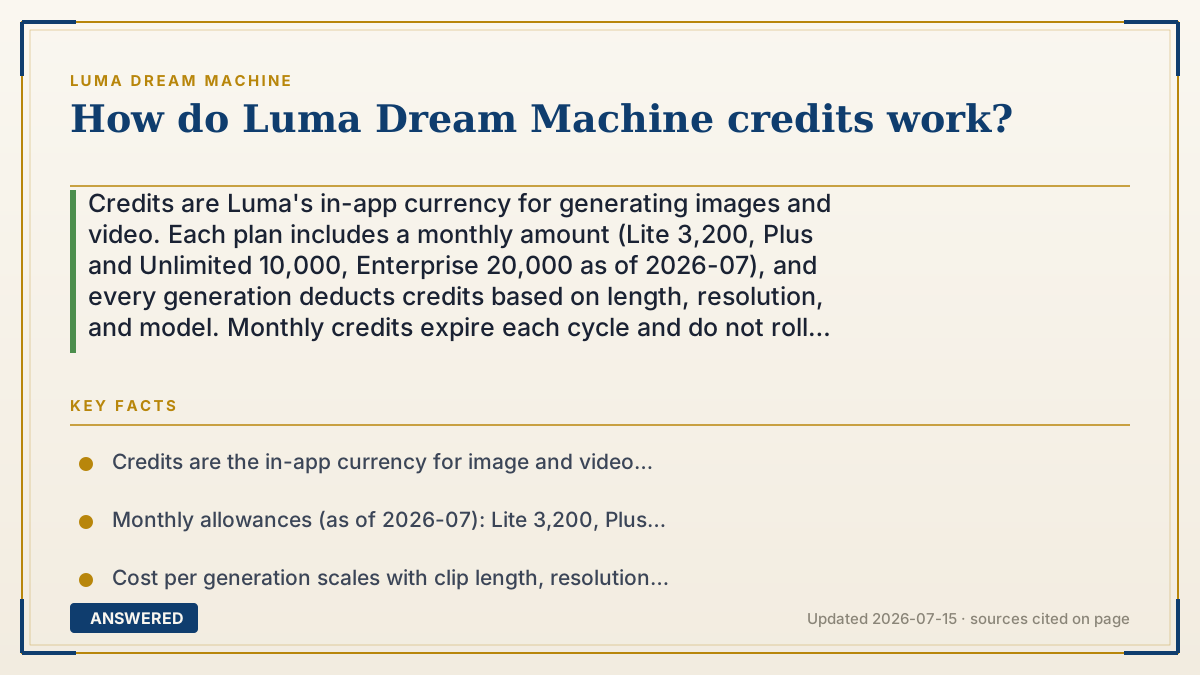
Credits are Luma's in-app currency for generating images and video. Each plan includes a monthly amount (Lite 3,200, Plus and Unlimited 10,000, Enterprise 20,000 as of 2026-07), and every generation deducts credits based on length, resolution, and model. Monthly credits expire each cycle and do not roll over; failed generations are refunded automatically.
Why — the first-principles explanation
Credits exist because every video is a compute cost, not a fixed product. A long, high-resolution clip on the newest model burns far more GPU time than a short draft, so Luma cannot charge one flat 'per video' price. Credits let the price scale with the actual work: bigger, longer, sharper generations cost more credits.
This also lets Luma sell tiers cleanly. Instead of listing dozens of prices, it just hands each plan a monthly credit balance and lets you spend it however you like, a few big renders or many small ones. The catch is that monthly credits expire at the end of each billing cycle and do not stack, which pushes you to actually use what you pay for rather than hoard it.
Two fairness rules soften the system. First, if a generation fails, Luma automatically returns those credits, so you are not charged for its mistakes. Second, if you buy top-up credits beyond your monthly allowance, those last about a year rather than expiring monthly. Separately, Dream Machine credits do not carry over to the Dream Machine API, which is billed on its own.
An example that makes it click
Think of credits like tokens at an arcade. Each month your membership drops a set number of tokens in your cup, say 10,000. A quick, small game costs a few tokens; the big, flashy machine in the corner costs a lot. You spend them however you want. But here is the rule: the monthly tokens vanish at the end of the month, so unused ones do not pile up. If a machine jams mid-game, the arcade hands your tokens back. And any extra tokens you buy separately at the counter stay good for about a year.
How to do it
- Check your plan's monthly credit allowance (for example, 10,000 on Plus).
- Before generating, note that longer, higher-resolution, newer-model clips cost more credits.
- Generate; the cost is deducted from your balance shown in the app.
- If a generation fails, watch for the automatic credit refund.
- Use monthly credits before the cycle ends, since they expire, and buy top-up credits (valid ~1 year) if you need more.
Key facts
- Credits are the in-app currency for image and video generation in Dream Machine.
- Monthly allowances (as of 2026-07): Lite 3,200, Plus 10,000, Unlimited 10,000 fast-mode, Enterprise 20,000.
- Cost per generation scales with clip length, resolution, and model used.
- Monthly credits expire each billing cycle and do not roll over.
- Failed generations are auto-refunded; purchased top-up credits stay valid about one year.
Open the current official limits, credits and plan rules before relying on the allowance.
▶ The 60-second explainer (script)
How do Luma Dream Machine credits work? Credits are simply the in-app currency you spend to generate images and video. Each plan gives you a monthly amount: for example, 3,200 credits on Lite, 10,000 on Plus, and 20,000 on Enterprise. Every time you make a video, credits get deducted, and the cost isn't flat. A longer, sharper clip made with the newest model burns more credits than a quick low-res draft. That's because each generation uses real computing power, so the price scales with the actual work. Two important rules. First, your monthly credits expire at the end of each billing cycle. They do not roll over, so use them or lose them. Second, if a generation fails, Luma automatically refunds those credits, so you're never charged for its errors. If you run out, you can buy top-up credits, and those stay valid for about a year instead of expiring monthly. One more note: Dream Machine credits are separate from the Dream Machine API, which is billed on its own.
What authoritative sources say
People also ask
Do unused credits roll over?
No. Monthly plan credits expire at the end of each billing cycle. Purchased top-up credits last about a year.
What makes a video cost more credits?
Longer duration, higher resolution, and using the newest or highest-quality model all increase the cost.
Do I lose credits if a generation fails?
No. Luma automatically returns credits used on failed generations.
Can I use Dream Machine credits for the API?
No. Dream Machine credits do not transfer to the Dream Machine API, which is billed separately.