How do schools catch students cheating with AI?
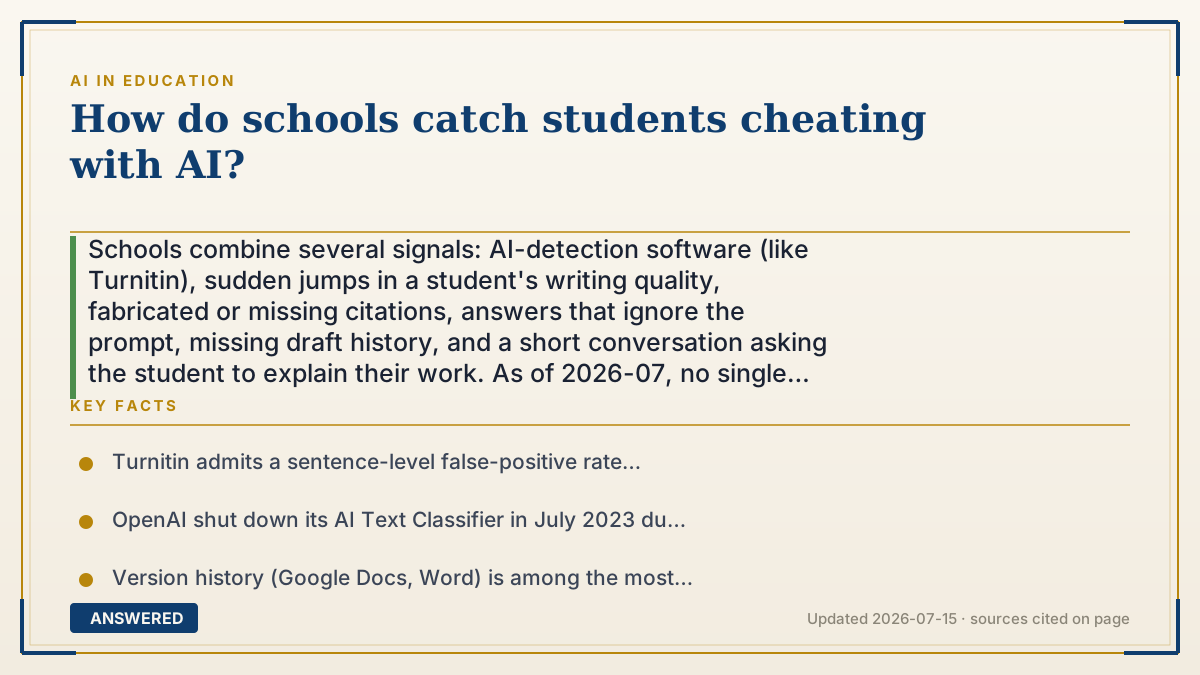
Schools combine several signals: AI-detection software (like Turnitin), sudden jumps in a student's writing quality, fabricated or missing citations, answers that ignore the prompt, missing draft history, and a short conversation asking the student to explain their work. As of 2026-07, no single method is proof, so fair schools require multiple signals before acting.
Why — the first-principles explanation
Because AI detection is unreliable on its own, schools that handle this well treat it like an investigation, not a scan. Detector software measures how predictable a text is and flags smooth, low-surprise writing, but that also catches careful humans and non-native English speakers, so a score is a hint, not evidence. OpenAI even shut down its own detector in 2023 for low accuracy, and Turnitin admits meaningful false positives.
Human signals often matter more than the software. A paper that suddenly reads two grade levels above the student's usual work, citations to sources that don't exist, an essay that answers a slightly different question than the one assigned, or an inability to explain one's own argument, these patterns are what experienced teachers actually notice. Any one can be innocent, so they're weighed together, not used to convict alone.
The most decisive tool is process evidence. Google Docs and Microsoft Word keep version history showing how a document grew; a real draft has messy revisions, while pasted AI text appears in large finished blocks. Add a brief, non-accusatory conversation, "walk me through your thinking here", and a student who did the work can, while one who didn't usually can't. That's why fair academic-integrity policies require corroboration beyond a detector score before any penalty, both to catch real cheating and to protect honest students from false accusations.
An example that makes it click
It's like a teacher noticing a suspiciously perfect essay the way a coach notices a runner who suddenly shaves two minutes off their mile. The coach doesn't immediately hand out a penalty; they look closer. Did the runner train for this? Can they do it again on the spot? Is there a record of the practice runs?
With AI, the "practice runs" are your drafts and version history, and the "do it again on the spot" is explaining your essay out loud. A student who genuinely improved has both. That combination, not a single beep from a detector, is how schools tell the difference.
How to do it
- Notice writing shifts: compare the work to the student's prior samples and in-class writing.
- Check sources and prompt fit: look for fake citations and answers that dodge the actual question.
- Run detector software as one signal only, given its false-positive rate.
- Review process evidence: draft history and version history in Google Docs or Word.
- Hold a short, non-accusatory talk asking the student to explain or extend their work.
- Corroborate before acting: follow the school's policy requiring multiple signals, not a lone detector score.
Key facts
- Turnitin admits a sentence-level false-positive rate around 4% and may miss up to 15% of AI text.
- OpenAI shut down its AI Text Classifier in July 2023 due to low accuracy (26% true positives).
- Version history (Google Docs, Word) is among the most decisive evidence, showing how a draft actually grew.
- Common human signals: sudden quality jumps, fake citations, off-prompt answers, and inability to explain one's work.
- Fair policies require corroboration beyond a detector score before penalties.
Choosing an AI tool for study?
The answer above explains the concept; this next step helps you choose by job, limits and current terms.
▶ The 60-second explainer (script)
How do schools catch students cheating with AI? They stack up evidence, because no single method proves it. Detector software like Turnitin measures how predictable writing is, but it flags careful humans and second-language writers too, and OpenAI shut down its own detector in 2023 for being too inaccurate. So a score is just a hint. What often matters more are human signals: a paper that suddenly reads two grade levels higher than usual, citations to books that don't exist, or an essay that answers a slightly different question than the one assigned. But the most decisive tool is process evidence. Google Docs and Word keep version history, and a real draft grows messily, while pasted AI text lands in big finished blocks. Add a quick conversation, 'walk me through your thinking', and a student who did the work usually can. That's the key: fair schools require several signals together, both to catch real cheating and to protect honest students from a false accusation. If you did the work, save your drafts.
What authoritative sources say
People also ask
Do schools rely mainly on detector software?
Fair ones don't. Because detectors have real false-positive rates, they use software as one signal among drafts, sources, and conversation.
What's the strongest proof of AI cheating?
Process evidence like version history, combined with a student's inability to explain their own work.
Can I be falsely accused of AI cheating?
It's possible if a school over-trusts a detector. Keeping your drafts and notes is the best protection.
Why don't detectors settle it?
They give probability estimates that flag careful and non-native writers too, and light editing defeats them, so they aren't proof.