How does ElevenLabs work?
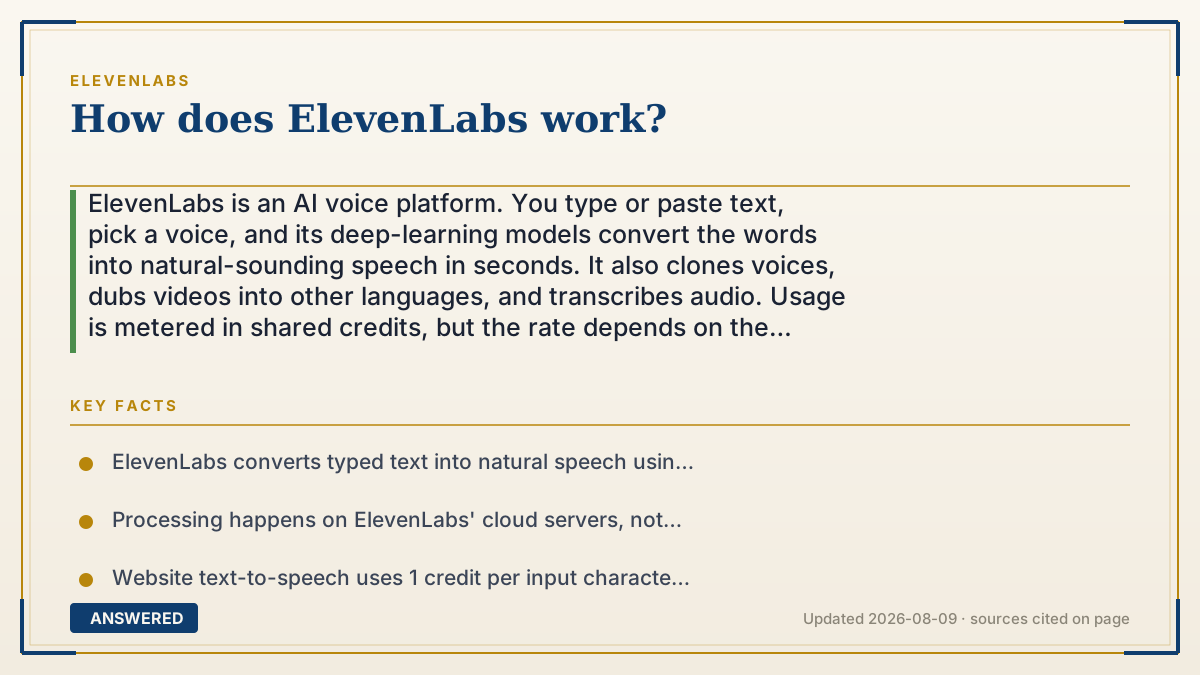
ElevenLabs is an AI voice platform. You type or paste text, pick a voice, and its deep-learning models convert the words into natural-sounding speech in seconds. It also clones voices, dubs videos into other languages, and transcribes audio. Usage is metered in shared credits, but the rate depends on the product, model and whether you use the website or API. Verified 2026-08-09.
Why — the first-principles explanation
At its core ElevenLabs solves one problem: turning text into speech that sounds human. Older text-to-speech read words one at a time, so it sounded flat and robotic. ElevenLabs' models instead read a whole passage of context before speaking, which lets them predict emotion, emphasis, and pacing the way a person naturally would. That context-awareness is why the output has rising and falling intonation instead of a monotone.
Everything runs on their servers, not your device, because the models are large and need powerful GPUs. When you press generate, your text is sent to ElevenLabs, the model produces an audio waveform, and the file streams back to you. Since each request burns compute, ElevenLabs meters usage with credits. For text-to-speech generated on the website, each input character consumes one credit before any shared-voice multiplier. API text-to-speech has its own model-specific discounts, and non-text products use different units, so there is no universal credits-to-minutes conversion.
On top of plain text-to-speech, the platform offers extra tools. Voice cloning learns a specific person's voice from a sample. Dubbing transcribes a video, translates it, and re-speaks it in a new language while keeping the original voice. Speech-to-text runs the process in reverse to transcribe recordings. These products can draw from the same account balance while using different meters.
An example that makes it click
Picture a vending machine for spoken audio. You feed in a slip of paper with your sentence written on it and press a button for the voice you want. A moment later, out drops an audio clip. Credits are the machine's tokens, but different buttons spend them differently: website text-to-speech counts input characters, while dubbing and transcription use their own meters. The clever part is that the machine reads the whole sentence first, the way you'd glance at a line before reading it aloud, so it knows where to pause, stress a word, or sound excited.
How to do it
- Create a free account at elevenlabs.io.
- Open the Text to Speech tool and paste in the text you want spoken.
- Choose a voice from the library, or use your own cloned voice.
- Adjust settings like stability and clarity if you want, then click Generate.
- Listen to the result and download the audio file, credits are deducted based on character count.
Key facts
- ElevenLabs converts typed text into natural speech using context-aware deep-learning models.
- Processing happens on ElevenLabs' cloud servers, not your device.
- Website text-to-speech uses 1 credit per input character before any shared-voice multiplier; API and other products use different rates.
- The platform also offers voice cloning, video dubbing, and speech-to-text.
- It supports dozens of languages, with cloning available in 32+.
Open the official product site and confirm the current access, plans and terms.
▶ The 60-second explainer (script)
How does ElevenLabs work? At its heart, it turns text into speech that sounds human. You type a sentence, pick a voice, and its AI reads it aloud in seconds. The trick is that older text-to-speech read words one at a time and sounded robotic, but ElevenLabs' models read the whole passage first, so they know where to pause, stress a word, or sound excited. All the heavy lifting happens on their servers, so any device can use it. ElevenLabs meters usage in credits: website text-to-speech consumes one credit per input character before any voice multiplier, while API models and products such as dubbing use different rates. The platform also clones voices, dubs videos and transcribes recordings. Verified August 9, 2026.
What authoritative sources say
People also ask
Do I need to install anything to use ElevenLabs?
No. It runs in your web browser, and the audio is generated on ElevenLabs' servers. There is also an API for developers.
Why does ElevenLabs sound more natural than older text-to-speech?
Its models read a whole passage of context before speaking, so they add human-like emphasis, pauses, and emotion instead of a flat monotone.
What can ElevenLabs do besides read text aloud?
It can clone a specific voice, dub videos into other languages while keeping the voice, and transcribe audio into text.
How is usage measured?
In credits. Website text-to-speech consumes one credit per input character before any voice multiplier; API models and other products use different meters, so credits do not have one universal duration.