How is AI changing the workplace?
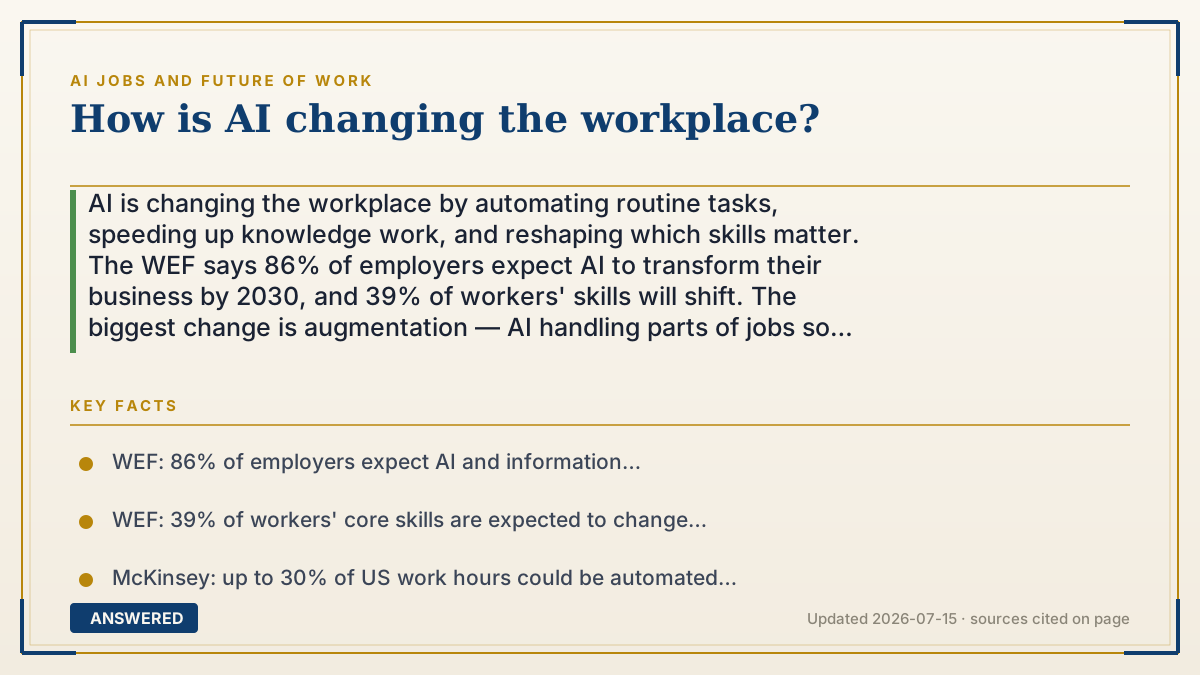
AI is changing the workplace by automating routine tasks, speeding up knowledge work, and reshaping which skills matter. The WEF says 86% of employers expect AI to transform their business by 2030, and 39% of workers' skills will shift. The biggest change is augmentation — AI handling parts of jobs so people focus on judgment and creativity.
Why — the first-principles explanation
AI changes the workplace through one core mechanism: it turns tasks that used to require a human into things software can do or accelerate. Because modern AI can generate text, code, images, and analysis on demand, it slots into the information layer of almost every office job — drafting, summarizing, searching, translating, and answering routine questions. Wherever work flows through documents and screens, AI can now do a first pass.
The practical result is a shift from doing to directing and checking. A lawyer spends less time writing a first-draft contract and more time reviewing the AI's draft. A marketer generates ten ad variations in minutes and spends the saved time on strategy. This is why the dominant effect is augmentation rather than replacement: AI removes grunt work inside a role, raising each person's output. McKinsey estimates up to 30% of US work hours are automatable, most of which shows up as freed time inside existing jobs.
Those changes ripple outward into how workplaces are organized. Skills shift fast — the WEF finds 39% of core skills will change by 2030 and 86% of employers expect AI to transform operations. New roles appear (AI trainers, prompt specialists, AI ethics and oversight). Hiring criteria tilt toward people who can work with AI. And new tensions emerge: data privacy, over-reliance on AI outputs, monitoring, and the need to verify machine work before trusting it. The workplace isn't emptying of people — it's reorganizing around a fast, tireless, but fallible digital assistant.
An example that makes it click
Picture a customer-support team in 2026. Before AI, ten agents each answered emails one at a time, typing similar replies all day. Now an AI drafts a suggested answer for every ticket in seconds. The routine questions get handled almost automatically, and the ten agents shift to the tricky, emotional, or unusual cases — the ones needing a real human to smooth things over.
The team didn't vanish, and it didn't stay the same. Its shape changed: fewer hours on repetitive typing, more on judgment and empathy, plus a new person who manages and improves the AI system. Multiply that across accounting, marketing, HR, and law, and you can see how AI is quietly rewiring the whole workplace, one task at a time.
Key facts
- WEF: 86% of employers expect AI and information processing to transform their business by 2030.
- WEF: 39% of workers' core skills are expected to change between 2025 and 2030.
- McKinsey: up to 30% of US work hours could be automated by 2030, mostly appearing as augmentation within jobs.
- IMF: 60% of jobs in advanced economies are exposed to AI, with about half likely enhanced rather than replaced.
- New workplace roles are emerging — AI/ML specialists, data specialists, and AI oversight roles rank among the fastest-growing.
Choosing an AI tool for work?
The answer above explains the concept; this next step helps you choose by job, limits and current terms.
▶ The 60-second explainer (script)
How is AI changing the workplace? Through one simple mechanism: it turns work that used to need a human into something software can do or speed up. Because AI can draft text, write code, and analyze data on demand, it slots into the information layer of almost every office job. So the daily change is a shift from doing to directing. A lawyer reviews an AI-drafted contract instead of writing it from scratch. A marketer generates ten ad versions in minutes, then spends the saved time on strategy. That's why the main effect is augmentation, not replacement — AI removes the grunt work inside a role. The World Economic Forum says eighty-six percent of employers expect AI to transform their business by 2030, and thirty-nine percent of workers' skills will shift. New roles appear too: AI trainers, prompt specialists, oversight and ethics jobs. The workplace isn't emptying of people — it's reorganizing around a fast, tireless, but fallible digital assistant that still needs humans to aim it and check its work.
What authoritative sources say
People also ask
What is the biggest way AI is changing work?
Augmentation. AI handles routine parts of a job so workers spend more time on judgment, creativity, and human interaction — reshaping roles rather than eliminating most of them.
Are new jobs being created inside workplaces?
Yes. Roles like AI/machine learning specialists, data specialists, prompt engineers, and AI oversight and ethics positions are among the fastest-growing new workplace jobs.
What new risks does AI bring to the workplace?
Data privacy, over-reliance on unverified AI outputs, increased monitoring, and skill gaps. Workplaces need guardrails and human review to use AI safely.
Do workers need new skills because of AI?
Yes. The WEF projects 39% of core skills will change by 2030, so AI fluency plus durable human skills like critical thinking are increasingly essential.