How is AI used in the classroom?
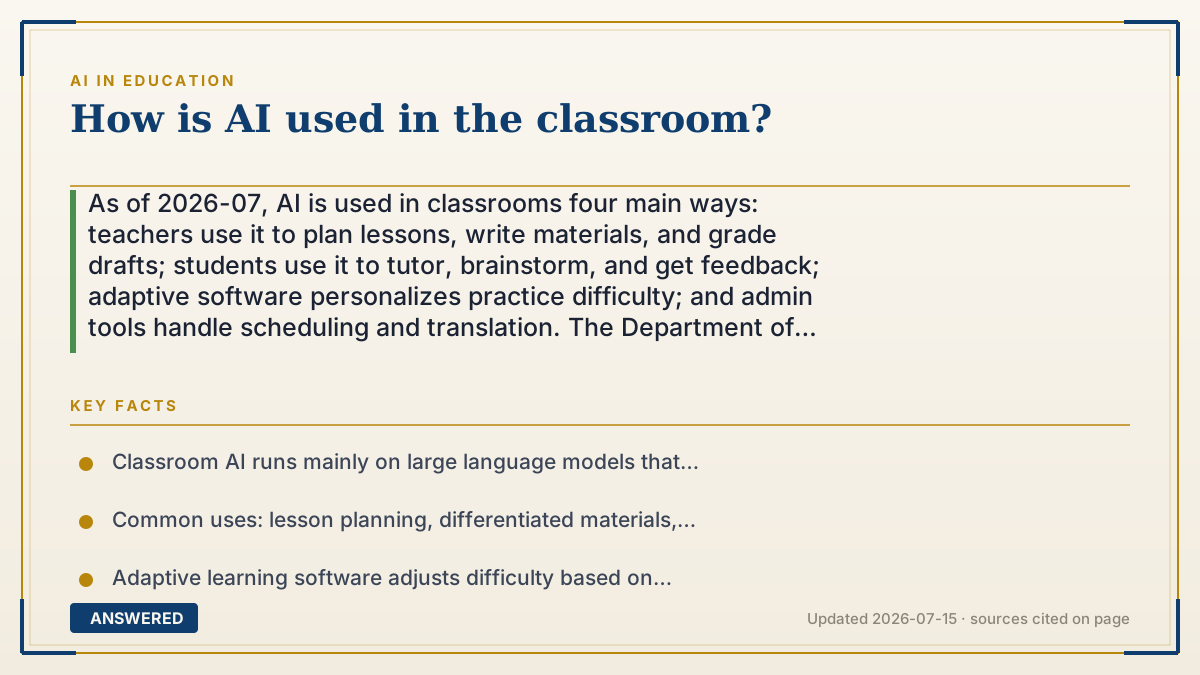
As of 2026-07, AI is used in classrooms four main ways: teachers use it to plan lessons, write materials, and grade drafts; students use it to tutor, brainstorm, and get feedback; adaptive software personalizes practice difficulty; and admin tools handle scheduling and translation. The Department of Education stresses teachers must stay in the loop.
Why — the first-principles explanation
Most classroom AI is built on the same engine: a large language model that predicts likely next words from patterns in huge text datasets. That single ability powers a surprising range of tasks. Because it can generate fluent text on demand, it can draft a lesson plan, rewrite a passage at a lower reading level, produce ten quiz questions, or explain a math step in three different ways. The teacher supplies the goal; the model supplies fast first drafts.
The second big use is personalization. Adaptive learning software watches which problems a student gets right and adjusts the next problem's difficulty, so a fast learner speeds up and a struggling learner gets more practice on the exact skill they missed. This isn't new AI magic; it's pattern-matching on student responses, and it works best on subjects with clear right answers like early math and vocabulary.
The third and fourth uses are feedback and operations. AI can give instant, low-stakes feedback on a rough essay so a student can revise before the teacher ever sees it, and it can translate a parent letter into a family's home language or draft a permission slip. Across all of these, the guardrail is the same: the model can be confidently wrong, so a human checks anything that counts. That is why the U.S. Department of Education frames AI as a tool that augments teachers rather than replacing their judgment.
An example that makes it click
Picture a single teacher, Ms. Rivera, on a Sunday night. She types "make a 45-minute lesson on the water cycle for 4th grade, plus 5 quiz questions and a simpler version for readers below grade level." In two minutes she has a first draft she then edits. On Monday, her students practice fractions on an app that gives the struggling kids easier problems and the quick kids harder ones, automatically. A new student who speaks Vietnamese reads the day's instructions translated instantly.
None of this replaced Ms. Rivera. It just handed her a fast intern for the boring parts, so she spent Monday walking the room and actually teaching.
How to do it
- Lesson prep: ask an AI to draft plans, worksheets, and quiz questions from your standards, then edit for accuracy.
- Differentiation: have it rewrite the same text at multiple reading levels or languages.
- Adaptive practice: assign software that adjusts problem difficulty to each student's responses.
- Feedback: let students get instant AI feedback on rough drafts before human grading.
- Operations: use AI for translation, scheduling, and drafting parent communications, with a human review.
Key facts
- Classroom AI runs mainly on large language models that generate text by predicting likely word patterns.
- Common uses: lesson planning, differentiated materials, adaptive practice, draft feedback, and translation.
- Adaptive learning software adjusts difficulty based on each student's correct and incorrect answers.
- The U.S. Department of Education's 2023 AI report frames AI as augmenting, not replacing, teachers.
- AI outputs can contain confident errors (hallucinations), so human review is required for anything graded.
▶ The 60-second explainer (script)
How is AI actually used in classrooms today? Four main ways. One, teacher prep. A teacher can ask an AI to draft a lesson plan, worksheets, and quiz questions in minutes, then edit them. Two, personalization. Adaptive apps watch which problems a student misses and automatically adjust the difficulty, so fast learners speed up and strugglers get more practice. Three, instant feedback. Students can get quick notes on a rough essay and revise before a human ever grades it. And four, operations, like translating a parent letter into a family's home language. All of this runs on the same engine, a model that predicts likely words, which means it can also be confidently wrong. So the rule everywhere is human in the loop. The U.S. Department of Education says AI should support teachers, not replace their judgment. Think of it as a fast intern for the boring parts, freeing the teacher to actually teach.
What authoritative sources say
People also ask
Do students use AI directly in class?
Often yes, for tutoring, brainstorming, and draft feedback, usually under teacher rules about what counts as their own work.
What subjects benefit most from adaptive AI?
Subjects with clear right answers, like early math, reading fluency, and vocabulary, where the software can reliably judge responses.
Is AI grading the final grades?
Rarely. AI can give first-pass feedback, but responsible policies keep a human making the final call on scores.
Does using AI mean less teacher work?
It shifts work. Teachers spend less time drafting materials and more time on instruction and student support.
The same question, asked other ways
- How can AI be used in education?