How to learn AI for beginners?
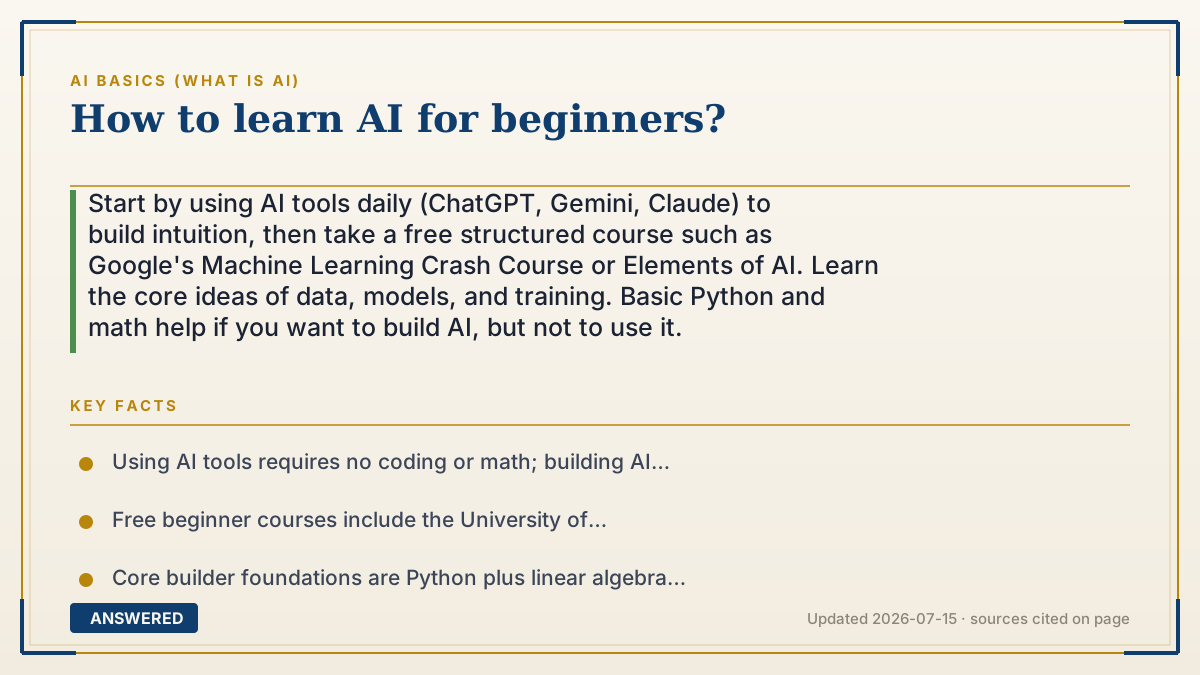
Start by using AI tools daily (ChatGPT, Gemini, Claude) to build intuition, then take a free structured course such as Google's Machine Learning Crash Course or Elements of AI. Learn the core ideas of data, models, and training. Basic Python and math help if you want to build AI, but not to use it.
Why — the first-principles explanation
"Learning AI" means two very different things, so pick your goal first. One path is becoming a skilled user: prompting tools well, knowing their limits, and applying them to real work. This needs zero math or code. The other path is becoming a builder: training and deploying models, which does require programming and some math. Most beginners should start as users, because it builds accurate intuition fast and is immediately useful.
AI rewards hands-on practice over passive reading, because the field is about how systems behave with real data, not memorized definitions. When you actually prompt a model, watch it fail, and adjust, you learn what it can and can't do far better than from a textbook. So the fastest curriculum is: use it every day, then layer in structured theory to explain what you're seeing.
If you go the builder route, the foundation is Python plus a little math (linear algebra, probability, and basic calculus underpin how models learn). Free, reputable courses exist for every level, so cost is not a barrier. The winning strategy is consistency and small projects, not cramming, because understanding compounds when you connect new concepts to things you've already built.
An example that makes it click
Learning AI is like learning to cook. You don't start by memorizing the chemistry of caramelization. You start by making scrambled eggs, then a stir-fry, tasting as you go. After a dozen meals you develop instincts, and then a bit of food-science theory suddenly makes sense because you've seen it happen in the pan.
Same with AI: cook with the tools first. Ask ChatGPT to plan your week, summarize an article, or fix a spreadsheet formula. Once you've 'burned' a few dishes (gotten wrong answers), the courses on how models work will click, because you'll recognize what they're describing.
How to do it
- Week 1-2: Use a free AI chatbot (ChatGPT, Gemini, or Claude) daily for real tasks to build intuition about what it does well and badly.
- Learn prompting basics: give context, specify format and length, and refine with follow-ups.
- Take a beginner course: 'Elements of AI' (free, no math) for concepts, or Google's Machine Learning Crash Course for the technical side.
- Learn the core vocabulary: data, model, training vs inference, machine learning, neural networks, generative AI.
- If you want to build: learn basic Python, then a friendly library like scikit-learn, and try a small project (e.g., classify images or text).
- Add math gradually as needed: linear algebra, probability, and basic calculus power how models learn.
- Keep a project going. Small, consistent builds beat marathon study sessions for retention.
Key facts
- Using AI tools requires no coding or math; building AI models does require programming (usually Python) and some math.
- Free beginner courses include the University of Helsinki's 'Elements of AI' and Google's Machine Learning Crash Course.
- Core builder foundations are Python plus linear algebra, probability, and basic calculus.
- Hands-on practice and small projects retain better than passive reading.
- Start as a 'user' before a 'builder' to develop accurate intuition quickly and cheaply.
▶ The 60-second explainer (script)
Want to learn AI as a total beginner? Here's the fastest path. First, decide your goal. Do you want to use AI, or build it? Using it needs no math and no code, so start there. Step one, and this is the big one: use a free chatbot like ChatGPT, Gemini, or Claude every single day for real tasks. Plan your week, summarize an article, fix a formula. You'll learn what it's great at and where it fails, which is intuition no textbook gives you. Step two, get better at prompting: give context, say the format and length you want, and refine with follow-ups. Step three, take a free structured course. 'Elements of AI' is fantastic and needs no math. Google's Machine Learning Crash Course goes deeper if you want the technical side. If you decide to build models, learn a bit of Python and some math, and start a tiny project. The secret isn't cramming. It's cooking with the tools consistently until the theory clicks.
What authoritative sources say
People also ask
How long does it take to learn AI?
You can be a competent user in a few weeks of daily practice. Becoming a builder who trains models typically takes several months of study and projects.
Do I need a math or CS degree?
No. Many people use and even build with AI without a degree. Math matters more for research and deep model work than for applied use.
What's the best first step?
Use a free AI tool daily for real tasks. Practical experience builds intuition faster than reading, and it's free.
Is Python necessary?
Only if you want to build AI. Python is the most common language for machine learning, but using existing AI tools needs no coding at all.