Is AI good or bad?
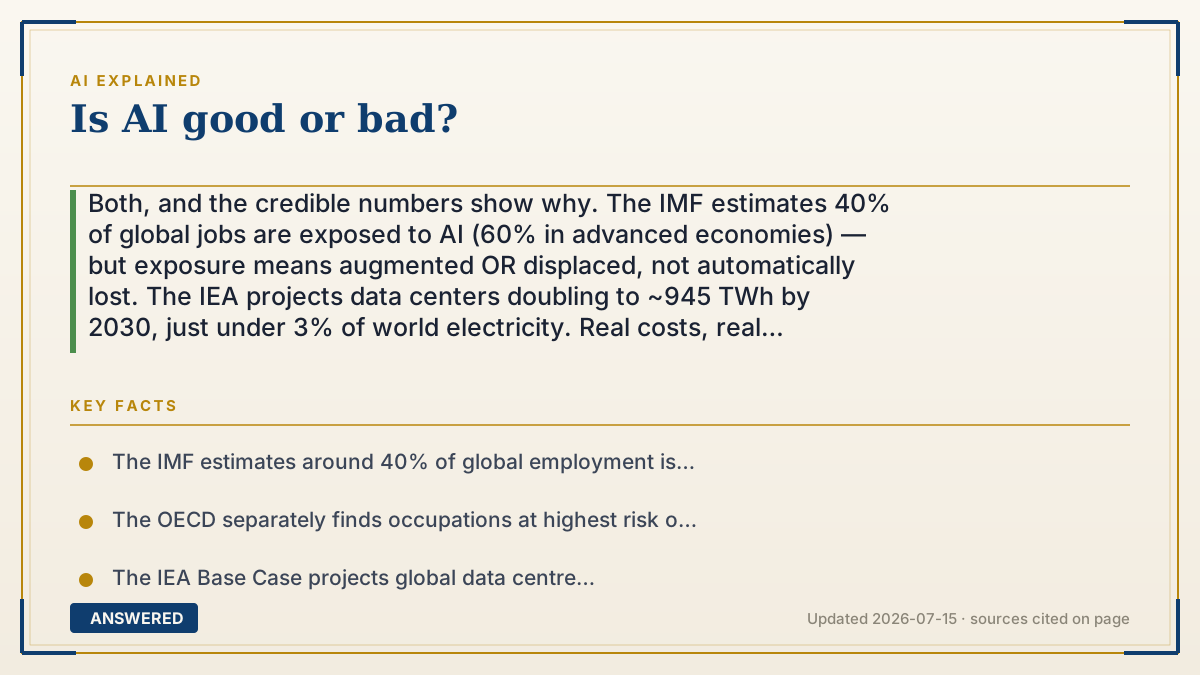
Both, and the credible numbers show why. The IMF estimates 40% of global jobs are exposed to AI (60% in advanced economies) — but exposure means augmented OR displaced, not automatically lost. The IEA projects data centers doubling to ~945 TWh by 2030, just under 3% of world electricity. Real costs, real benefits, genuinely uncertain balance.
Why — the first-principles explanation
The reason you can't get a straight answer isn't that everyone's dodging. It's that "AI" isn't one thing, and the estimates you see are measuring different things with different boundaries. Once you see the boundaries, the disagreements stop looking like a conspiracy and start looking like arithmetic.
Take jobs. You'll see "40% of jobs at risk" and "27% at risk" and assume someone is lying. Neither is. The IMF's 40% figure (60% in advanced economies) measures exposure — how much of a job's tasks AI could touch. The OECD's ~27% measures risk of automation based on skills and abilities. Different questions, different answers. And the IMF explicitly adds a complementarity dimension: exposure splits into jobs AI likely augments versus jobs it likely displaces. The IMF's own reading is that roughly half of exposed jobs in advanced economies could see negative effects — which means the other half might see their productivity rise. "40% exposed" is not "40% unemployed," and anyone quoting it that way is either confused or selling something.
Same structure for energy. Numbers range from "trivial" to "civilizational threat" because people measure different boundaries. Per-query energy is tiny. Training a frontier model is large but one-time. Inference across billions of daily queries is the part that actually compounds. Whole-data-center consumption includes everything — search, video, cloud storage — not just AI. The IEA's Base Case, which is the most careful public estimate available, projects data center electricity roughly doubling to about 945 TWh by 2030, just under 3% of global electricity, growing about 15% per year — over four times faster than all other electricity demand. AI is the main driver, with AI-optimized data center demand more than quadrupling. But note: 3% of global electricity is real and not apocalyptic. Whether that's worth it depends on what you get, and on whether the grid it lands on is clean. The IEA also warns those data centers risk becoming victims of their own success — they can outrun the grid that feeds them. Water follows the same pattern: on-site evaporative cooling versus off-site water used to generate the electricity are different numbers, and headlines routinely mix them.
The honest structural answer is that AI's costs and benefits land on different people. The person whose transcription job disappears is not the person whose radiologist caught something earlier. The county whose electricity bill rises to power a data center is not the shareholder. Asking "is AI good or bad" averages across those people and produces a number that describes nobody. That's why it feels unanswerable. It is unanswerable in that form — but it's very answerable if you ask good for whom, at whose cost, on what timescale.
An example that makes it click
Ask "are cars good or bad." Cars gave hundreds of millions of people freedom of movement, and they kill over a million people a year worldwide, and they reshaped cities around parking lots, and they let an ambulance reach you in eight minutes. Every one of those is true at once. Nobody who's thought about it says "cars: good" or "cars: bad." They say: seatbelts, speed limits, crosswalks, emissions standards, and don't build the whole city around them.
That's the shape of the AI answer too. The useful conversation was never the verdict. It's the seatbelts.
Key facts
- The IMF estimates around 40% of global employment is exposed to AI, rising to about 60% in advanced economies; it stresses that exposure splits between jobs AI augments and jobs it displaces, and estimates roughly half of exposed jobs in advanced economies could see negative effects.
- The OECD separately finds occupations at highest risk of automation account for about 27% of employment on average across OECD countries — a lower number because it measures automation risk from skills and abilities, not AI task exposure.
- The IEA Base Case projects global data centre electricity consumption doubling to around 945 TWh by 2030 — just under 3% of total global electricity consumption.
- Data centre electricity consumption grows around 15% per year from 2024 to 2030 in the IEA Base Case, more than four times faster than total electricity demand from all other sectors.
- The US and China account for nearly 80% of global data centre electricity growth to 2030: roughly +240 TWh (up 130%) in the US and +175 TWh (up 170%) in China.
- Electricity demand from AI-optimised data centres is projected to more than quadruple by 2030, making AI the most significant driver of data centre growth.
- Water-use figures vary widely because on-site cooling water and off-site water consumed generating the electricity are different measurements often reported interchangeably.
▶ The 60-second explainer (script)
Is AI good or bad? Both — and the reason you can't get a straight answer isn't that people are dodging. It's that the numbers measure different things. Take jobs. You'll see "forty percent of jobs at risk" and "twenty-seven percent at risk" and assume someone's lying. Neither is. The IMF's forty percent — sixty in advanced economies — measures exposure: how much of a job's tasks AI could touch. The OECD's twenty-seven measures risk of automation from skills and abilities. Different questions. And the IMF explicitly splits exposure into jobs AI augments versus jobs it displaces. Their read: about half of exposed jobs in advanced economies could see negative effects. So the other half might get more productive. Forty percent exposed is not forty percent unemployed. Anyone quoting it that way is confused or selling something. Energy, same story. Estimates run from trivial to apocalyptic because people draw different boundaries. Per-query energy is tiny. Training is big but one-time. Inference across billions of queries compounds. Whole-data-center numbers include search and video, not just AI. The IEA's base case — the most careful public estimate — has data centers roughly doubling to nine hundred forty-five terawatt-hours by 2030. That's just under three percent of global electricity, growing fifteen percent a year, four times faster than everything else. Real. Not apocalyptic. Here's the structural thing though: the costs and benefits land on different people. The person whose transcription job vanished isn't the person whose radiologist caught the tumor early. Asking "is AI good or bad" averages across them and describes nobody. Ask instead: good for whom, at whose cost, on what timescale. That one has answers.
What authoritative sources say
People also ask
Will AI take 40% of jobs?
No — that's a misreading. The IMF's 40% figure is exposure, meaning AI could touch some of those jobs' tasks. The IMF estimates roughly half of exposed jobs in advanced economies could see negative effects; the rest may be augmented and become more productive.
Why do AI energy estimates vary so wildly?
Different boundaries. Per-query energy, one-time training energy, total inference across billions of queries, and whole-data-center consumption (which includes search and video, not just AI) are four different measurements. Headlines swap them freely.
How much water does AI use?
It depends entirely on what you count. On-site evaporative cooling water and off-site water consumed generating the electricity are separate numbers, and the split varies by site and grid mix. Any single headline figure is hiding that choice.
Is 3% of global electricity a lot?
It's material but not catastrophic — comparable to other large industrial sectors. The sharper issue the IEA raises is speed and concentration: 15% annual growth clustered in specific regions can outrun local grid capacity long before it strains global supply.
What's the best way to think about it?
Replace "is AI good or bad" with "good for whom, at whose cost, on what timescale." The averaged verdict describes nobody, because the benefits and the costs land on different people.