Is jobright.AI legit?
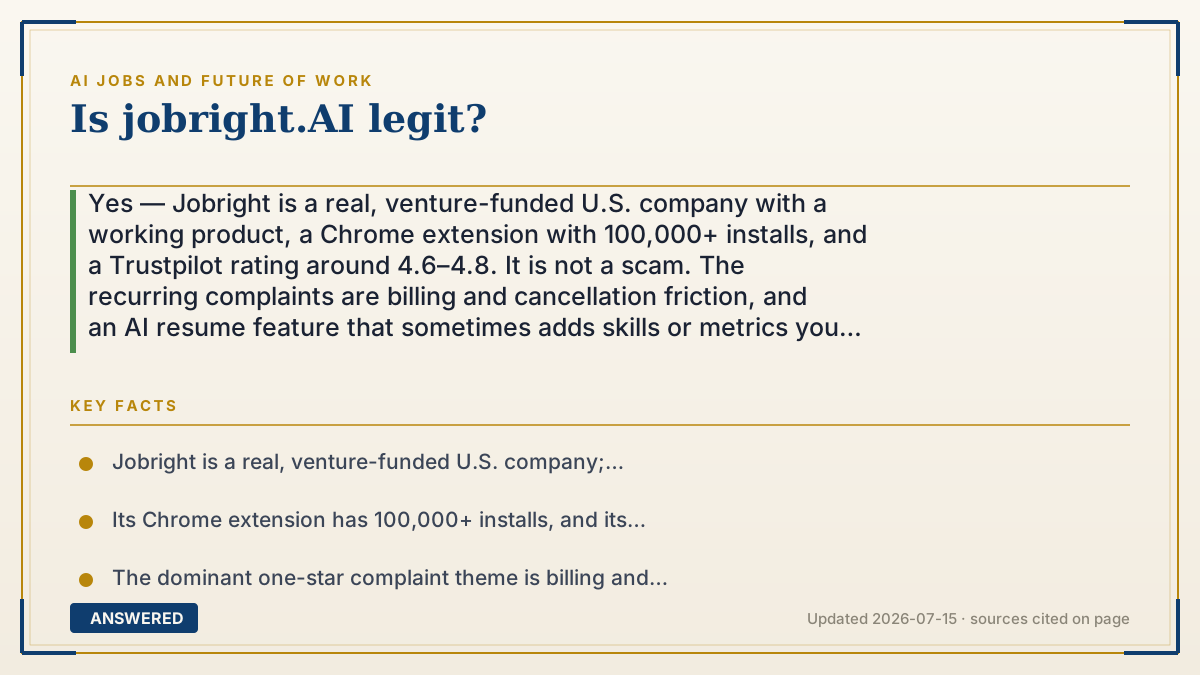
Yes — Jobright is a real, venture-funded U.S. company with a working product, a Chrome extension with 100,000+ installs, and a Trustpilot rating around 4.6–4.8. It is not a scam. The recurring complaints are billing and cancellation friction, and an AI resume feature that sometimes adds skills or metrics you never had.
Why — the first-principles explanation
"Legit" bundles three different questions, and Jobright scores differently on each. Does the company exist and ship a product? Clearly yes — funded, publicly reviewed, tens of thousands of users. Does it bill honestly? That's where the one-star reviews cluster: auto-renewal, hard-to-find cancellation, email-only support. Does the product make claims it can't keep? Partly — which is where the real risk sits, and it isn't a fraud risk.
Understand the business model and the complaint pattern stops being mysterious. Job-search tools sell to people in a stressful, temporary situation. You subscribe in a panic, land a job in six weeks, and forget the subscription exists. That means the profitable customer is the one who stops paying attention — an incentive structure that quietly rewards friction at cancellation. This isn't unique to Jobright; it describes the whole category, and it's why billing complaints dominate its negative reviews rather than complaints about the product.
The more serious issue is technical, not ethical. Users report the resume AI inserting skills, metrics, or credentials that weren't in the original. That's exactly what language models do — they generate the most plausible continuation, and "increased efficiency by 40%" is an extremely plausible thing to find on a resume. The model has no way to know it's false. On a resume this is dangerous in a way it isn't elsewhere: an invented credential is résumé fraud, and you own that, not the tool. Read every generated line and delete anything that isn't literally true.
One legal correction, since most advice online is out of date: the FTC's "click-to-cancel" rule was vacated by the Eighth Circuit on July 8, 2025, days before its main requirements took effect. So don't count on it. You are still protected by the Restore Online Shoppers' Confidence Act (ROSCA), Section 5 of the FTC Act, and state auto-renewal laws — and the FTC has continued bringing subscription cases under those. Your practical protection is your card, not a rule that no longer exists.
An example that makes it click
Think of it like a gym in January. The gym is real. The equipment works. Nobody is running a con. And yet the entire business is built on the fact that you'll stop coming in March and keep paying until October — so the sign-up desk is by the front door and the cancellation form is in a basement office open Tuesdays.
Jobright is a real gym. The complaint isn't that the treadmills are fake; it's that leaving is harder than joining. And the AI resume feature is like a personal trainer who fills in your workout log with numbers you didn't actually lift. Flattering, plausible, and entirely your problem when someone checks.
How to do it
- Verify before you subscribe: use the free tier first to see whether its job matches are actually relevant to you.
- Note the renewal date the moment you subscribe, and set a calendar reminder 2 days before it.
- Find the cancellation path before you pay, not after — if you can't locate it in the settings, treat that as information.
- Read every AI-generated resume line and delete anything not literally true. Invented metrics and credentials are your liability, not the tool's.
- Pay with a method you can control — a virtual or single-merchant card lets you cut off recurring charges if support goes unresponsive.
- Keep records: screenshot your cancellation confirmation and save the email, since billing disputes turn on evidence.
- If charged after cancelling, dispute with your card issuer and file a complaint at reportfraud.ftc.gov — ROSCA and state auto-renewal laws still apply even though the click-to-cancel rule was vacated.
Key facts
- Jobright is a real, venture-funded U.S. company; reporting indicates roughly $7.7M raised, including a $4.5M seed round and a later round with participation from Indeed's affiliated venture arm (figures reported by third-party reviewers, not independently confirmed here).
- Its Chrome extension has 100,000+ installs, and its Trustpilot rating sits around 4.6–4.8 across reviews (as of 2026-07).
- The dominant one-star complaint theme is billing and cancellation friction: auto-renewal without warning, hard-to-find cancellation, and email-only support.
- Multiple users report the resume AI inserting false skills, fabricated metrics, or credentials absent from the original resume.
- The FTC's 'click-to-cancel' Negative Option Rule was vacated in full by the Eighth Circuit on July 8, 2025, on procedural grounds — it is not in force.
- Subscription sellers remain subject to ROSCA, Section 5 of the FTC Act, and state auto-renewal laws, and the FTC has continued enforcement under those authorities.
▶ The 60-second explainer (script)
Is jobright dot AI legit? Yes — it's a real, venture-funded U.S. company with a working product, over a hundred thousand Chrome extension installs, and a Trustpilot rating around four-point-six to four-point-eight. It is not a scam. But 'legit' is really three questions, and it scores differently on each. Does the company exist and ship? Clearly. Does it bill honestly? That's where the one-star reviews pile up — auto-renewal, hard-to-find cancellation, email-only support. And once you see the business model, that stops being mysterious. Job tools sell to people in a stressful, temporary situation. You subscribe in a panic, you get hired in six weeks, and you forget the subscription exists. The profitable customer is the one who stops paying attention. That's the whole category, not just this company. The bigger issue is technical. Users report the resume AI adding skills and metrics that were never in the original. And that's exactly what these models do — they generate what's plausible, and 'increased efficiency by forty percent' is extremely plausible on a resume. The model has no idea it's false. But an invented credential is resume fraud, and you own that, not the app. Read every line. Delete anything that isn't literally true. One correction, because most advice online is stale: the FTC's click-to-cancel rule was struck down by the Eighth Circuit in July 2025. It's gone. You're still covered by ROSCA and state auto-renewal laws — but your real protection is the card you paid with and a calendar reminder before the renewal date.
What authoritative sources say
People also ask
Is Jobright a scam?
No. It's a real funded company with a working product and largely positive public reviews. The complaints are about billing friction and AI accuracy, which are different problems from fraud.
Why do so many reviews mention billing?
Because job-search subscriptions are bought during a temporary crisis and forgotten once you're hired. That's a category-wide incentive problem, and it's why you should note the renewal date on day one.
Is it safe to let it write my resume?
Only if you check every line. Users report the AI inserting skills and metrics that weren't in the original — and an invented credential is your liability in a background check, not the tool's.
Doesn't the FTC's click-to-cancel rule protect me?
Not anymore — the Eighth Circuit vacated it entirely on July 8, 2025. ROSCA, Section 5 of the FTC Act, and state auto-renewal laws still apply, and you can dispute unauthorized charges with your card issuer.
Does the auto-apply feature actually work?
It exists on the paid tier, but early-2026 reports describe it as limited in scope and waitlist-gated for some users. Mass auto-applying also tends to produce volume rather than results.