Should I opt out of AI resume screening?
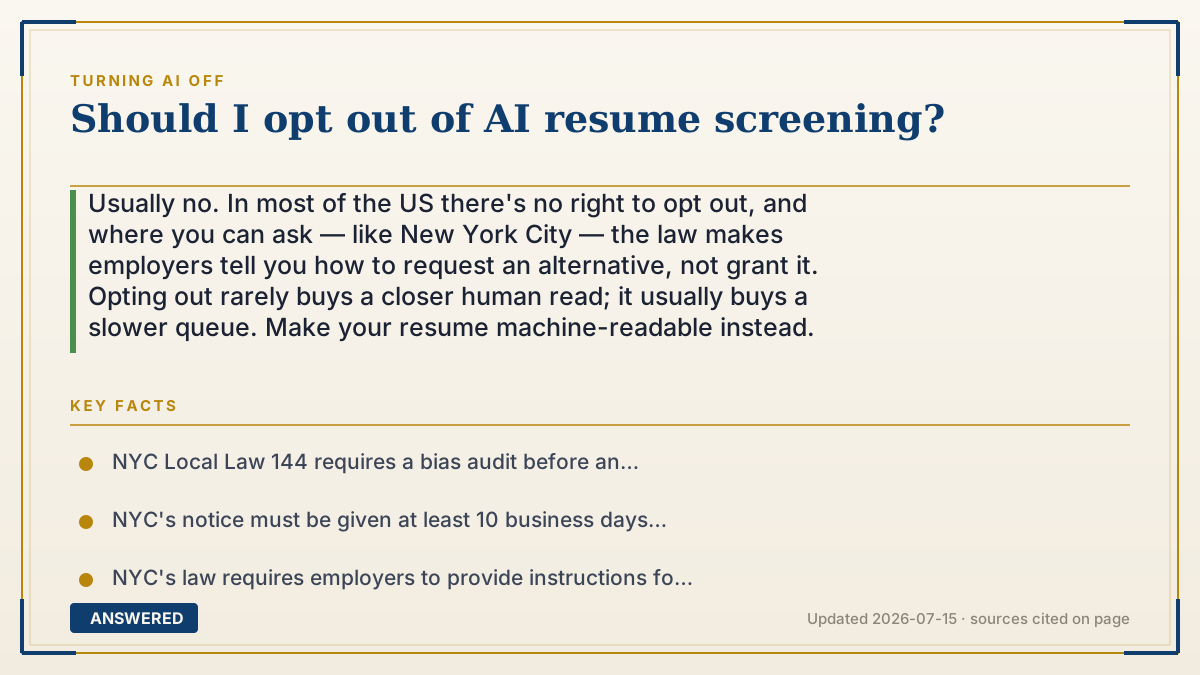
Usually no. In most of the US there's no right to opt out, and where you can ask — like New York City — the law makes employers tell you how to request an alternative, not grant it. Opting out rarely buys a closer human read; it usually buys a slower queue. Make your resume machine-readable instead.
Why — the first-principles explanation
The word "opt out" implies a right you can exercise. For AI resume screening in the US, that right mostly doesn't exist — and where something like it exists, it's narrower than it sounds.
New York City's Local Law 144 is the strongest example and worth reading precisely. It bars employers from using an automated employment decision tool unless it has had an independent bias audit, a summary of that audit is published, and candidates are notified. The notice must come at least 10 business days before use, disclose the job qualifications the tool assesses, and include instructions for requesting an alternative selection process or accommodation. Notice the structure: the law regulates the notice, not the outcome. It requires the employer to tell you how to ask. It does not oblige the employer to say yes. That gap is the whole answer to this question, and most articles skip straight past it.
Colorado's AI Act (SB24-205), signed May 17, 2024 with a February 1, 2026 effective date, takes a different angle: notice when AI is a substantial factor in a consequential decision, a right to correct inaccurate personal data, and an opportunity to appeal an adverse decision via human review if technically feasible. Again, no general opt-out — an appeal after the fact, hedged. And state AI law is genuinely unsettled right now; Colorado has already revised its statute since passage, so verify the current text before relying on any specific provision.
Underneath the law is a practical asymmetry. An opt-out request is a cost to the employer and a signal about you. It asks a recruiter to build a manual path for one candidate out of hundreds. Some will do it gladly. Many will let your file drift. You are not buying a careful human read — you are buying a detour, and detours are where applications get lost. The regulatory point that matters more is one the EEOC has heard directly in testimony: these tools often lack scientific validation, and applicants usually aren't even told they were used. The realistic lever is not refusing the machine. It's making sure the machine can read you — and knowing that discrimination law applies to the outcome no matter which tool produced it.
An example that makes it click
Imagine a huge concert where everyone enters through automatic ticket scanners. You can ask a staff member to check your ticket by hand instead. They're allowed to say no. If they say yes, you stand off to the side while one busy person eventually gets to you — and 400 people who used the scanner are already inside.
Your ticket wasn't the problem. But if your barcode is smudged, the scanner rejects you and nobody knows why. The winning move usually isn't demanding the manual line. It's printing a clean barcode. A messy resume is a smudged barcode.
How to do it
- Find out if a tool is even being used — in NYC, employers must notify you at least 10 business days before using an automated employment decision tool.
- Read the notice: it must disclose the job qualifications and characteristics the tool assesses, and tell you how to request an alternative process or accommodation.
- Check the published bias audit summary — NYC employers must post one on their website. Its absence is itself a signal about the employer.
- Decide honestly: do you have a disability-related need? If so, request a reasonable accommodation, which sits on much firmer legal ground than a general opt-out.
- If you have no accommodation need, usually don't opt out. Instead make your resume machine-readable: standard headings, no text in images or tables, plain fonts, .docx or text-based PDF.
- Mirror the exact language of the job posting for real skills you have — most screeners match terms, not synonyms.
- Apply through a human channel in parallel: a referral, a recruiter, or a hiring manager's inbox. This beats opting out because it adds a path rather than blocking one.
- If you were rejected and suspect discrimination, the tool doesn't shield the employer — you can file a charge with the EEOC or your state agency.
Key facts
- NYC Local Law 144 requires a bias audit before an automated employment decision tool is used, and requires the employer to post a summary of the audit results on its website.
- NYC's notice must be given at least 10 business days before use and must disclose the job qualifications and characteristics the tool assesses.
- NYC's law requires employers to provide instructions for requesting an alternative selection process or a reasonable accommodation — it does not require the employer to grant the request.
- Colorado's SB24-205 was signed May 17, 2024 with a February 1, 2026 effective date; it requires notice, a right to correct inaccurate personal data, and an opportunity to appeal an adverse decision via human review "if technically feasible."
- As of 2026-07 no US federal law grants job applicants a general right to opt out of AI resume screening; state and local AI laws are changing quickly, and Colorado has already revised its statute since passage.
- EEOC testimony has described automated hiring systems as "ubiquitous in certain industries, including retail," while noting many lack scientific validation and that applicants are typically not informed of their use.
▶ The 60-second explainer (script)
Usually, no — and the reason is a detail almost every article gets wrong. Let's take New York City's Local Law 144, the strongest protection in the country. It says employers can't use an automated hiring tool unless it's had an independent bias audit, the audit summary is posted publicly, and candidates get notice at least ten business days ahead. That notice has to tell you what qualifications the tool is assessing, and how to request an alternative process. Sounds great. Now read it again. The law regulates the notice — not the outcome. It requires the employer to tell you how to ask. It does not require them to say yes. That gap is the entire answer. Colorado's AI Act, signed May 2024 and effective February 2026, takes a different angle — notice, a right to correct wrong data about you, and an appeal via human review, quote, if technically feasible. Still no opt-out. And heads up: state AI law is genuinely in flux. Colorado has already rewritten parts of its own statute. Check the current text before you rely on any of it. But here's the practical thing. An opt-out request is a cost to the employer and a signal about you. You're asking a recruiter to build a manual path for one person out of hundreds. Some will. Many will just let your file drift. You're not buying a careful human read — you're buying a detour, and detours are where applications go to die. So flip it. The lever isn't refusing the machine. It's making sure the machine can read you. Standard headings. No text trapped in images or tables. Text-based PDF. Use the posting's own words for skills you actually have. And apply through a human in parallel — a referral adds a path instead of blocking one. One exception, and it's important: if you have a disability-related need, request an accommodation. That stands on far firmer legal ground than a general opt-out. And if you were rejected and suspect discrimination — the software is not a shield. The law applies to the outcome no matter what tool produced it. You can file with the EEOC.
What authoritative sources say
People also ask
Will opting out get a human to read my resume?
Not reliably. Even in New York City, the law requires employers to tell you how to request an alternative process — not to provide one. In practice your application often moves to a slower manual queue, if anywhere.
Is requesting a disability accommodation the same as opting out?
No, and the difference matters. An accommodation request rests on established disability law and is far stronger than a general objection to automation. If you have a disability-related need, ask for an accommodation specifically.
Can I tell whether AI screened my application?
Often not. NYC requires advance notice, but most jurisdictions don't — EEOC testimony has noted applicants usually aren't informed that automated systems were used at all.
If an AI tool rejects me unfairly, do I have any recourse?
Possibly. Anti-discrimination law applies to the outcome regardless of which tool produced it, so using software is not a defense. You can file a charge with the EEOC or your state civil rights agency.
What actually improves my odds?
Make the resume machine-readable — standard headings, no text inside images or tables, a text-based PDF — mirror the posting's exact wording for skills you genuinely have, and pursue a referral in parallel.