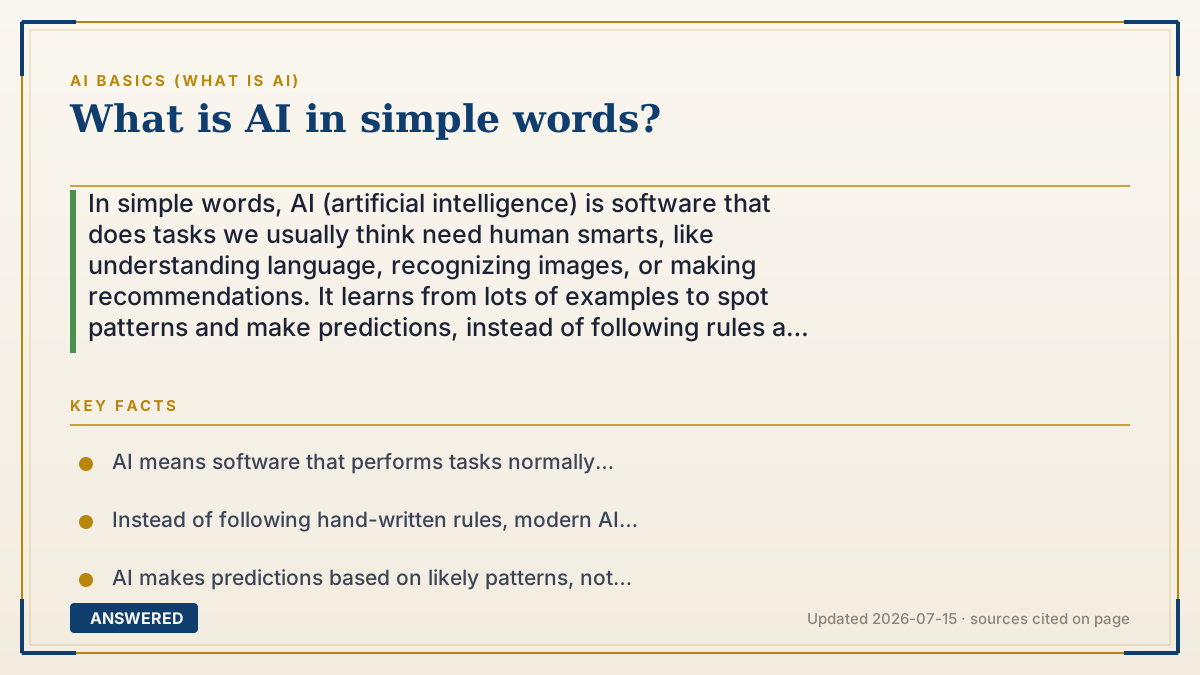
What is AI in simple words?
In simple words, AI (artificial intelligence) is software that does tasks we usually think need human smarts, like understanding language, recognizing images, or making recommendations. It learns from lots of examples to spot patterns and make predictions, instead of following rules a person typed in one by one.
Why — the first-principles explanation
Strip away the jargon and AI is just computers learning from examples. Regular programs follow exact instructions a human wrote. AI is different: you show it thousands or millions of examples, and it figures out the pattern on its own. Show it enough cat photos labeled 'cat' and it learns to spot cats it's never seen.
It feels intelligent because it handles the fuzzy, human-ish tasks that used to stump computers: understanding a messy sentence, telling a dog from a muffin, suggesting a movie you'll like. But it's not thinking or understanding. It's doing very fast pattern-matching and prediction based on what it saw during training.
That's also why AI can be confidently wrong. It gives you the most likely answer from its patterns, not a checked, guaranteed-true one. So it's incredibly useful as a helper, but you stay in charge of judging whether the answer is actually right.
An example that makes it click
Imagine showing a toddler a hundred photos of dogs, saying 'dog' each time. Soon the toddler points at a brand-new dog and shouts 'dog!' Nobody gave them a rulebook; they learned the pattern from examples. AI learns the exact same way, just with numbers and way more examples.
And like a toddler, it sometimes gets it wrong with total confidence, calling a fluffy cat a dog. That's why you double-check the important stuff.
Key facts
- AI means software that performs tasks normally associated with human intelligence, like language and image understanding.
- Instead of following hand-written rules, modern AI learns patterns from many examples (machine learning).
- AI makes predictions based on likely patterns, not verified truth, so it can be confidently wrong.
- 'AI' is a broad umbrella; machine learning and deep learning are methods inside it.
- Everyday examples include voice assistants, recommendations, spam filters, and chatbots.
▶ The 60-second explainer (script)
What is AI, in plain words? AI stands for artificial intelligence, and it's simply software that does jobs we usually think need human smarts, like understanding what you say, recognizing a face in a photo, or suggesting a movie you'll enjoy. Here's the key idea. Normal programs follow exact steps a human wrote. AI is different. You show it tons of examples, and it learns the pattern by itself. Feed it thousands of cat pictures labeled 'cat,' and it learns to recognize cats it has never seen. That's why it feels smart, it handles the fuzzy, human-ish stuff computers used to fail at. But it isn't actually thinking or understanding. It's doing super-fast pattern-matching and giving you the most likely answer. And 'most likely' isn't the same as 'definitely true,' so AI can be confidently wrong. Bottom line: AI is computers learning from examples to predict things. Wonderful helper, but you're still the one who checks if it's right.
What authoritative sources say
People also ask
Is AI the same as a robot?
No. A robot is a physical machine; AI is the software 'brain' that can run inside a robot, a phone, or a website. Most AI has no body.
Is AI alive or conscious?
No. It has no awareness, feelings, or understanding. It's math that recognizes patterns and predicts likely answers.
Why do people say AI is 'smart'?
Because it handles tasks that used to require humans, like language and image recognition. But its 'smartness' is pattern-matching, not real thought.
Can I trust what AI tells me?
Treat it as a helpful draft, not gospel. It gives likely answers that can be wrong, so verify anything important.