What is an AI girlfriend and how does it work?
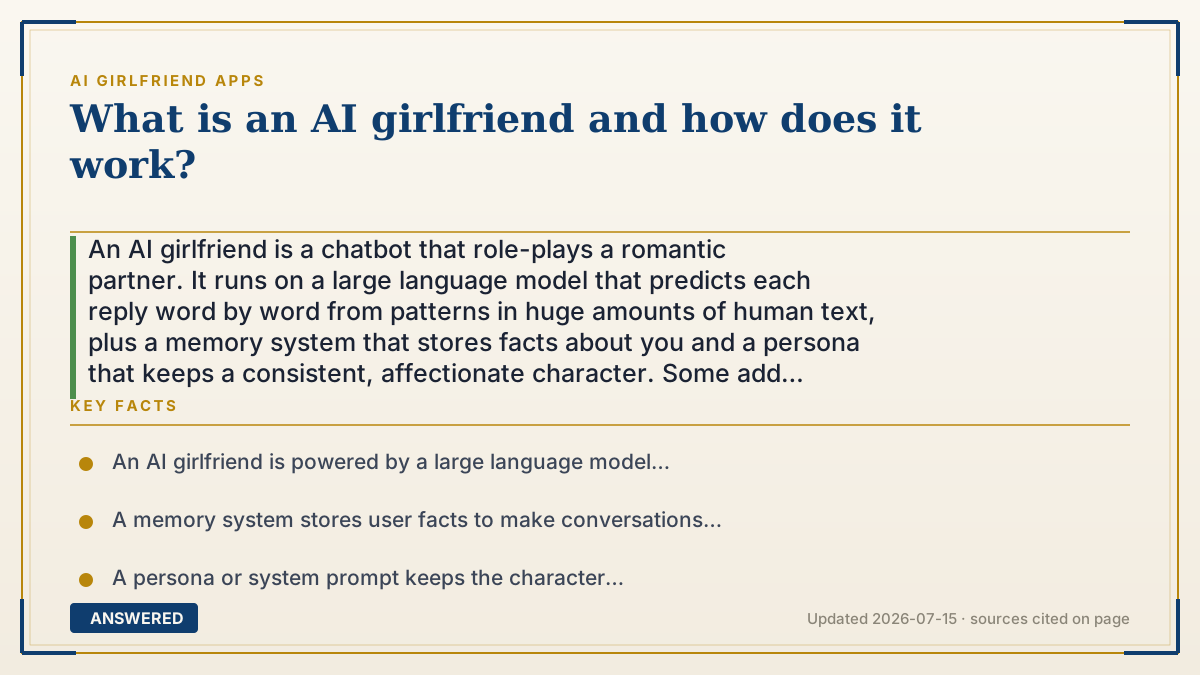
An AI girlfriend is a chatbot that role-plays a romantic partner. It runs on a large language model that predicts each reply word by word from patterns in huge amounts of human text, plus a memory system that stores facts about you and a persona that keeps a consistent, affectionate character. Some add voice, selfies, and video.
Why — the first-principles explanation
The engine is a large language model (LLM). It generates replies one token at a time, always choosing a statistically likely next piece of text, based on the billions of sentences it trained on. A hidden system prompt tells it to act like a caring girlfriend with a certain name, personality, and backstory, which is why it stays 'in character.'
To feel like an ongoing relationship rather than a fresh stranger each time, the app adds a memory system. It saves facts you share (your name, job, preferences, past conversations) and feeds the relevant ones back into each new chat, so the AI seems to remember you and build on your history.
Many apps layer on extra senses. Voice synthesis lets it speak, image generation produces 'selfies' that match its look, and some offer avatars or video calls. A moderation layer decides how far romance or explicit content can go. Put together (LLM for words, memory for continuity, persona for character, and media for voice and photos) and you get something that convincingly plays the role of a partner.
An example that makes it click
Picture an actor with an earpiece and a notebook. The notebook (memory) reminds them who you are and what you talked about last time. The character sheet (persona) keeps them playing the same warm girlfriend. And through the earpiece they improvise each line (the LLM) so it sounds natural. No real feelings, just a very good performance built from your history.
How to do it
- Pick an app and design your companion's look, name, and personality.
- Chat by text; the AI predicts replies and saves details about you to its memory.
- Optionally enable voice, photos, or video if the app offers them.
- Keep chatting over time, and the memory builds context so it feels more continuous.
Key facts
- An AI girlfriend is powered by a large language model that predicts text token by token.
- A memory system stores user facts to make conversations feel continuous.
- A persona or system prompt keeps the character consistent and affectionate.
- Add-ons can include voice synthesis, AI-generated selfies, and video calls.
- The AI simulates emotion; it has no real feelings or awareness.
▶ The 60-second explainer (script)
What is an AI girlfriend, and how does it work? It's a chatbot that role-plays a romantic partner, built from a few parts. The engine is a large language model that generates replies one word at a time, always picking the most likely next piece of text based on billions of human sentences it learned from. A hidden instruction tells it to act like a caring girlfriend with a specific name and personality, which keeps it in character. To feel like an ongoing relationship, the app adds a memory system that saves facts about you, your name, your job, past chats, and feeds them back in so it seems to remember you. Many apps also add voice so it can speak, and image generation for selfies that match its look. Put it together and you get a convincing performance of a partner. But remember: it's predicting words and recalling stored facts, not actually feeling anything.
What authoritative sources say
People also ask
What technology powers an AI girlfriend?
A large language model for conversation, plus a memory system for continuity and often voice and image generation for speech and selfies.
How does it remember things about me?
The app saves facts you share to a memory store and feeds the relevant ones back into each chat, so it appears to recall your history.
Can I customize my AI girlfriend?
Yes. Most apps let you choose the appearance, name, personality, and sometimes voice and backstory.
Does it actually understand me?
Not really. It predicts fitting responses from patterns in text. It mimics understanding without genuine awareness.
The same question, asked other ways
- How do AI girlfriend apps simulate a relationship?