What jobs can't AI replace?
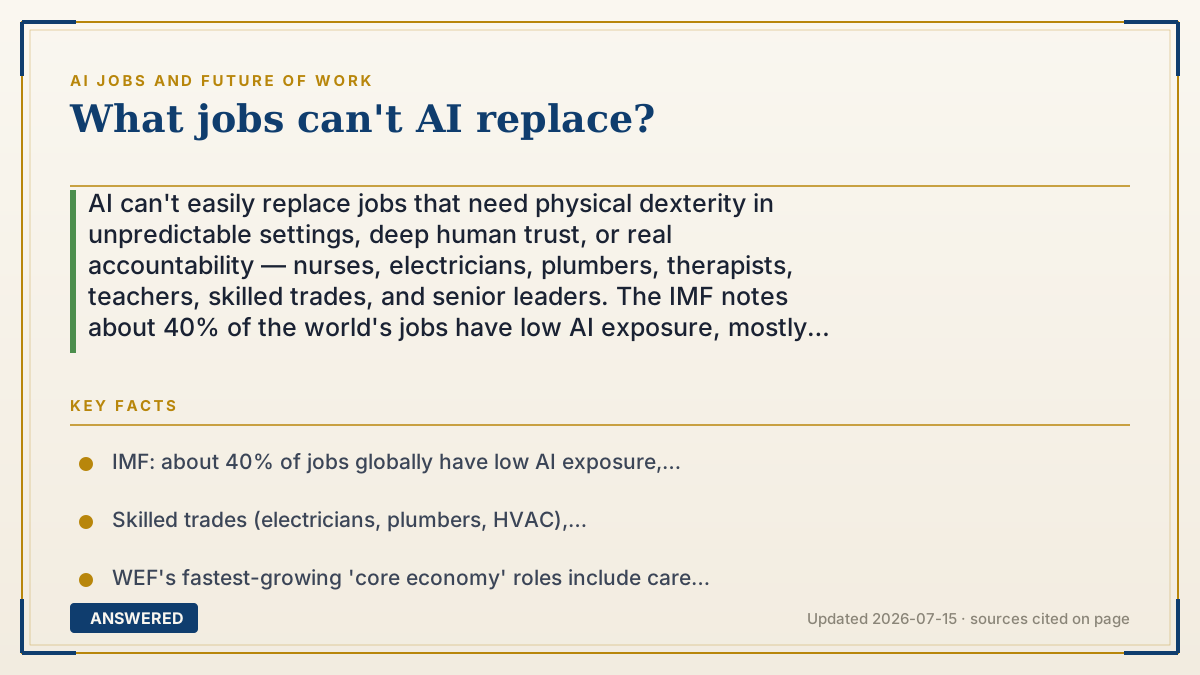
AI can't easily replace jobs that need physical dexterity in unpredictable settings, deep human trust, or real accountability — nurses, electricians, plumbers, therapists, teachers, skilled trades, and senior leaders. The IMF notes about 40% of the world's jobs have low AI exposure, mostly manual and care roles requiring a human body and human judgment.
Why — the first-principles explanation
The jobs AI can't replace share a simple trait: they resist being turned into pure information processing. Today's AI is, at its core, a pattern-prediction engine running on a computer. It has no body, takes no responsibility, and feels nothing. Any job whose value depends on those three things is hard to automate.
No body protects physical work in unpredictable environments. A plumber crawling under a sink, a nurse repositioning a patient, an electrician tracing a fault in an old house — these need hands, balance, and real-time adaptation to messy reality. Robots exist, but building one that handles the endless variety of a real home or hospital is far harder and costlier than writing software, so these jobs stay human for a long time.
No responsibility protects work where someone must be accountable and trusted. We want a human doctor to sign off on surgery, a human judge to weigh a sentence, a human pilot ultimately in command. No feeling protects care and connection — therapy, early-childhood teaching, social work, hospice care — where the point is a human actually caring, not a machine imitating care. AI can assist all of these, but the irreplaceable core is the human being present, liable, and genuinely engaged. That's why the IMF finds the least-exposed jobs cluster in manual, care, and skilled-trade work.
An example that makes it click
Imagine your bathroom floods at 2 a.m. An AI can tell you why pipes burst and even draft a repair plan. But it can't drive over, squeeze into the crawlspace, feel which joint is loose in the dark, and physically fix it while water sprays. You need a plumber with hands.
Now imagine your child is scared at the dentist. An AI could read a soothing script, but a kind hygienist who kneels down, makes eye contact, and actually cares calms the child in a way a screen never will. Wet hands and warm hearts — that's the territory AI can't take. The safest jobs live there.
Key facts
- IMF: about 40% of jobs globally have low AI exposure, concentrated in manual, physical, and care work.
- Skilled trades (electricians, plumbers, HVAC), healthcare hands-on roles (nurses, physical therapists), and personal care jobs are consistently rated among the least automatable.
- WEF's fastest-growing 'core economy' roles include care workers, delivery drivers, farmworkers, and educators — human-centered work.
- Goldman Sachs found construction, maintenance, and cleaning among the least AI-exposed occupations, versus office and legal work at 40%+ exposure.
- No job is fully immune; even resilient jobs will use AI tools for scheduling, records, and diagnosis support.
▶ The 60-second explainer (script)
What jobs can't AI replace? The trick is to look at what today's AI fundamentally lacks: it has no body, takes no responsibility, and feels nothing. Any job built on those three things stays human. No body means physical work in messy, unpredictable places — plumbers, electricians, nurses, mechanics. Building a robot for the endless variety of a real home or hospital is far harder than writing software. No responsibility protects work where a human must be accountable and trusted — surgeons signing off, judges deciding sentences, senior leaders making the call. And no feeling protects care and connection — therapists, early-childhood teachers, social workers — where the whole point is a real person who actually cares. The IMF finds about forty percent of the world's jobs have low AI exposure, mostly in these manual and care roles. No job is one hundred percent safe, but if your work needs hands, trust, or heart, AI is your assistant, not your replacement.
What authoritative sources say
People also ask
What is the single safest job from AI?
Skilled trades and hands-on healthcare rank highest. Electricians, plumbers, and nurses combine physical dexterity, unpredictable environments, and human trust — all things AI can't replicate cheaply.
Are creative jobs safe from AI?
Partly. AI can generate art and text, so routine creative work is exposed, but jobs needing original vision, taste, and human collaboration — like art direction — remain more resilient.
Can AI replace doctors and teachers?
It can assist both, but not replace them. We require human accountability for medical decisions and human connection for teaching, especially with young children.
Is any job 100% safe from AI?
No. Even resilient jobs will adopt AI tools for paperwork and diagnosis support. The goal is low exposure and using AI as a helper, not total immunity.