Can AI art be detected?
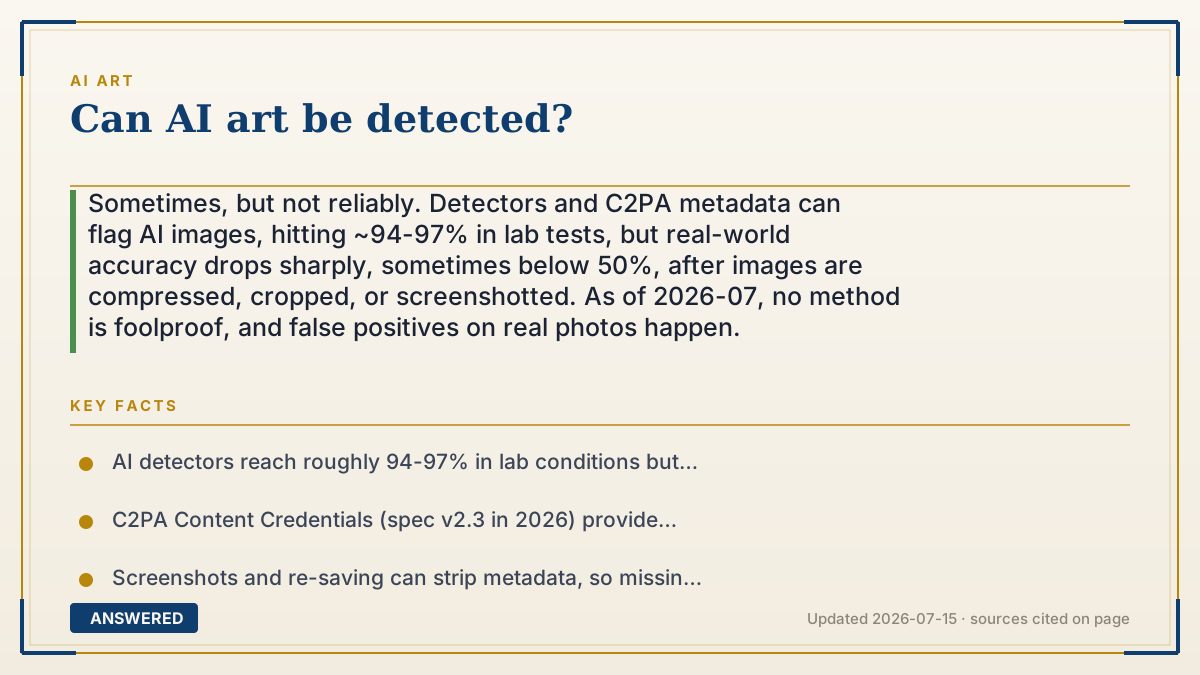
Sometimes, but not reliably. Detectors and C2PA metadata can flag AI images, hitting ~94-97% in lab tests, but real-world accuracy drops sharply, sometimes below 50%, after images are compressed, cropped, or screenshotted. As of 2026-07, no method is foolproof, and false positives on real photos happen.
Why — the first-principles explanation
Detection works by hunting for fingerprints AI generation leaves behind, and every fingerprint can fade. There are three types. The first is statistical patterns in the pixels; detectors are trained to recognize them. In clean lab conditions they're impressive, around 94-97%, but compression, resizing, and social-media re-encoding smear those patterns, and accuracy can crater below 50%.
The second is provenance metadata, mainly C2PA Content Credentials, a tamper-evident label many big generators embed. When present, it's strong evidence. But it's fragile: a screenshot or a re-save can strip it, and many tools never add it, so its absence proves nothing.
The third is visual tells (bad hands, garbled text), which are quickly disappearing as 2026 models improve, making them a weak signal at best.
The deeper reason detection stays hard is an arms race: as detectors improve, generators improve too, and simple edits defeat many checks. That's why experts treat detection as probabilistic, combine multiple signals, and avoid claiming certainty, especially since falsely accusing a real photo of being AI is a real risk.
An example that makes it click
Detecting AI art is like detecting whether water came from a specific spring. Fresh from the bottle, you might test its mineral fingerprint and be fairly sure (a clean detector on a clean image). But once it's poured into a pool, mixed, and reheated (compressed, cropped, screenshotted), the fingerprint washes out and your test gets unreliable.
The bottle might also have a label saying its source (C2PA metadata), which is great, unless someone peeled the label off. So you can often tell, but a determined person can erase the clues, and sometimes you'll misjudge ordinary tap water as something it isn't.
How to do it
- Run the image through a detector like Sightengine or Hive for a probability score.
- Check the file for C2PA Content Credentials with a verify tool.
- Use the original, uncompressed file when possible for best detector accuracy.
- Cross-check with a reverse image search for a known source.
- Treat the result as a probability; avoid firm accusations from a single tool.
Key facts
- AI detectors reach roughly 94-97% in lab conditions but can drop below 50% on compressed or social-media images.
- C2PA Content Credentials (spec v2.3 in 2026) provide strong provenance when embedded and intact.
- Screenshots and re-saving can strip metadata, so missing credentials don't prove human authorship.
- Detectors can produce false positives, flagging genuine photos as AI-generated.
- Detection is an ongoing arms race as generators improve alongside detectors.
Choosing a tool for your creative workflow?
The answer above explains the concept; this next step helps you choose by job, limits and current terms.
▶ The 60-second explainer (script)
Can AI art be detected? Sometimes, but don't trust any single test too much. Detection tools look for fingerprints that AI leaves in the pixels. On clean, original files they're impressive, around 94 to 97 percent accurate. But here's the problem: once an image is compressed, cropped, or screenshotted for social media, those fingerprints smear, and accuracy can fall below 50 percent. There's also C2PA Content Credentials, a built-in label many big generators add. When it's there, it's strong proof, but a screenshot can wipe it, and many tools never add it, so a missing label proves nothing. And the old visual tells like bad hands are vanishing as 2026 models improve. On top of that, detectors sometimes flag real photos as fake. So the honest answer: you can often detect AI art, but not reliably, and never treat one tool's answer as certain.
What authoritative sources say
People also ask
How accurate are AI detectors?
Around 94-97% on clean lab images, but much lower, sometimes under 50%, on compressed or edited real-world images.
Can detection be fooled?
Yes. Compressing, cropping, or lightly editing an image, or stripping metadata, can defeat many checks.
Do detectors ever flag real photos?
Yes, false positives happen, which is why you shouldn't accuse someone based on one tool.
Is metadata reliable proof?
Intact C2PA credentials are strong evidence, but they're easily removed, and many tools don't add them.