Can you copyright AI generated art?
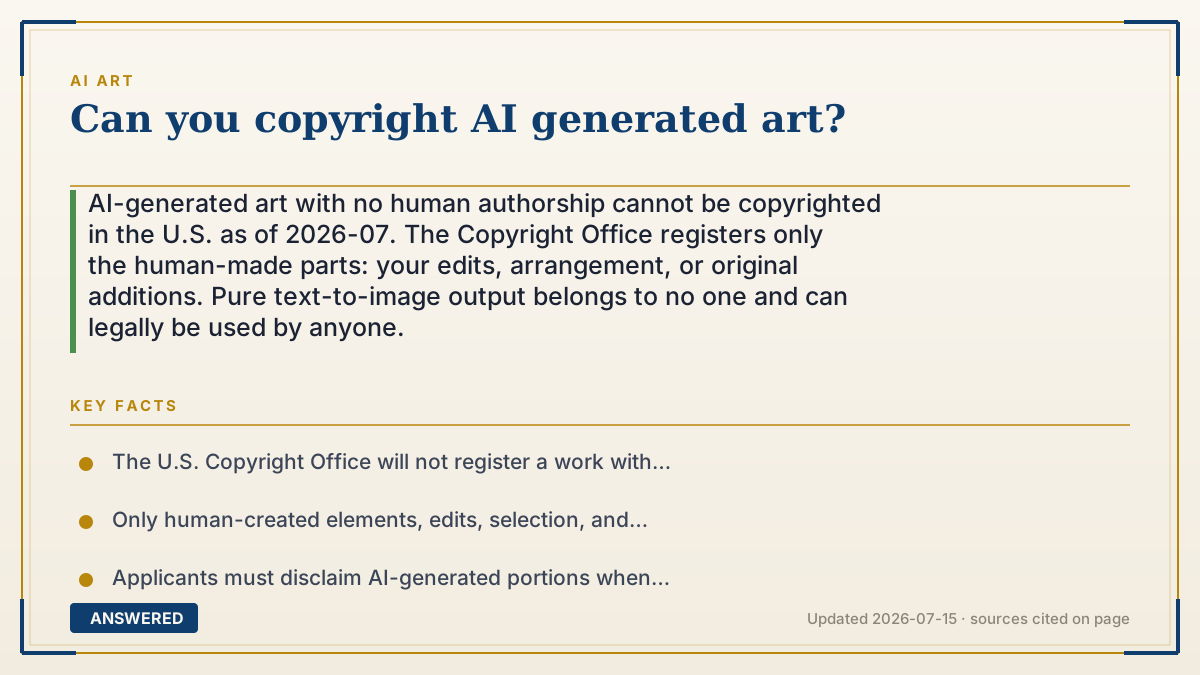
AI-generated art with no human authorship cannot be copyrighted in the U.S. as of 2026-07. The Copyright Office registers only the human-made parts: your edits, arrangement, or original additions. Pure text-to-image output belongs to no one and can legally be used by anyone.
Why — the first-principles explanation
Copyright is a deal society makes with human creators: make something original and we'll give you exclusive rights for a while. The whole system is built around a person as the "author." That is why AI-generated art is tricky. If a machine produced the actual image, there is no human author for that image, and with no author there is no copyright.
The key concept is human creative control over the expression. Ideas are never protected, only the specific way an idea is expressed. When you prompt an AI, you supply the idea ("a cat astronaut, oil painting") but the model chooses the exact composition, colors, and brushwork. Because you didn't control those choices, the law treats the output as not authored by you.
But a finished project is rarely one raw image. If you generate several pieces, pick the best ones, retouch them, add hand-drawn elements, or arrange them into a comic or poster, all of that human work is protectable. The copyright simply won't extend to the AI-generated pixels underneath.
The safest path if you want strong rights: treat AI output as raw material, then do enough real human work on top that a court could point to your creative choices.
An example that makes it click
Imagine a coloring book. The printed outlines were drawn by someone else, so you can't claim you created those lines. That's the AI-generated part. But when you color it in with your own choices, blending shades and adding your own doodles in the margins, your coloring and additions are yours.
So if a friend photocopies your finished page, they're copying your color choices and doodles, which you can complain about, but they were always free to use the blank printed outline, because you never owned that part.
How to do it
- Keep the AI output as a starting layer, not the finished piece.
- Add clear human authorship: paint over it, combine multiple generations, or arrange them into a larger original work.
- Save proof of your process: prompt logs, layered edit files, and dated drafts.
- Register at copyright.gov, disclaiming the AI-generated material and describing your human contribution.
- Use your registration to protect the human parts if someone copies them.
Key facts
- The U.S. Copyright Office will not register a work with no human authorship (2025 guidance).
- Only human-created elements, edits, selection, and arrangement are eligible for protection.
- Applicants must disclaim AI-generated portions when registering (policy effective March 16, 2023).
- The D.C. Circuit affirmed in March 2025 (Thaler v. Perlmutter) that an AI cannot be a copyright author.
- Rules vary by country; the U.S. currently uses a strict human-authorship standard.
▶ The 60-second explainer (script)
Can you copyright AI-generated art? If a machine made the image and you only typed a prompt, then no, that image isn't yours under U.S. law as of 2026. Copyright protects human authors, and the Copyright Office says a prompt doesn't give you enough control to be the author. Here's what you can protect: everything human you add on top. Edit the picture, combine several generations, add your own drawings, or arrange them into a poster or comic, and those creative choices are protectable. Just keep your process files and, when you register, disclaim the AI parts and describe what you made. Bottom line: raw AI output belongs to no one, but your human work on top belongs to you.
What authoritative sources say
People also ask
Does the AI company own the image instead?
Usually no one owns the raw output. Many tools grant you usage rights by contract, but that is not the same as copyright.
Can two people generate the same image and both claim it?
Neither can claim copyright over pure AI output, so both are free to use similar results.
What counts as 'enough' human editing?
There's no fixed line, but meaningful, visible creative changes are stronger than tiny tweaks. The more original work, the safer.
Should I register even if unsure?
You can, as long as you're honest about the AI parts. Registration protects the human contributions you disclose.
The same question, asked other ways
- If a painting is made by AI, who owns the copyright?
- Are AI-generated works copyrighted or in the public domain?