Can you sell AI art?
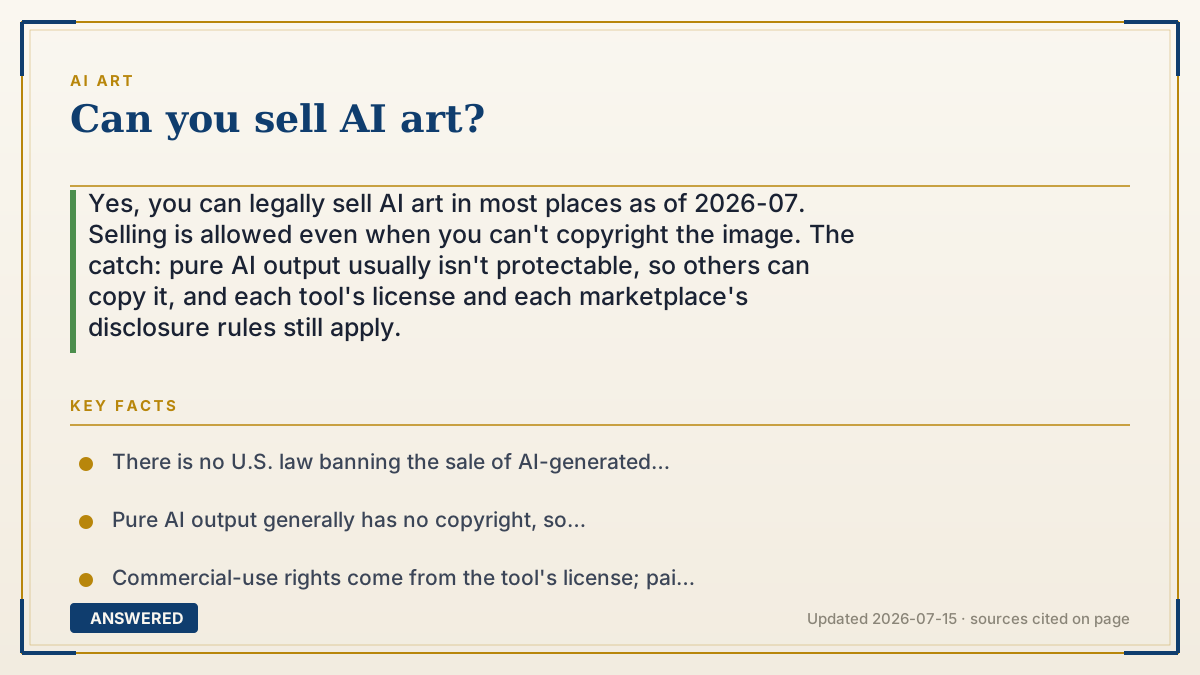
Yes, you can legally sell AI art in most places as of 2026-07. Selling is allowed even when you can't copyright the image. The catch: pure AI output usually isn't protectable, so others can copy it, and each tool's license and each marketplace's disclosure rules still apply.
Why — the first-principles explanation
Selling and owning a copyright are two different things. Copyright is about stopping others from copying your work. Selling is just a transaction: you hand over a file or print and get paid. You can sell something you don't own the copyright to, the same way you can sell a public-domain image or a plain photo of the sky.
The part people miss is what the buyer actually gets. If the AI art has no copyright, you can still sell copies, but you usually can't stop a competitor from selling the exact same or similar image. That weakens "exclusive" deals. It's fine for prints, merch, and stock-style art, but risky if a buyer expects an image only they can ever use.
Two other layers matter. First, the tool's license: services like Midjourney or ChatGPT grant paying users commercial-use rights, but free tiers sometimes don't, so read the terms. Second, the marketplace rules: platforms like Etsy allow AI art but require you to disclose it and to be the creative force behind the listing.
So the honest formula is: selling = usually allowed; exclusivity = usually not; always check the tool license and the platform's rules before you list.
An example that makes it click
Think of collecting seashells on a public beach. Nobody owns the shells, but you can absolutely sell the ones you gather, clean, and arrange into a necklace. The shells were free for anyone, yet buyers still pay you for the finished piece and your effort.
The twist: since the beach is public, your neighbor can gather identical shells and sell their own necklace too. That's AI art. You can sell it, you just can't fence off the beach.
How to do it
- Confirm your AI tool's license allows commercial use for your plan (paid plans usually do; some free tiers don't).
- Add human value: edit, upscale, print well, or bundle into a product people want.
- Pick a marketplace and read its AI rules (for example, Etsy requires disclosure).
- Disclose AI use where required and describe your creative role.
- Price for prints/merch, not exclusivity, since pure AI output usually can't be locked down.
Key facts
- There is no U.S. law banning the sale of AI-generated art as of 2026.
- Pure AI output generally has no copyright, so exclusivity is hard to guarantee (US Copyright Office, 2025).
- Commercial-use rights come from the tool's license; paid Midjourney plans grant commercial use, some free tiers don't.
- Etsy allows seller-prompted AI art but requires sellers to disclose AI use in the listing.
- Ongoing training-data lawsuits (e.g., Andersen v. Stability AI, trial set Sept 8, 2026) may affect the space.
Choosing a tool for your creative workflow?
The answer above explains the concept; this next step helps you choose by job, limits and current terms.
▶ The 60-second explainer (script)
Can you sell AI art? Yes, in most places you legally can, as of 2026. Selling and copyright are different things. You can sell an image even if you don't own it, just like you can sell a photo of a sunset. But here's the catch: pure AI output usually has no copyright, so you can't stop someone else from selling a similar image, which means exclusive deals are risky. Before you list anything, check two things. One, your AI tool's license, because paid plans usually allow commercial use but some free tiers don't. Two, the marketplace rules, since platforms like Etsy allow AI art but make you disclose it. Sell prints and products, be honest about how you made them, and you're on solid ground.
What authoritative sources say
People also ask
Do I need commercial rights to sell AI art?
You need the tool's license to permit commercial use. Paid plans on major tools usually do; check before selling.
Can someone copy my AI art and sell it too?
Often yes, because pure AI output usually isn't copyrightable. Adding real human edits gives you more protection.
Where can I sell AI art?
Print-on-demand sites, Etsy, stock platforms, and your own store. Each has its own AI-disclosure rules.
Is it legal everywhere?
No blanket ban exists in the U.S., but tool licenses, platform rules, and local laws still apply.
The same question, asked other ways
- Is selling AI generated art legal?
- Can you legally sell AI art if it has no copyrighted characters?