Can I use AI voice for youtube videos and monetize?
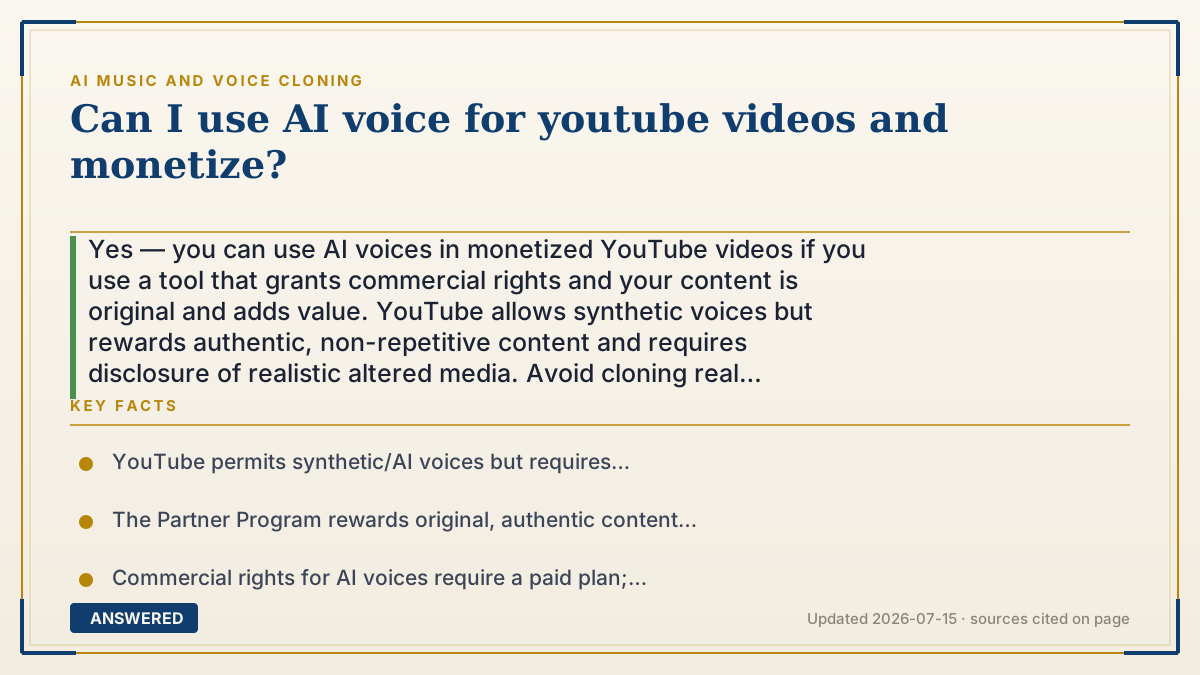
Yes — you can use AI voices in monetized YouTube videos if you use a tool that grants commercial rights and your content is original and adds value. YouTube allows synthetic voices but rewards authentic, non-repetitive content and requires disclosure of realistic altered media. Avoid cloning real people's voices without consent. This is general information, not legal advice.
Why — the first-principles explanation
Monetizing AI-voiced YouTube videos comes down to three gates you must pass at once.
First, the tool's license. AI voice platforms sell commercial rights on paid tiers — Suno's commercial rights start on the $8/month Pro plan, and other voice tools have similar terms. Free tiers usually forbid commercial use, so using a free-tier voice on a monetized channel can violate the tool's terms.
Second, YouTube's own rules. YouTube does not ban AI voices, but its Partner Program rewards original, authentic content and penalizes 'inauthentic' or mass-produced, repetitive uploads. Purely automated, low-effort AI narration stitched over stock footage risks being judged reused or spammy. YouTube also requires creators to disclose realistic AI-altered or synthetic content, and cloning a real person's voice can trigger removal.
Third, third-party rights. If your AI voice imitates a real person, right-of-publicity laws (like Tennessee's ELVIS Act) apply, and any copyrighted music or clips still need clearance or you'll face Content ID claims. The winning formula is a licensed AI voice on original, human-shaped content that you disclose when it's realistic — that keeps all three gates green.
An example that makes it click
Think of monetizing like getting three stamps at a fair to ride the big coaster. Stamp one: your ticket booth (the AI tool) says 'commercial use OK' — you need a paid ticket, not a free sample. Stamp two: the fair operator (YouTube) checks that your ride is your own build, not a copy of the ride next door. Stamp three: you didn't bolt on parts (a real person's voice or someone's music) without permission. Miss any stamp and the coaster stays closed.
How to do it
- Use an AI voice tool that grants commercial rights (a paid plan, e.g., Suno Pro at $8/month), not a free tier.
- Make original, valuable content — add your own script, editing, and commentary, not mass-produced narration.
- Disclose AI-generated or realistically altered content where YouTube requires it.
- Don't clone a real person's voice without written consent (right-of-publicity risk).
- Clear or license any music and clips to avoid Content ID claims, then apply to the YouTube Partner Program.
Key facts
- YouTube permits synthetic/AI voices but requires disclosure of realistic altered or synthetic media.
- The Partner Program rewards original, authentic content and demotes repetitive, mass-produced uploads.
- Commercial rights for AI voices require a paid plan; Suno's start at $8/month (Pro).
- Cloning a real person's voice without consent risks right-of-publicity claims (e.g., ELVIS Act).
- Copyrighted music or clips can trigger Content ID claims regardless of the AI voice.
Choosing a tool for your creative workflow?
The answer above explains the concept; this next step helps you choose by job, limits and current terms.
▶ The 60-second explainer (script)
Can you use an AI voice in YouTube videos and monetize them? Yes, if you clear three gates. First, the tool: use an AI voice plan that grants commercial rights, like a paid tier — free tiers usually forbid commercial use. Second, YouTube's rules: it allows AI voices, but its Partner Program rewards original, authentic content and demotes mass-produced, repetitive uploads, so add real value with your own script and editing. YouTube also asks you to disclose realistic synthetic content. Third, other people's rights: don't clone a real person's voice without consent, and clear any music or clips or you'll get Content ID claims. Put it together — a licensed AI voice, original content, honest disclosure — and your channel can be monetized. This is general information, not legal advice.
What authoritative sources say
People also ask
Does YouTube allow AI-generated voices?
Yes, but it rewards original, authentic content and requires you to disclose realistic AI-altered or synthetic media.
Can a fully automated AI-voice channel get monetized?
It's risky. YouTube demotes repetitive, mass-produced content; add original scripting, editing, and value to qualify.
Do I need commercial rights from the voice tool?
Yes. Use a paid plan that grants commercial use — free tiers typically forbid it.
Can I use a celebrity AI voice for my videos?
Not without consent. It risks right-of-publicity claims and content removal.
The same question, asked other ways
- Is AI generated voice content monetizable on youtube?
- Can I use an AI narrator on YouTube?