Can you clone someone else's voice with ElevenLabs?
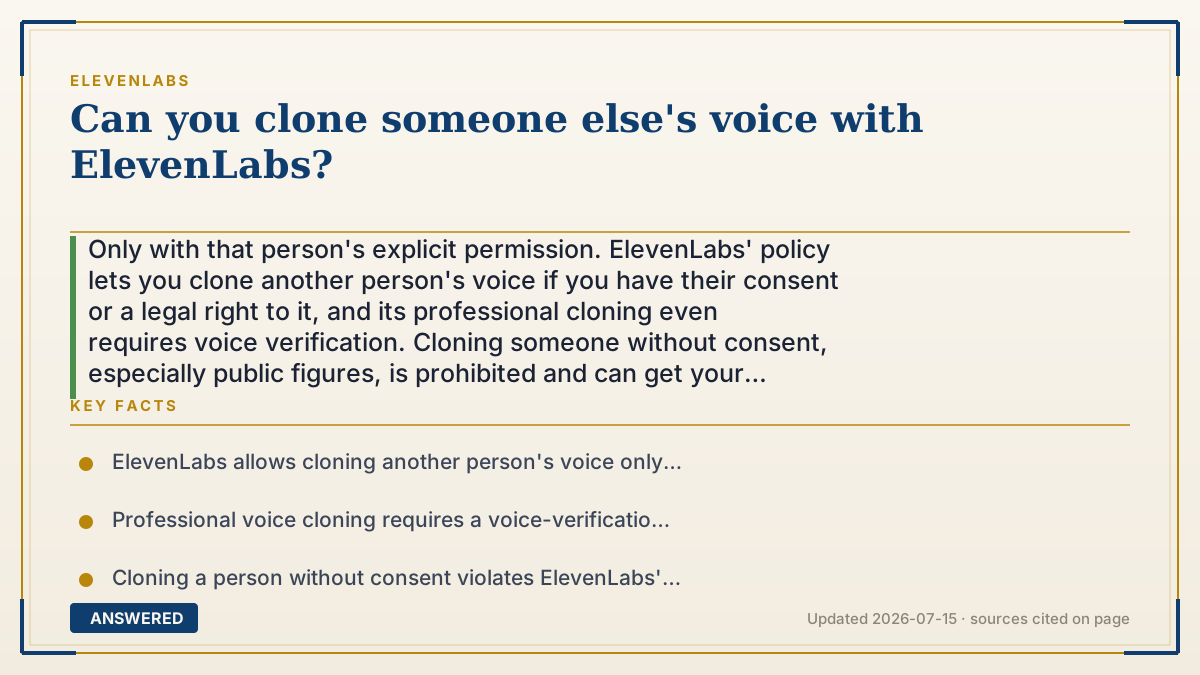
Only with that person's explicit permission. ElevenLabs' policy lets you clone another person's voice if you have their consent or a legal right to it, and its professional cloning even requires voice verification. Cloning someone without consent, especially public figures, is prohibited and can get your account suspended, and may break the law.
Why — the first-principles explanation
Technically, ElevenLabs can clone almost any voice from a short sample, that's the power of the model. But capability and permission are different things. Because a voice is part of a person's identity, using it without consent can deceive listeners or harm the owner, so ElevenLabs draws a hard line in its rules: you must own the voice or have explicit permission.
The platform enforces this in two ways. For professional voice cloning, it requires a verification step, often a spoken confirmation, to prove the voice belongs to whoever is authorizing the clone. That's a technical barrier against grabbing a celebrity's audio off the internet. For everything, the Prohibited Use Policy bans replicating a person's voice without consent or a legal right, and ElevenLabs has suspended accounts that violate it.
Beyond the company's rules sits the law. A growing number of U.S. states protect voice and likeness (Tennessee's ELVIS Act, plus laws in California, New York, and others), and defamation, fraud, or right-of-publicity claims can follow misuse. So the real answer to 'can you' is layered: the tool can, the policy allows it only with consent, and the law can punish you if you skip that consent.
An example that makes it click
It's like having a master key that opens any door. The fact that the key works doesn't make it okay to walk into a stranger's house, you're only allowed into homes where the owner handed you the key. Cloning a voice is the same: the AI can copy nearly anyone, but you're only permitted to copy the voices whose owners have said yes. Grab a famous actor's voice off YouTube without asking, and you've walked into a house that isn't yours, which is exactly what ElevenLabs bans and what the law can punish.
How to do it
- Get explicit, ideally written, consent from the person whose voice you want to clone.
- Use their real, clean audio, recorded or shared with their permission.
- For professional cloning, complete ElevenLabs' voice-verification step confirming authorization.
- Do not clone public figures or anyone else without permission, this is prohibited.
- Keep a record of the consent in case of a rights dispute or account review.
Key facts
- ElevenLabs allows cloning another person's voice only with their consent or a legal right.
- Professional voice cloning requires a voice-verification step to confirm authorization.
- Cloning a person without consent violates ElevenLabs' Prohibited Use Policy.
- Accounts that clone voices without permission can be suspended.
- Multiple U.S. states (e.g., Tennessee's ELVIS Act, California, New York) legally protect voice likeness.
Open the official product site and confirm the current access, plans and terms.
▶ The 60-second explainer (script)
Can you clone someone else's voice with ElevenLabs? Only if you have their permission. Technically the AI can copy almost any voice from a short clip, but ElevenLabs' rules are strict: you must own the voice or have explicit consent to use it. For professional cloning, the platform even makes you complete a verification step to prove the voice belongs to whoever is authorizing it, that's designed to stop people from grabbing a celebrity's audio off the internet. Cloning someone without consent breaks ElevenLabs' Prohibited Use Policy, and the company has suspended accounts for it. On top of that, the law is catching up: several U.S. states now protect a person's voice, like Tennessee's ELVIS Act. So the bottom line is simple, get permission first, or don't clone the voice.
What authoritative sources say
People also ask
Can I clone a celebrity's voice?
No, not without their consent. Cloning public figures without permission is prohibited and can be illegal under state voice-likeness laws.
What counts as permission?
Explicit consent from the voice owner, ideally in writing. Professional cloning also requires ElevenLabs' voice-verification step.
What happens if I clone someone without consent?
ElevenLabs can suspend your account, and you could face legal claims for right-of-publicity, fraud, or defamation.
Can I clone a friend's voice for fun?
Only if they agree. Get their explicit consent first, even for personal or joke projects.
The same question, asked other ways
- Are there restrictions on what voices you can upload to ElevenLabs?
- Can you clone a celebrity voice with ElevenLabs?
- Do you need consent to clone a voice on ElevenLabs?