Do you need consent to clone someone's voice?
Yes. To clone an identifiable person's voice you should get their clear, ideally written consent. Cloning without permission can violate right-of-publicity laws such as Tennessee's ELVIS Act (effective July 1, 2024), and reputable tools like Suno require consent in their terms. Cloning your own voice needs no one else's permission. This is general information, not legal advice.
Why — the first-principles explanation
Consent is the dividing line because a person's voice is part of their identity, and the law increasingly treats identity as something you own. The relevant right is the right of publicity — control over commercial use of your name, image, and voice. When you clone someone without asking, you use their identity without authorization, which is exactly what these laws forbid.
The legal ground has shifted fast. Tennessee's ELVIS Act (effective July 1, 2024) was the first to explicitly cover AI voice clones, and states like California and New York have added protections; a federal NO FAKES Act is proposed but not yet law as of 2026-07. On top of that, cloning to deceive can trigger fraud, impersonation, or defamation claims — the FTC has warned about voice-clone scams — which apply no matter what.
Reputable platforms build consent into their rules. Suno states plainly that you should only train or use a voice cloning model with the clear consent of the person whose voice is being used, and many tools require a verification step to confirm you control the voice. The clean rule of thumb: your own voice, no permission needed; anyone else's voice, get explicit consent — preferably in writing — before you clone.
An example that makes it click
Cloning someone's voice without asking is like making a rubber stamp of your neighbor's signature. Even if you're 'just experimenting,' you've copied something that belongs to their identity. If they hand you a note saying 'yes, make the stamp,' you're fine. Without that note, they can rightfully say you took a piece of who they are.
How to do it
- For your own voice: no third-party consent is needed.
- For anyone else's voice: get clear, specific, ideally written consent before cloning.
- Spell out in the consent how the clone will be used (project, commercial or not, duration).
- Use tools that require a verification step, and keep proof of consent on file.
- Never clone a voice to deceive, defraud, or defame — that's illegal regardless of consent.
Key facts
- Cloning an identifiable person's voice without consent can violate right-of-publicity laws.
- Tennessee's ELVIS Act (effective July 1, 2024) explicitly protects voices from AI cloning.
- The federal NO FAKES Act was proposed but not passed as of 2026-07.
- Suno's guidance requires clear consent of the person whose voice is used.
- Cloning your own voice requires no third-party permission.
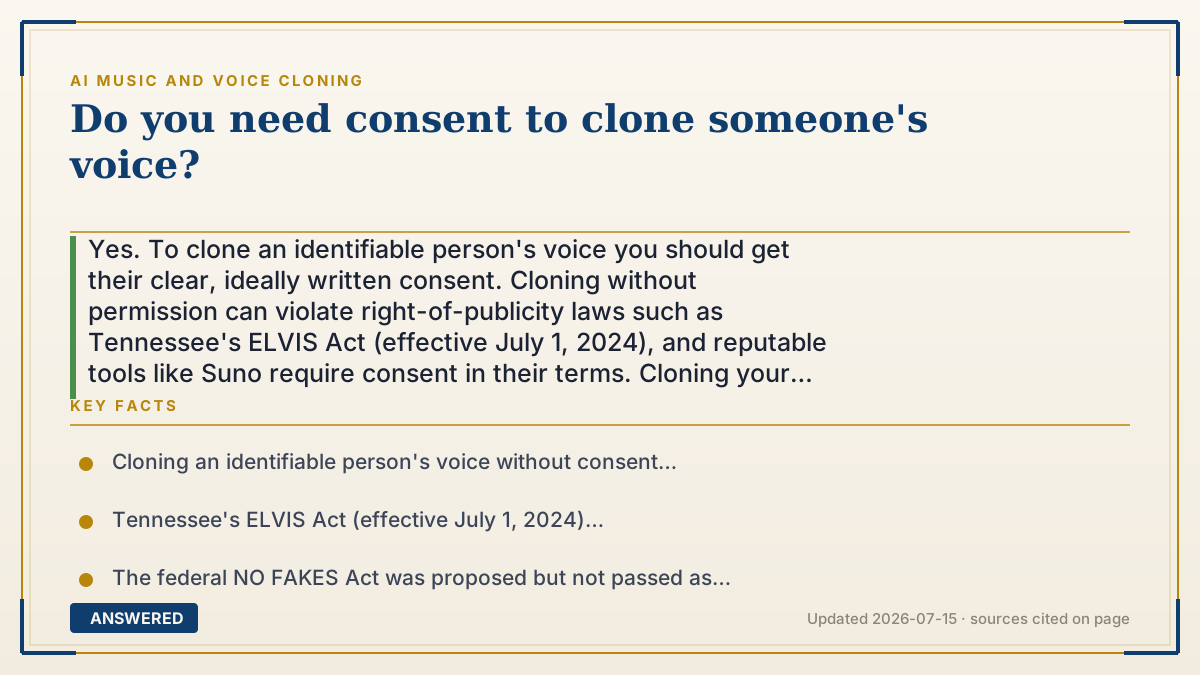
▶ The 60-second explainer (script)
Do you need consent to clone someone's voice? Yes. A person's voice is part of their identity, and the law increasingly protects it through what's called the right of publicity. Clone an identifiable person without permission and you can run into laws like Tennessee's ELVIS Act, which since July 2024 specifically covers AI voice clones. Reputable tools agree: Suno says you should only clone a voice with the clear consent of that person, and many tools add a verification step to confirm you control the voice. Cloning to deceive is a separate crime entirely. The simple rule: your own voice needs no permission, but anyone else's voice requires explicit, ideally written consent that spells out how the clone will be used. This is general information, not legal advice.
What authoritative sources say
People also ask
Do I need consent to clone my own voice?
No. You control your own voice, so cloning it for your own projects requires no one else's permission.
Does consent need to be in writing?
Written consent is strongly recommended. It proves permission and should describe how the clone will be used.
What if I clone a voice just for fun, not money?
Right-of-publicity risk is highest for commercial use, but unauthorized cloning can still cause legal and ethical problems. Get consent.
What law covers voice-clone consent?
State right-of-publicity laws, led by Tennessee's ELVIS Act (2024). A federal NO FAKES Act is proposed but not yet passed.