Do AI covers need copyright permission?
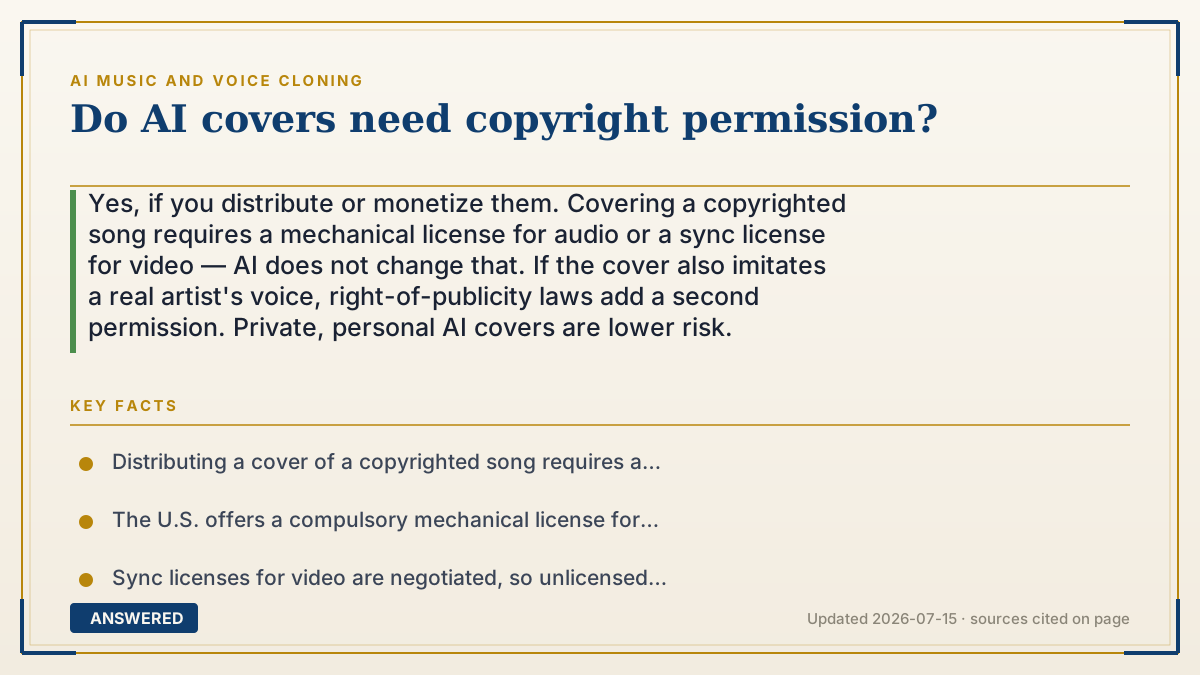
Yes, if you distribute or monetize them. Covering a copyrighted song requires a mechanical license for audio or a sync license for video — AI does not change that. If the cover also imitates a real artist's voice, right-of-publicity laws add a second permission. Private, personal AI covers are lower risk.
Why — the first-principles explanation
A 'cover' by definition reuses someone else's composition — the melody and lyrics — which is copyrighted. Copyright law gives the songwriter control over reproducing and distributing that composition. So releasing any cover, AI or human, means you need permission for the song, usually in the form of a mechanical license (for audio streams and downloads) or a sync license (when the music is tied to video).
The good news for audio is the compulsory mechanical license: in the U.S., you generally can obtain a mechanical license for a cover without the songwriter's individual approval, at a set rate, through services like the MLC or a licensing platform. Video is stricter — sync licenses are negotiated, which is why unlicensed covers on YouTube often get Content ID claims that redirect revenue.
AI adds a second, separate permission when the cover imitates a specific artist's voice. That's not copyright — it's the right of publicity, protected by laws like Tennessee's ELVIS Act (effective July 1, 2024). So an AI cover of a hit song in a famous singer's voice needs the song license and raises a voice-rights issue. The lowest-risk cover is your own voice on a licensed or public-domain song. Purely personal, non-distributed use is the least likely to cause problems, but distribution is where permission becomes essential.
An example that makes it click
A cover is like reprinting someone's poem in your own handwriting. The words still belong to the poet, so to publish it you pay the poet a set fee (the mechanical license). Now imagine you also copy a famous narrator's exact voice to read it aloud — that narrator can object separately (right of publicity). Two permissions, because you borrowed two different things: the poem and the voice.
How to do it
- Confirm the song is copyrighted (most modern songs are); public-domain songs need no permission.
- For audio release, get a mechanical license (e.g., via the MLC or a licensing service) at the set rate.
- For video, obtain a sync license or expect Content ID claims on platforms like YouTube.
- If the cover imitates a real artist's voice, get that person's consent to avoid right-of-publicity claims.
- Keep personal-only AI covers private if you don't want to secure licenses.
Key facts
- Distributing a cover of a copyrighted song requires a mechanical (audio) or sync (video) license.
- The U.S. offers a compulsory mechanical license for covers at a set statutory rate.
- Sync licenses for video are negotiated, so unlicensed video covers risk Content ID claims.
- Imitating a real artist's voice adds a right-of-publicity permission (e.g., ELVIS Act, July 1, 2024).
- A cover of a public-domain song in your own voice needs no copyright permission.
▶ The 60-second explainer (script)
Do AI covers need copyright permission? If you're releasing or monetizing them, yes. A cover reuses a song's melody and lyrics, which are copyrighted, so you need a license — a mechanical license for audio, or a sync license for video. AI doesn't change that. The good news for audio is that the U.S. offers a compulsory mechanical license at a set rate, so you don't have to chase the songwriter for approval. Video is stricter and often gets Content ID claims. And there's a second permission AI adds: if your cover copies a real artist's voice, right-of-publicity laws like the ELVIS Act apply, so you'd need that person's consent too. The lowest-risk cover is your own voice on a public-domain song. This is general information, not legal advice.
What authoritative sources say
People also ask
Can I release an AI cover without any license?
Only if the song is in the public domain. Copyrighted songs need a mechanical license for audio or a sync license for video.
Is the mechanical license hard to get?
No. The U.S. compulsory mechanical license lets you cover a song at a set rate through services like the MLC without the writer's individual approval.
Does using AI change the permission I need?
For the song, no. But imitating a real artist's voice adds a separate right-of-publicity permission.
What about personal, private covers?
Purely personal, non-distributed use is lower risk, but sharing or monetizing triggers the licensing requirements.