Does AI use artists work without permission?
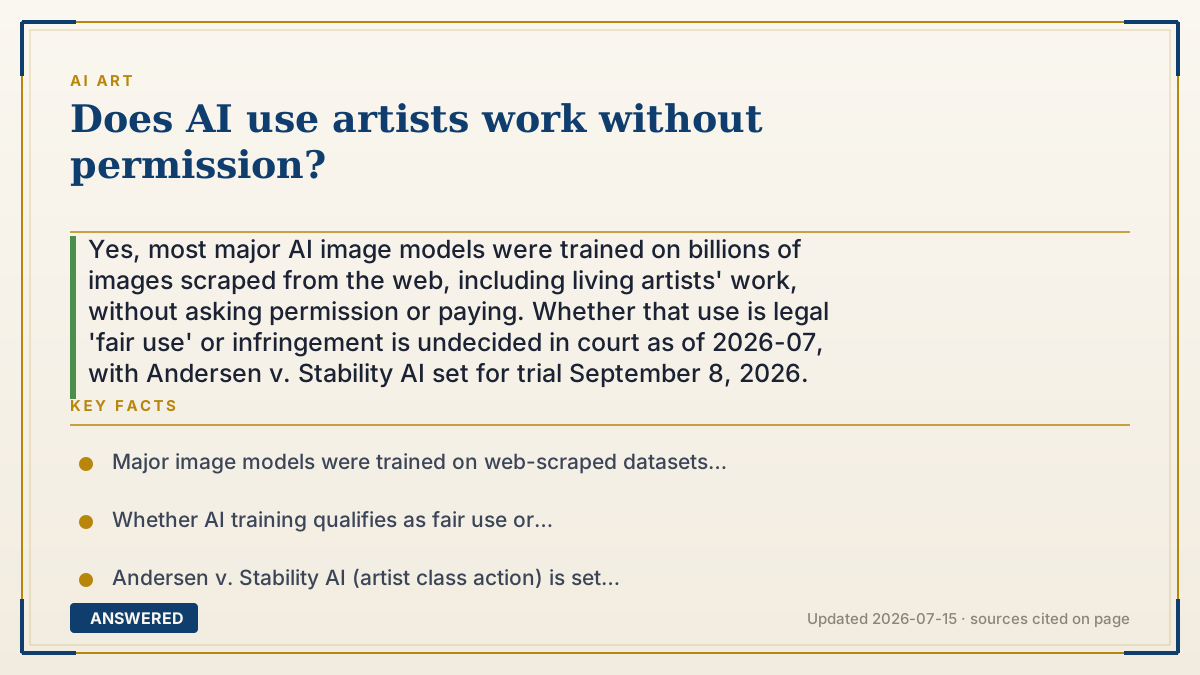
Yes, most major AI image models were trained on billions of images scraped from the web, including living artists' work, without asking permission or paying. Whether that use is legal 'fair use' or infringement is undecided in court as of 2026-07, with Andersen v. Stability AI set for trial September 8, 2026.
Why — the first-principles explanation
To train an image model, developers needed enormous amounts of pictures, so they scraped the public web at massive scale. These datasets pulled in art from portfolios, galleries, and social media, generally without contacting the creators or compensating them. So on the factual question, 'does AI use artists' work without permission,' the answer is largely yes.
The harder question is whether that's legal. U.S. copyright has a doctrine called fair use that sometimes permits copying without permission (for things like research or transformative uses). AI companies argue training is transformative, learning patterns rather than storing copies. Artists argue their work was copied wholesale to build a commercial product that competes with them. Courts are actively weighing this; there's no settled answer yet.
Mechanically, the trained model doesn't keep a folder of your paintings; it stores statistical patterns. But the training step still involved copying the images to process them, and that copying is what the lawsuits target.
The response from the industry has been partial: some newer tools train on licensed or opt-in data, and 'do-not-train' signals and opt-outs exist, though coverage is inconsistent. So the situation in 2026 is: yes, permission generally wasn't sought, the legality is being litigated, and consent-based alternatives are slowly emerging.
An example that makes it click
Imagine a giant library photocopied every book in town, including ones still on sale, to build a machine that writes new books in any author's style. The machine doesn't keep the photocopies, it learned from them, but the copying still happened without asking the authors.
Some authors say, 'that's just how anyone learns to write.' Others say, 'you copied my whole catalog to build a product that now competes with me.' The town's judges are still arguing about whether that first photocopy was allowed. That's exactly where AI art stands.
Key facts
- Major image models were trained on web-scraped datasets including artists' work, generally without permission or pay.
- Whether AI training qualifies as fair use or infringement is unresolved in court as of 2026.
- Andersen v. Stability AI (artist class action) is set for trial September 8, 2026.
- Getty Images v. Stability AI is also litigating alleged unauthorized use of images.
- Some newer tools use licensed or opt-in training data, and 'do-not-train' opt-outs exist but are inconsistent.
▶ The 60-second explainer (script)
Does AI use artists' work without permission? On the facts, largely yes. To build image generators, companies scraped billions of pictures from the open web, including living artists' portfolios, generally without asking or paying them. The trained model doesn't keep a folder of those paintings, it learned statistical patterns, but the training step still copied the images, and that copying is exactly what's being challenged in court. The legal question, is it fair use or infringement, is genuinely undecided. AI companies say training is transformative learning; artists say their entire catalogs were copied to build a product that competes with them. The big case, Andersen versus Stability AI, is heading to trial in September 2026. Meanwhile, some newer tools now train only on licensed or opt-in data, and 'do-not-train' opt-outs exist, though coverage is spotty. So: mostly without permission, and the courts will decide if that was legal.
What authoritative sources say
People also ask
Did AI companies ask artists first?
Generally no. Most large models were trained on web-scraped data without seeking permission or paying creators.
Is training on my art illegal?
That's the open question. Courts are deciding whether it's fair use or infringement; there's no final ruling yet.
Can I stop my art from being used?
You can use 'do-not-train' opt-outs and opt-out registries where available, but coverage is inconsistent.
Are any tools consent-based?
Yes. Some newer models train only on licensed or opt-in images as a more consent-friendly option.
The same question, asked other ways
- Is AI trained on copyrighted images?