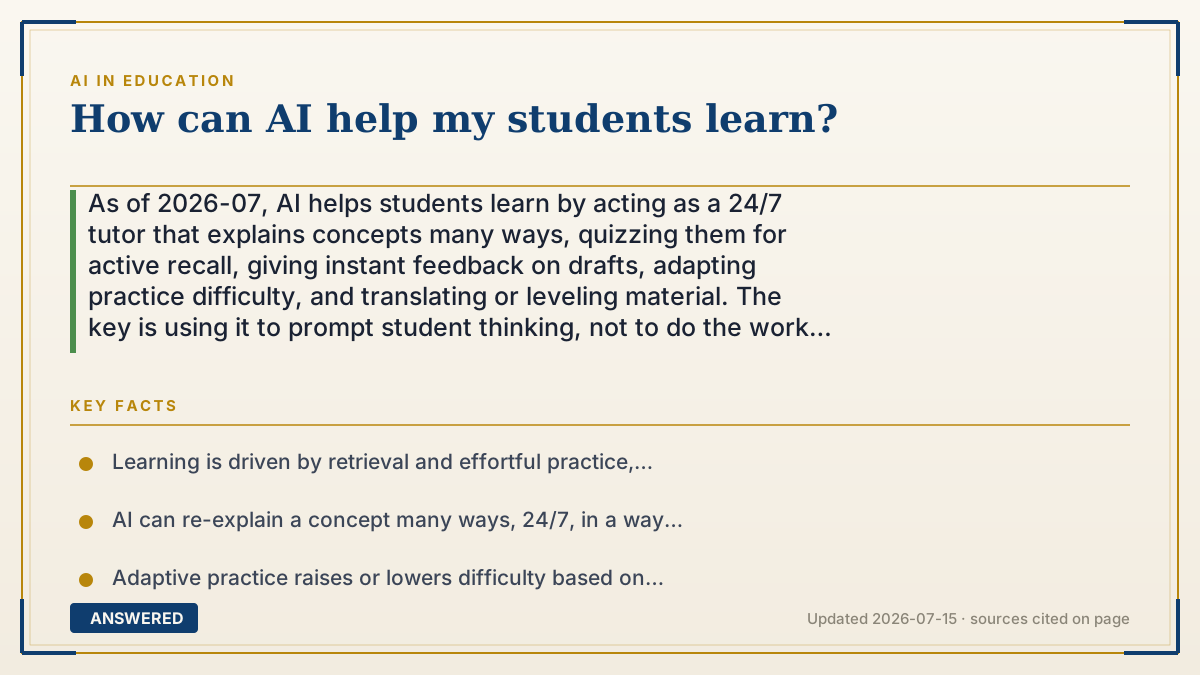
How can AI help my students learn?
As of 2026-07, AI helps students learn by acting as a 24/7 tutor that explains concepts many ways, quizzing them for active recall, giving instant feedback on drafts, adapting practice difficulty, and translating or leveling material. The key is using it to prompt student thinking, not to do the work for them, with a teacher checking accuracy.
Why — the first-principles explanation
AI helps learning most when it triggers the mental work that actually builds knowledge. Learning happens through retrieval (pulling information from memory) and effortful practice, not through passively receiving answers. So the highest-value uses of AI are the ones that make students' brains do something: being quizzed, explaining their reasoning to the AI, or getting feedback that sends them back to revise.
Re-explanation is AI's quiet superpower. A single teacher can explain a concept two or three ways before moving on; an AI can explain it ten ways, with fresh analogies and worked examples, until it clicks for a specific student, at any hour. Pair that with adaptive practice, where difficulty rises and falls with the student's answers, and you get one-on-one attention that used to require a paid tutor.
The design rule that separates help from harm is to aim AI at the process, not the product. "Quiz me on these terms and tell me which I keep missing," "give me a hint, not the answer," and "critique my thesis" all push the student to think. "Write my essay" does the opposite. Because the model can be confidently wrong, a teacher still sets goals, checks facts, and designs assignments so students must show their reasoning. Used this way, AI extends the teacher's reach to every student individually, which is the thing classrooms have always struggled to do.
An example that makes it click
Imagine every student having a patient study buddy who never gets tired. A kid stuck on the causes of World War I says "explain it like I'm ten," then "okay, now quiz me," then "I said the alliances mattered, what am I missing?" The buddy keeps going until it clicks, and it's available at 9 p.m. when the teacher is off the clock.
That buddy doesn't write the kid's essay, that would defeat the point. It asks questions, drops hints, and points out gaps, so the student's own brain does the heavy lifting and remembers it on test day.
How to do it
- Set up AI as a tutor: have students ask it to explain concepts in multiple ways until they understand.
- Use it for active recall: prompt it to quiz students and flag which items they keep missing.
- Ask for hints, not answers, so students still do the problem-solving.
- Get feedback on drafts: students revise based on AI critique before turning work in.
- Level and translate materials so every student can access the content.
- Keep a teacher in the loop to set goals, verify facts, and design assignments that show reasoning.
Key facts
- Learning is driven by retrieval and effortful practice, so AI helps most when it makes students think.
- AI can re-explain a concept many ways, 24/7, in a way one teacher can't for every student.
- Adaptive practice raises or lowers difficulty based on the student's answers.
- 'Give me a hint' and 'quiz me' beat 'give me the answer' for building durable knowledge.
- AI can be confidently wrong, so teacher oversight and fact-checking remain essential.
Choosing an AI tool for study?
The answer above explains the concept; this next step helps you choose by job, limits and current terms.
▶ The 60-second explainer (script)
How can AI help your students learn? By doing the one thing that actually builds knowledge: making their brains work. Learning comes from retrieval and effortful practice, not from passively receiving answers. So the best uses of AI are the ones that make students think. Number one, re-explanation. A teacher can explain a concept two or three ways; an AI can explain it ten, with fresh analogies, until it clicks, at any hour. Number two, active recall. Have students ask the AI to quiz them and flag what they keep missing. Number three, hints not answers, so they still solve it themselves. Number four, feedback on drafts, so they revise before turning work in. The golden rule is to aim AI at the process, not the product. 'Quiz me' and 'critique my thesis' help; 'write my essay' doesn't. And because AI can be confidently wrong, you the teacher still set the goals and check the facts. Used this way, AI gives every single student the one-on-one attention classrooms have always struggled to provide.
What authoritative sources say
People also ask
What's the single best way to use AI for learning?
Active recall: have the AI quiz students and tell them which items they keep missing, since retrieval builds durable memory.
Should I let students get answers from AI?
Better to have them ask for hints and explanations, so they still do the problem-solving that builds skill.
How does AI feedback help learning?
It lets students revise a draft quickly and repeatedly before a graded submission, turning writing into a practice loop.
Do I still need to check AI outputs for my students?
Yes. AI can state wrong facts confidently, so a teacher should verify content and set the learning goals.