How to humanize AI text to avoid detection?
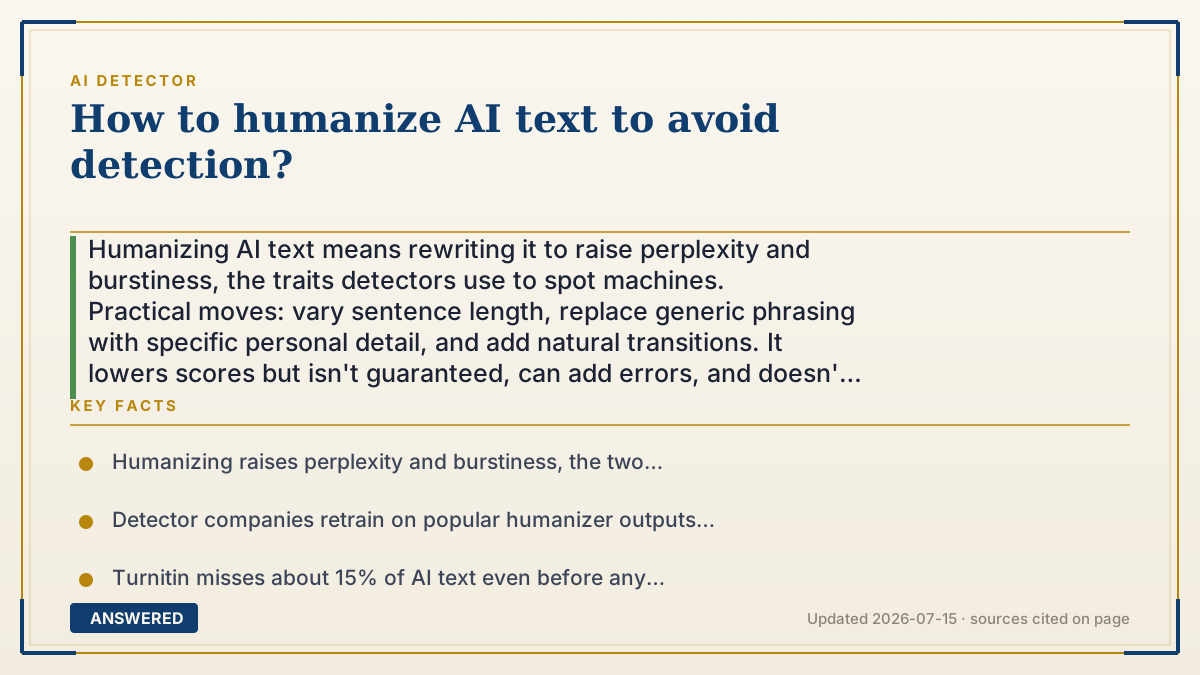
Humanizing AI text means rewriting it to raise perplexity and burstiness, the traits detectors use to spot machines. Practical moves: vary sentence length, replace generic phrasing with specific personal detail, and add natural transitions. It lowers scores but isn't guaranteed, can add errors, and doesn't erase academic-integrity risk.
Why — the first-principles explanation
AI detectors treat writing as machine-made when it is predictable and uniform, low perplexity and low burstiness. "Humanizing" is the deliberate reverse: making the text less predictable and more uneven so it resembles how people actually write. That's the whole mechanism behind both manual editing and automated humanizer tools.
The changes that matter map directly to those two signals. Raising perplexity means swapping the most obvious word for a less expected but still accurate one, adding a specific detail a model wouldn't invent, or including a genuine opinion. Raising burstiness means breaking the AI's even rhythm, following a long, complex sentence with a short blunt one. Real human writing also carries small imperfections, asides, and personal references that machines rarely generate, and adding those pushes the score down.
But there are hard limits. Detectors are retrained on the output of popular humanizers, so automated tools lose effectiveness over time and sometimes leave their own detectable fingerprints. Aggressive rewriting can also mangle meaning or, more dangerously, preserve fabricated facts and fake citations that a human reader catches no matter what the detector says. And a lower score doesn't change the underlying question of whether submitting AI-generated work is allowed where you're submitting it. The most robust form of "humanizing" is to actually write it yourself, using AI only for permitted steps, and to keep drafts that prove your process.
An example that makes it click
Imagine a robot dance routine, every move identical spacing, perfectly on the beat. To make it look human, you'd add little pauses, an off-beat step, a shrug, a personal flourish. Suddenly it reads as a real person dancing.
Humanizing AI text is that flourish for writing: uneven sentence lengths, a surprising word, a personal aside. It makes the 'dance' look human to the detector. But if the routine still contains a move that's physically impossible, a made-up fact, the judges in the audience notice, even if the robot-detector doesn't.
How to do it
- Read the AI draft and identify generic, evenly-paced sentences that all sound the same length and tone.
- Rewrite in your own voice, replacing predictable words with less obvious but accurate ones to raise perplexity.
- Vary rhythm on purpose: pair long, detailed sentences with short, blunt ones to raise burstiness.
- Insert specific personal examples, observations, or opinions a language model would not generate.
- Verify every fact and citation, since humanizing preserves fabricated sources that reviewers catch.
- Keep your own drafts and notes, and confirm the submission actually allows AI assistance before relying on any humanized text.
Key facts
- Humanizing raises perplexity and burstiness, the two core signals detectors use to identify AI text.
- Detector companies retrain on popular humanizer outputs, so automated tools degrade over time.
- Turnitin misses about 15% of AI text even before any humanizing is applied.
- Aggressive rewriting can preserve fabricated facts and citations that human reviewers still catch.
- A lower detector score does not change whether AI use is permitted by a school or employer policy.
▶ The 60-second explainer (script)
How do you humanize AI text to avoid detection? Detectors flag writing that's too predictable and too uniform. So humanizing means the opposite: making the text less predictable and more uneven, like real people write. The moves that matter are simple. Swap obvious words for less expected but accurate ones to raise what's called perplexity. Break the even rhythm by following a long sentence with a short, blunt one to raise burstiness. And add specific personal details, opinions, and small asides that a machine wouldn't invent. That lowers the score, but know the limits. Detectors retrain on popular humanizer tools, so they lose their edge over time. Heavy rewriting can garble your meaning or leave fake facts behind that a human catches instantly. And a lower score doesn't make AI work allowed where it isn't. The most reliable version of humanizing is writing it yourself and keeping your drafts.
What authoritative sources say
People also ask
What does 'humanize AI text' mean?
It means editing AI-generated writing so it looks like human writing to a detector, mainly by adding sentence variety, unexpected words, and personal detail.
Do humanizer tools guarantee I'll pass?
No. They can lower scores, but detectors retrain on their output and results are inconsistent, and reviewers may still spot fabricated facts.
Does humanizing improve the writing?
Not always. Automated rewriting can create awkward phrasing or errors. Careful manual editing in your own voice usually reads better than tool output.
Is humanizing AI text cheating?
If it's used to submit AI work as your own where that's prohibited, most schools treat it as academic dishonesty regardless of the detector score.