Is AI art ethical?
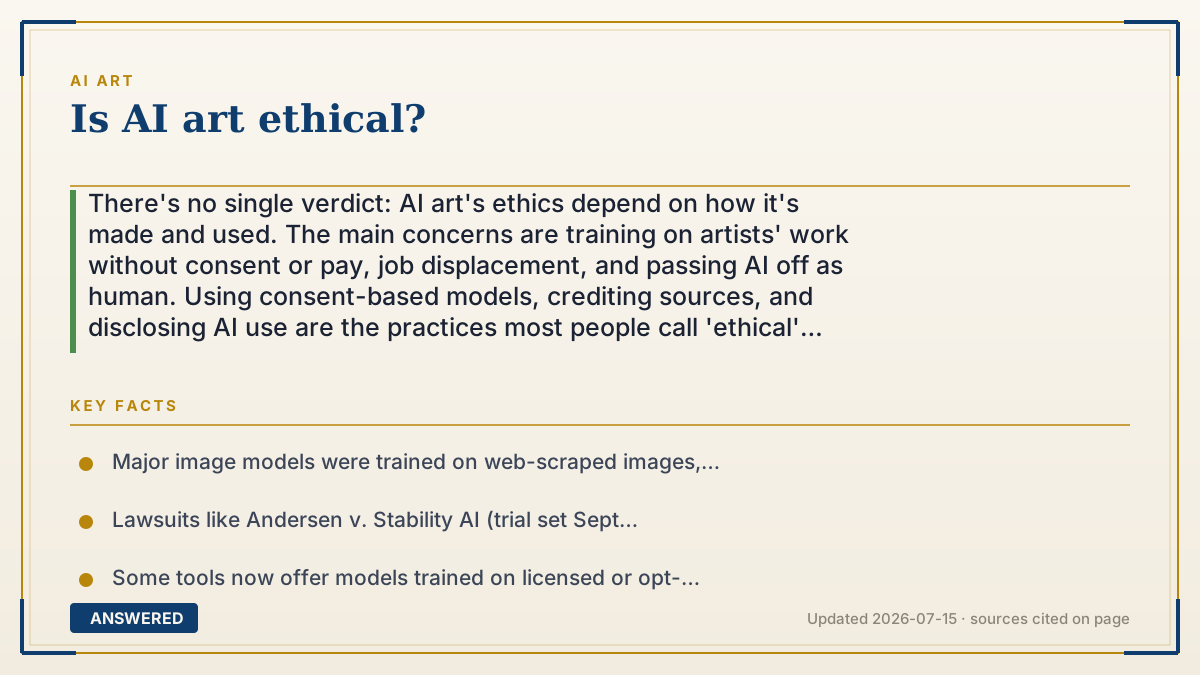
There's no single verdict: AI art's ethics depend on how it's made and used. The main concerns are training on artists' work without consent or pay, job displacement, and passing AI off as human. Using consent-based models, crediting sources, and disclosing AI use are the practices most people call 'ethical' as of 2026.
Why — the first-principles explanation
Ethics questions get clearer when you separate the tool from the behavior. A brush isn't ethical or unethical; how you use it is. AI art is similar, so the honest answer looks at specific choices rather than a blanket yes or no.
The biggest concern is consent and compensation for training data. Most image models learned from billions of pictures scraped from the web, including working artists' portfolios, without asking or paying. Critics argue that's taking the value of someone's labor; defenders argue it's like a human learning by studying many works. Courts are still deciding, with cases like Andersen v. Stability AI heading toward trial in 2026.
Second is impact on livelihoods. When a business replaces paid illustrators with a $10 subscription, real people lose income. Whether that's 'unethical' or just economic change is a values question, but it's a genuine harm to weigh.
Third is honesty. Passing AI work off as hand-made, or faking a real person, crosses into deception. That's why disclosure, crediting influences, and choosing models trained on licensed or opt-in data are the practices most people point to as the ethical high ground.
An example that makes it click
Imagine a student who learns to cook by tasting thousands of restaurant dishes, then opens a place next door selling very similar meals for half price. Some say 'that's just learning'; others say 'you built your business on their recipes without asking.' Both feel partly right.
Now imagine the student also labels the food honestly and credits the chefs who inspired each dish, versus one who claims every recipe is a personal family secret. The behavior, consent and honesty, is what tips it toward fair or unfair. AI art works the same way.
Key facts
- Major image models were trained on web-scraped images, often without artists' consent or payment.
- Lawsuits like Andersen v. Stability AI (trial set Sept 8, 2026) test whether such training is legal.
- Some tools now offer models trained on licensed or opt-in data as a more consent-based option.
- Passing AI work off as human-made or faking real people is widely viewed as deceptive.
- Common 'ethical use' practices: disclose AI, credit influences, and respect artists' opt-outs.
Choosing a tool for your creative workflow?
The answer above explains the concept; this next step helps you choose by job, limits and current terms.
▶ The 60-second explainer (script)
Is AI art ethical? There's no single yes or no, because a tool isn't ethical or unethical, how you use it is. Let's look at the real concerns. First, most AI models were trained on billions of images scraped from the web, including working artists' portfolios, without asking or paying them. Courts are still deciding if that's legal, with big cases heading to trial in 2026. Second, businesses swapping paid illustrators for a cheap subscription costs real people income. Third, honesty: passing AI work off as hand-made, or faking a real person, is deceptive. So what makes AI art more ethical? Disclosing that you used AI, crediting the artists who influenced you, and choosing tools trained on licensed or opt-in data. The ethics live in your choices, not the technology.
What authoritative sources say
People also ask
Is it stealing to train on artists' work?
That's the core dispute. Critics say it uses labor without consent; defenders compare it to human learning. Courts are deciding.
How can I use AI art more ethically?
Disclose AI use, credit influences, avoid mimicking a living artist's signature style, and prefer licensed or opt-in models.
Does AI art hurt working artists?
It can reduce demand for some paid work, though it also creates new roles in prompting, editing, and direction.
Is faking a real person's style illegal?
Style itself isn't copyrighted, but copying works, or using someone's likeness or name, can raise legal and ethical issues.
The same question, asked other ways
- What are the ethical implications of AI generated artwork?