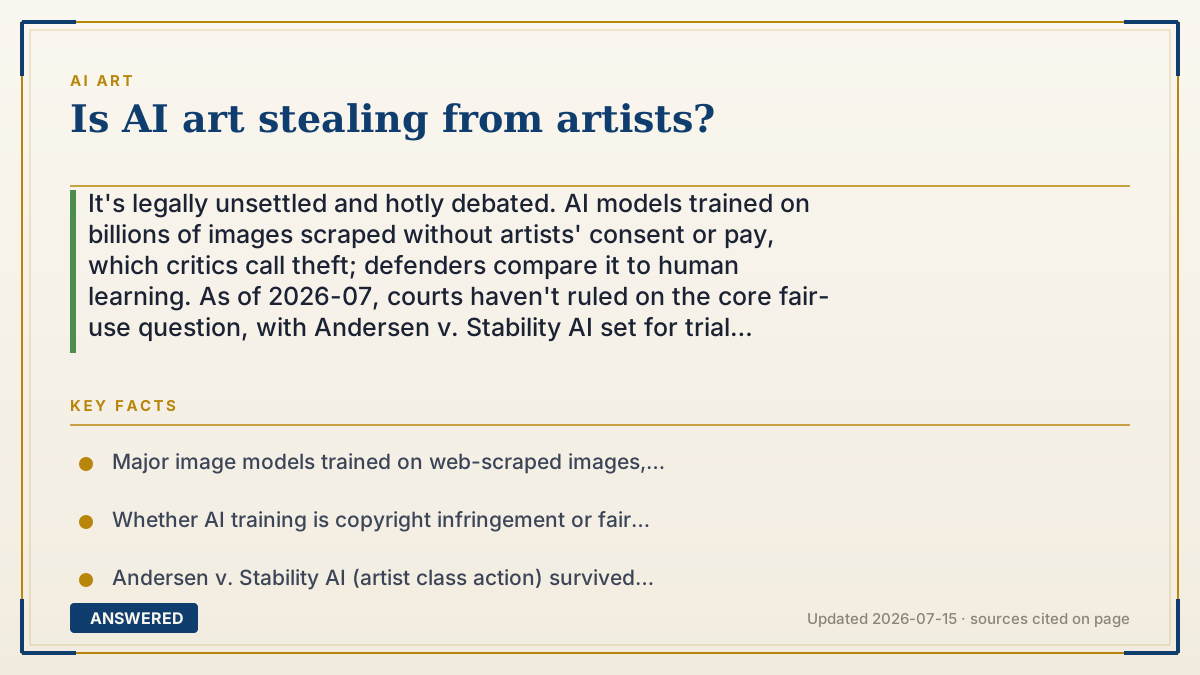
Is AI art stealing from artists?
It's legally unsettled and hotly debated. AI models trained on billions of images scraped without artists' consent or pay, which critics call theft; defenders compare it to human learning. As of 2026-07, courts haven't ruled on the core fair-use question, with Andersen v. Stability AI set for trial September 8, 2026.
Why — the first-principles explanation
The word 'stealing' hides two different questions: is it illegal, and is it unfair? They don't have the same answer, and mixing them causes most of the confusion.
On the legal side, image models were trained by copying huge datasets of pictures scraped from the web, including living artists' portfolios, without permission. Whether that copying is copyright infringement or 'fair use' is exactly what courts are deciding. Cases like Andersen v. Stability AI and Getty Images v. Stability AI are working through the system, and as of 2026 there's no final ruling on training, so calling it 'theft' is a prediction, not an established fact.
On the fairness side, the model doesn't store or paste your painting; it learns statistical patterns and generates new pixels. Defenders say that's like a human studying thousands of works to learn a style, which has always been legal. Critics answer that a machine ingesting your entire catalog at industrial scale, then competing with you commercially, isn't the same as human inspiration.
A sharper harm is style mimicry and unauthorized likeness: prompting 'in the style of [living artist]' to flood the market with imitations, or copying an artist's actual works. That feels closer to real harm than learning in the abstract, which is why consent, opt-outs, and licensed training data are central to the debate.
An example that makes it click
Imagine a music student who listens to 10,000 songs and learns how catchy melodies work, then writes new tunes. That's legal and normal, humans learn by absorbing.
Now imagine a factory that vacuums up every song a specific band ever recorded, without asking, and cranks out thousands of very similar tracks that compete with the band on the same streaming charts. Same 'learning' idea, very different feel and scale. That gap, human inspiration versus industrial ingestion for profit, is exactly what the courts and the community are wrestling with.
Key facts
- Major image models trained on web-scraped images, including artists' work, without consent or payment.
- Whether AI training is copyright infringement or fair use is undecided as of 2026.
- Andersen v. Stability AI (artist class action) survived a motion to dismiss and is set for trial Sept 8, 2026.
- Getty Images v. Stability AI is also ongoing over alleged unauthorized use of images.
- AI models generate new pixels from learned patterns rather than storing and pasting exact copies.
Choosing a tool for your creative workflow?
The answer above explains the concept; this next step helps you choose by job, limits and current terms.
▶ The 60-second explainer (script)
Is AI art stealing from artists? It's genuinely unsettled, so let's separate two questions: is it illegal, and is it unfair? On the legal side, AI models were trained by copying billions of images scraped from the web, including living artists' portfolios, without permission. Whether that's copyright infringement or fair use is exactly what courts are deciding right now, with the big artist case, Andersen versus Stability AI, heading to trial in September 2026. So calling it theft is a prediction, not a settled fact. On the fairness side, defenders say the AI just learns patterns, like a human studying thousands of works. Critics say a machine swallowing your entire catalog and then competing with you isn't the same. The sharpest concern is mimicking a specific living artist's style on demand. That's why consent, opt-outs, and licensed data are at the heart of this fight.
What authoritative sources say
People also ask
Is it legally 'theft' yet?
No court has finally ruled that AI training is infringement. The core fair-use question is still open as of 2026.
Does AI copy my exact artwork?
Generally it learns patterns and makes new pixels, but the training copying itself is what's being challenged in court.
Can artists opt out?
Some tools and datasets offer opt-outs, and 'no-train' signals exist, but coverage is inconsistent.
What about copying a living artist's style?
Style isn't copyrighted, but copying actual works, or using a name or likeness, can cross legal and ethical lines.