Is AI voice cloning illegal?
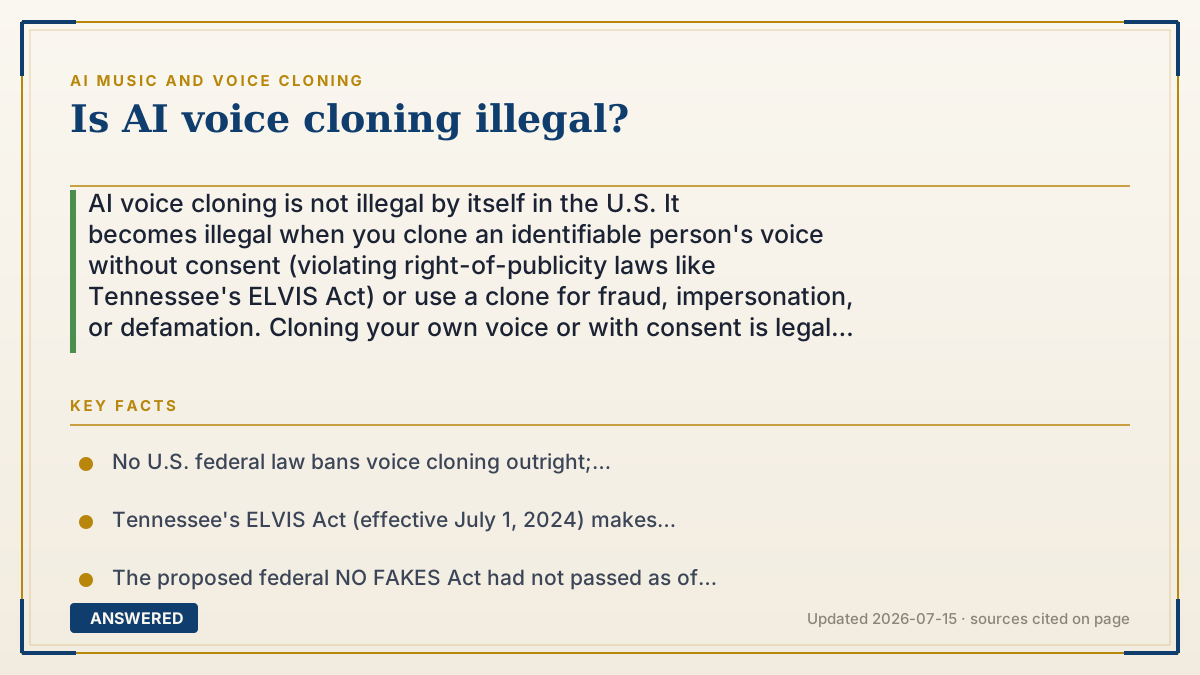
AI voice cloning is not illegal by itself in the U.S. It becomes illegal when you clone an identifiable person's voice without consent (violating right-of-publicity laws like Tennessee's ELVIS Act) or use a clone for fraud, impersonation, or defamation. Cloning your own voice or with consent is legal. This is general information, not legal advice.
Why — the first-principles explanation
The technology is legal; specific misuses are illegal. There's no federal law that bans voice cloning outright, so courts look at what you did with the clone under existing rules.
The biggest trigger is using someone's voice without permission. A person's voice is part of their identity, protected by state right-of-publicity laws. Tennessee's ELVIS Act (effective July 1, 2024) is the first to explicitly outlaw unauthorized AI voice replication, and other states have followed; a federal NO FAKES Act is proposed but not yet law as of 2026-07. Cloning your own voice, or someone's with consent, avoids this entirely.
The second trigger is harmful use, which is illegal regardless of consent details. The FTC has repeatedly warned about voice clones used in scams — impersonating a relative in distress to extract money. Cloning a voice to defraud, defame, harass, or spread deepfakes can violate fraud, impersonation, and harassment laws. So the honest summary: cloning is a legal tool that becomes a crime when used to steal identity or deceive. Keep it to your own voice or consented voices, and never use it to trick people.
An example that makes it click
Voice cloning is like owning a photocopier. Copying your own documents — legal. Copying a friend's file they asked you to copy — legal. But photocopying counterfeit money or forging someone's signed contract — that's a crime, and the machine's legality doesn't save you. The copier is fine; forgery and fraud are not. Same with cloning: the tool is legal, the deception is not.
How to do it
- Clone only your own voice, or get clear consent before cloning anyone else's.
- Never use a clone to impersonate, defraud, defame, or harass — those are crimes regardless of consent.
- Avoid cloning celebrities or public figures without a signed release (right-of-publicity risk).
- Keep documentation of consent and of your training audio's source.
- For any commercial or public use, consult a qualified attorney about your state's laws.
Key facts
- No U.S. federal law bans voice cloning outright; illegality depends on use.
- Tennessee's ELVIS Act (effective July 1, 2024) makes unauthorized AI voice replication unlawful.
- The proposed federal NO FAKES Act had not passed as of 2026-07.
- Using a clone for fraud is illegal; the FTC documents voice-clone scams.
- Cloning your own voice, or with consent, is legal.
Choosing a tool for your creative workflow?
The answer above explains the concept; this next step helps you choose by job, limits and current terms.
▶ The 60-second explainer (script)
Is AI voice cloning illegal? Not by itself. The technology is legal — it's certain uses that break the law. There's no federal ban, so it comes down to two things. First, permission: cloning an identifiable person's voice without consent can violate right-of-publicity laws, and Tennessee's ELVIS Act, effective July 2024, specifically outlaws unauthorized AI voice clones. Cloning your own voice or a consented voice is fine. Second, harm: using a clone to scam, impersonate, defame, or harass is illegal no matter what — the FTC warns about voice-clone scams targeting families. So the rule is simple: clone your own voice or one you have permission for, and never use it to deceive. A federal law called the NO FAKES Act is proposed but not yet passed. This is general information, not legal advice.
What authoritative sources say
People also ask
Can I go to jail for voice cloning?
Cloning itself isn't a crime, but using a clone for fraud, impersonation, or harassment can carry civil and criminal penalties.
Is cloning a celebrity's voice illegal?
Without consent, it can violate right-of-publicity laws like the ELVIS Act, especially for commercial use.
Is cloning my own voice legal?
Yes. You control your own voice, so cloning it for your own projects is lawful.
Is there a nationwide voice-cloning law?
Not yet. Protection is mostly state law; the federal NO FAKES Act is proposed but unpassed as of 2026-07.