Is AI voice cloning safe?
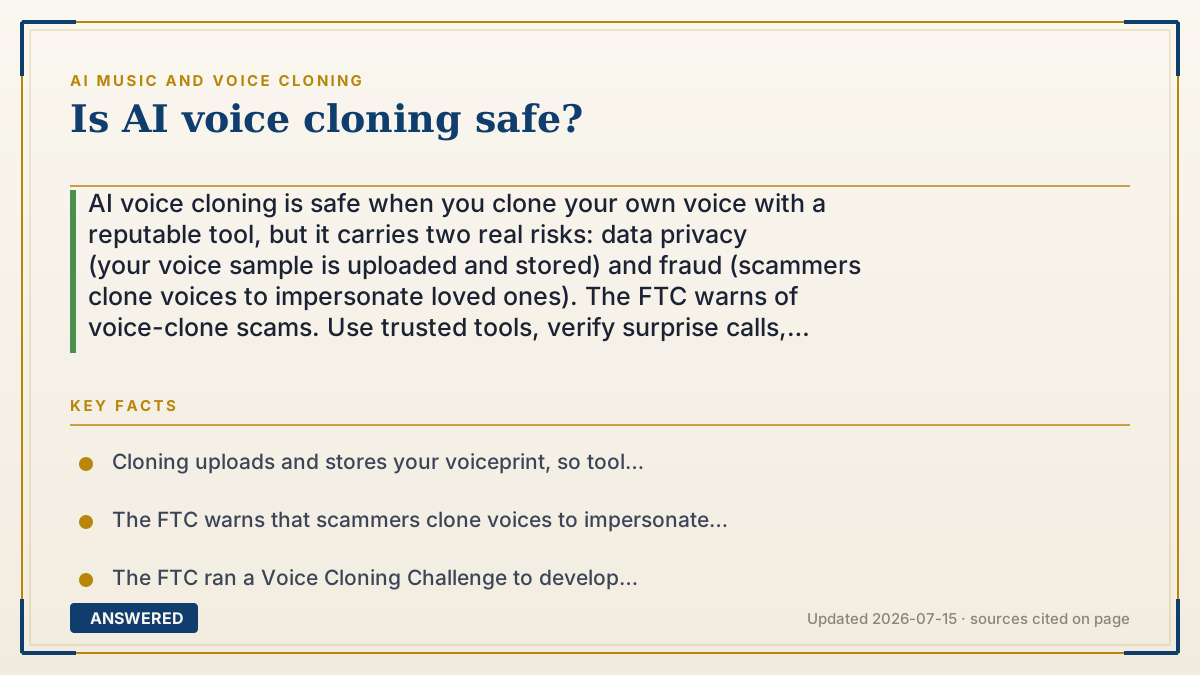
AI voice cloning is safe when you clone your own voice with a reputable tool, but it carries two real risks: data privacy (your voice sample is uploaded and stored) and fraud (scammers clone voices to impersonate loved ones). The FTC warns of voice-clone scams. Use trusted tools, verify surprise calls, and set a family code word.
Why — the first-principles explanation
'Safe' has two meanings here: safe for you as a user, and safe for society. Both deserve a straight answer.
For you as a user, the main concern is data privacy. When you clone your voice, you upload audio to a company that stores your voiceprint. A reputable tool with clear terms, deletion options, and a consent/verification step is low-risk; a shady free app with vague terms could reuse or leak your voice. So safety depends heavily on which tool you choose and what its policy says.
For society, the concern is misuse by others. Because a usable clone can be built from a short public clip, criminals use cloning for scams — the FTC documents the 'family-emergency' scam where a cloned voice calls a relative, claims to be in trouble, and demands fast, untraceable payment. Reports of large losses among older adults have risen sharply. This risk isn't about your cloning tool; it's about people cloning voices from audio you've already posted.
The practical takeaway: cloning your own voice with a trusted platform is reasonably safe, but protect yourself against others by treating urgent phone requests skeptically — hang up and call back on a known number, and agree on a family code word.
An example that makes it click
Voice cloning is like handing over a house key. Give a spare to a trusted, reputable locksmith with a clear contract, and you're fine. Give it to a random stranger with a handwritten 'trust me' note, and you're taking a real risk. Meanwhile, a burglar might make their own copy of your key from a photo you posted online — that's the scam risk. So use a trustworthy service, and lock the door with a family code word for surprise 'emergency' calls.
How to do it
- Choose a reputable tool with clear privacy terms, a consent/verification step, and voice-deletion options.
- Read what happens to your voice sample — storage, reuse, and deletion policies.
- Clone only your own voice or voices you have consent for.
- Protect against scams: hang up on urgent money requests and call back on a known number.
- Set a family code word to verify surprise emergency calls, and limit long public audio of yourself.
Key facts
- Cloning uploads and stores your voiceprint, so tool choice and privacy policy drive user safety.
- The FTC warns that scammers clone voices to impersonate relatives and demand urgent payment.
- The FTC ran a Voice Cloning Challenge to develop protections against misuse.
- A usable clone can be built from a short public audio clip.
- Verifying via a known number and using a family code word are recommended defenses.
Choosing a tool for your creative workflow?
The answer above explains the concept; this next step helps you choose by job, limits and current terms.
▶ The 60-second explainer (script)
Is AI voice cloning safe? It depends on two things. First, safety for you as a user. When you clone your voice, you upload it to a company that stores your voiceprint, so choose a reputable tool with clear privacy terms, a consent step, and the ability to delete your voice. A trusted service is low-risk; a shady free app is not. Second, safety from other people misusing it. Because a clone can be made from a short public clip, scammers use it to impersonate loved ones — the FTC warns about fake emergency calls demanding fast, untraceable payment. To protect yourself, hang up on urgent money requests and call back on a known number, and set a family code word. Bottom line: cloning your own voice with a trusted tool is reasonably safe — just guard against scams. This is general information, not legal advice.
What authoritative sources say
People also ask
Is it safe to upload my voice to a cloning app?
With a reputable tool that has clear privacy and deletion terms, the risk is low. Avoid apps with vague policies that might reuse your voice.
Can someone clone my voice from social media?
Yes. A short, clear public clip can be enough, which is why voice-clone scams exist. Limit long public audio and verify urgent calls.
How do I avoid voice-clone scams?
Hang up on surprise emergency money requests, call back on a known number, and set a family code word to confirm identity.
Does the tool keep my voice forever?
It depends on the tool. Check the privacy policy for storage, reuse, and deletion options before uploading.